
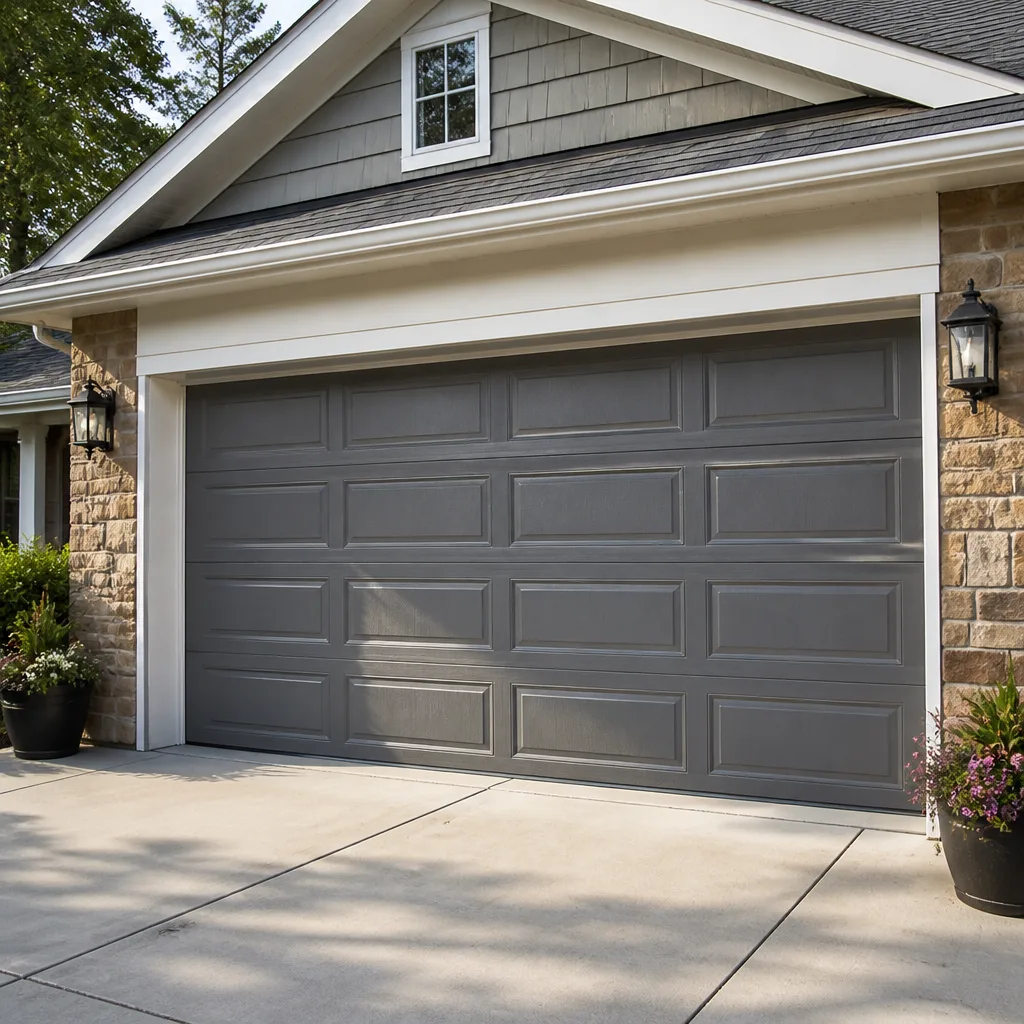
 Raised-panel steel
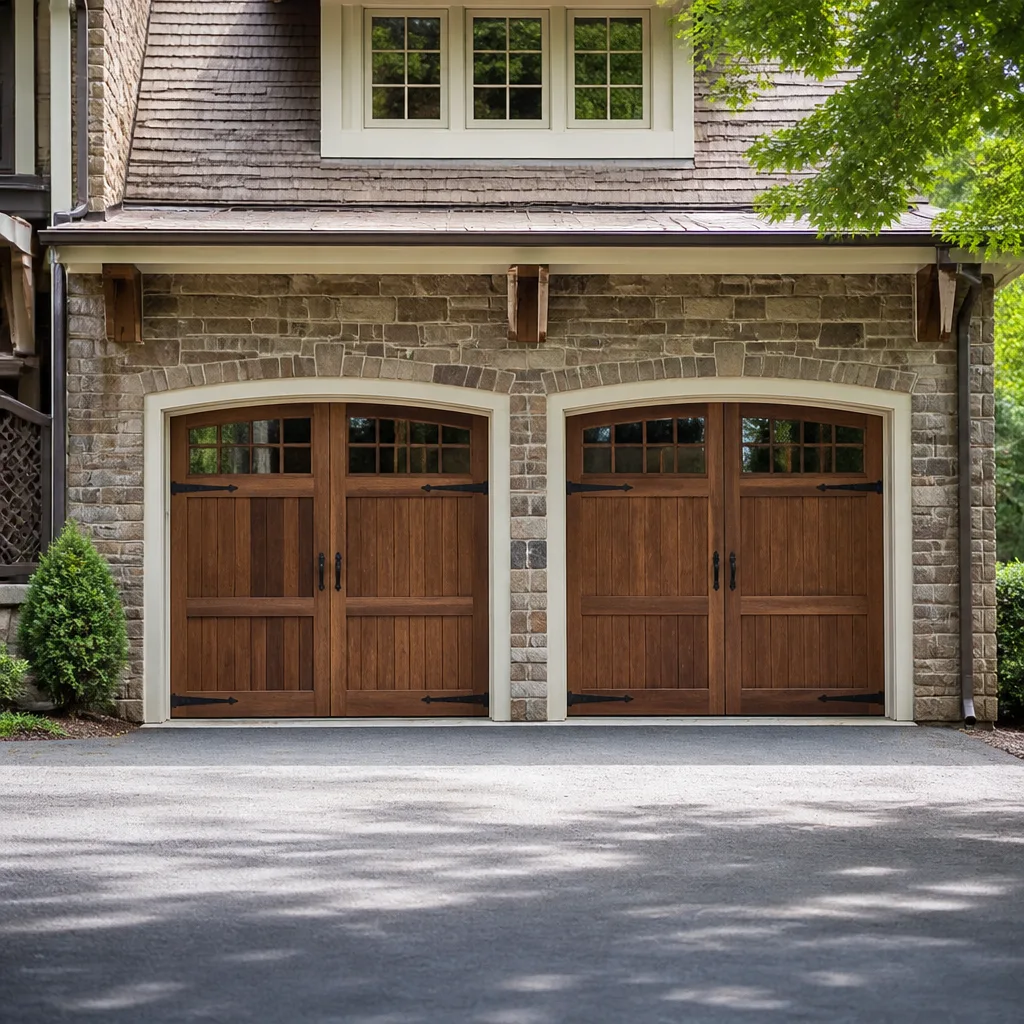 Carriage house
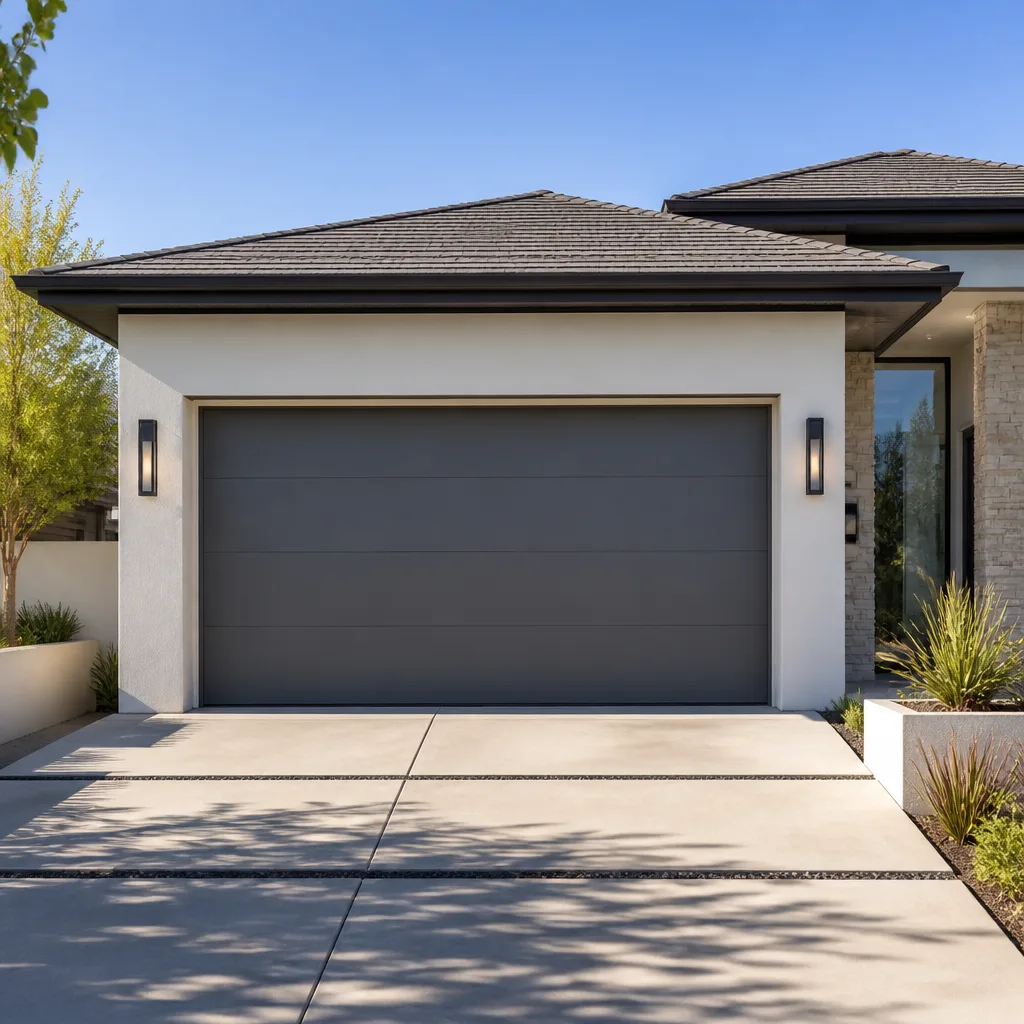 Modern flush
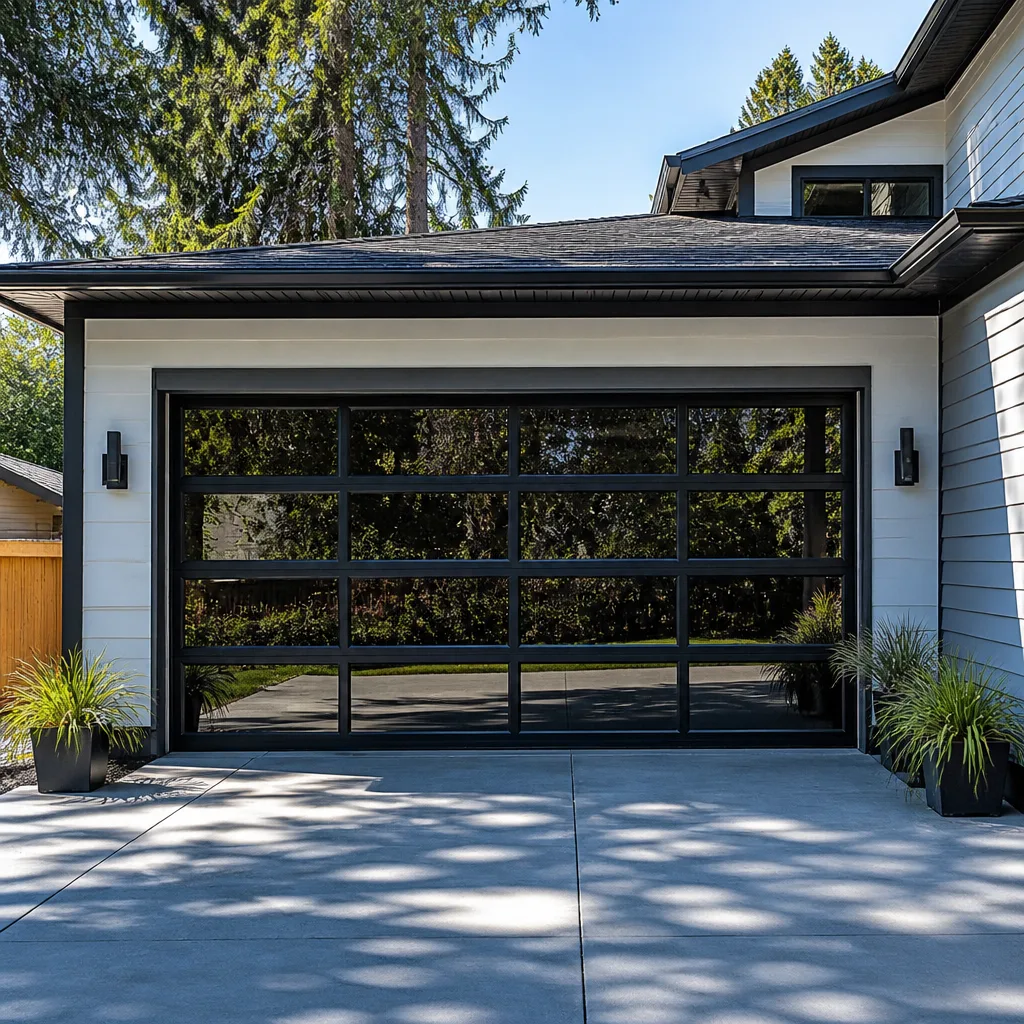 Full-view glass
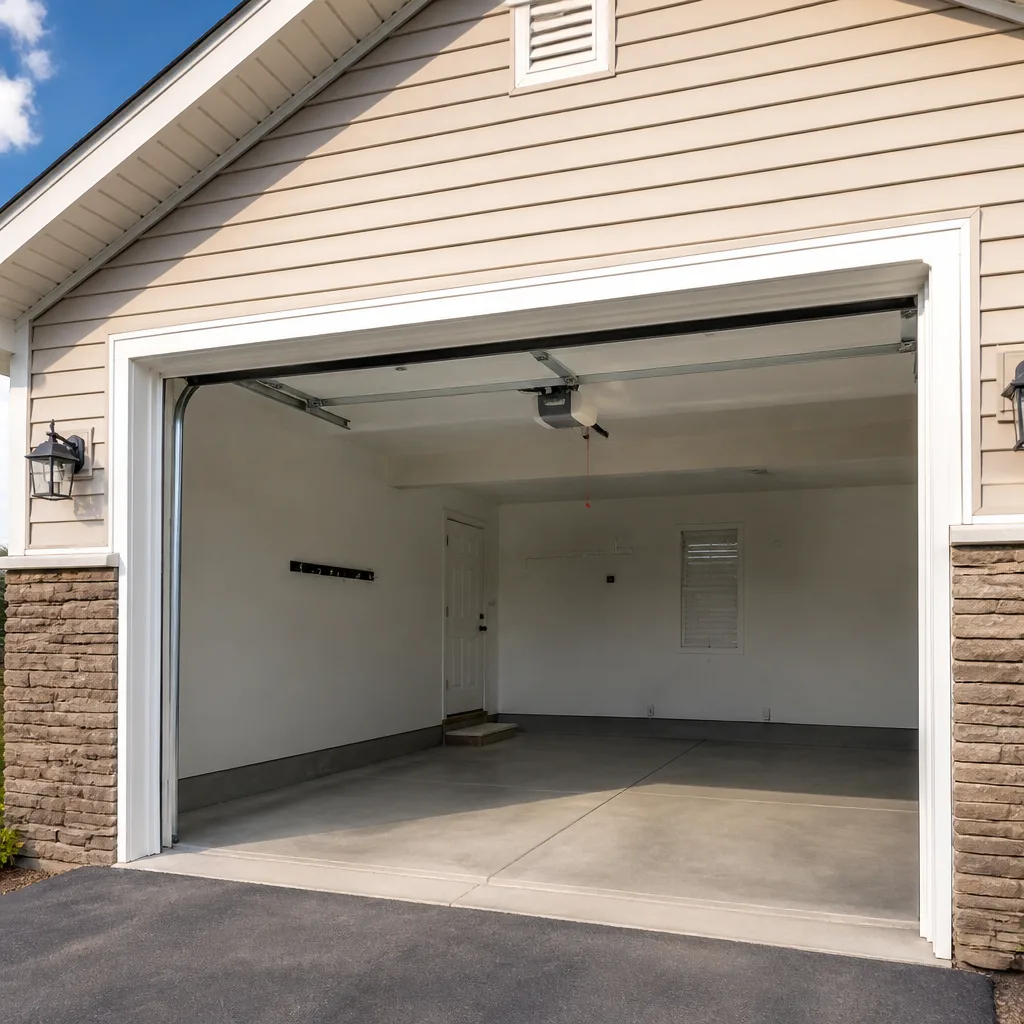 LiftMaster openers
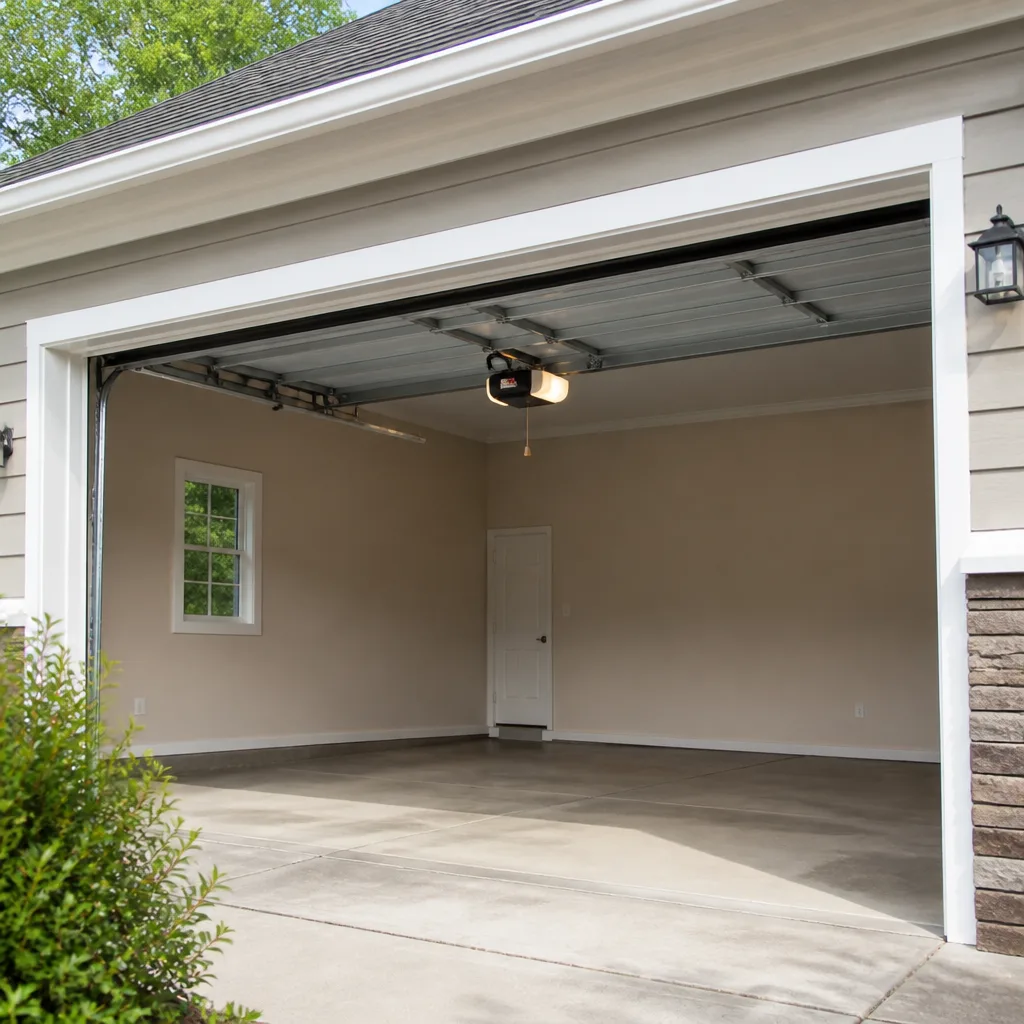 Chamberlain openers
Full 25-point door and opener safety check with every visit - springs, cables, rollers, tracks, and your LiftMaster or Chamberlain opener included
You get a price before we start. It does not change when the pro arrives.
Get your free estimateStyles & brands we work with
- Raised-panel steel
- Carriage house
- Modern flush
- Full-view glass
- LiftMaster openers
- Chamberlain openers
See the difference
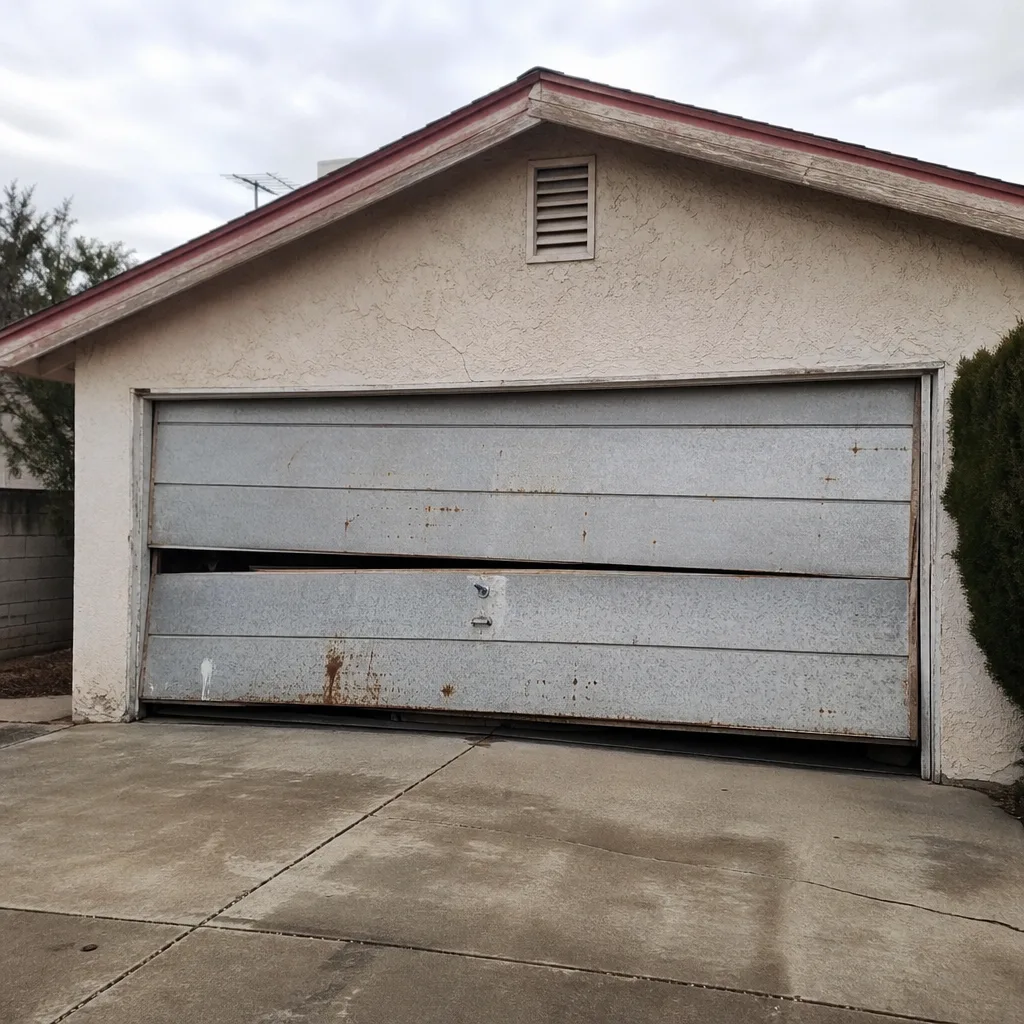 Before
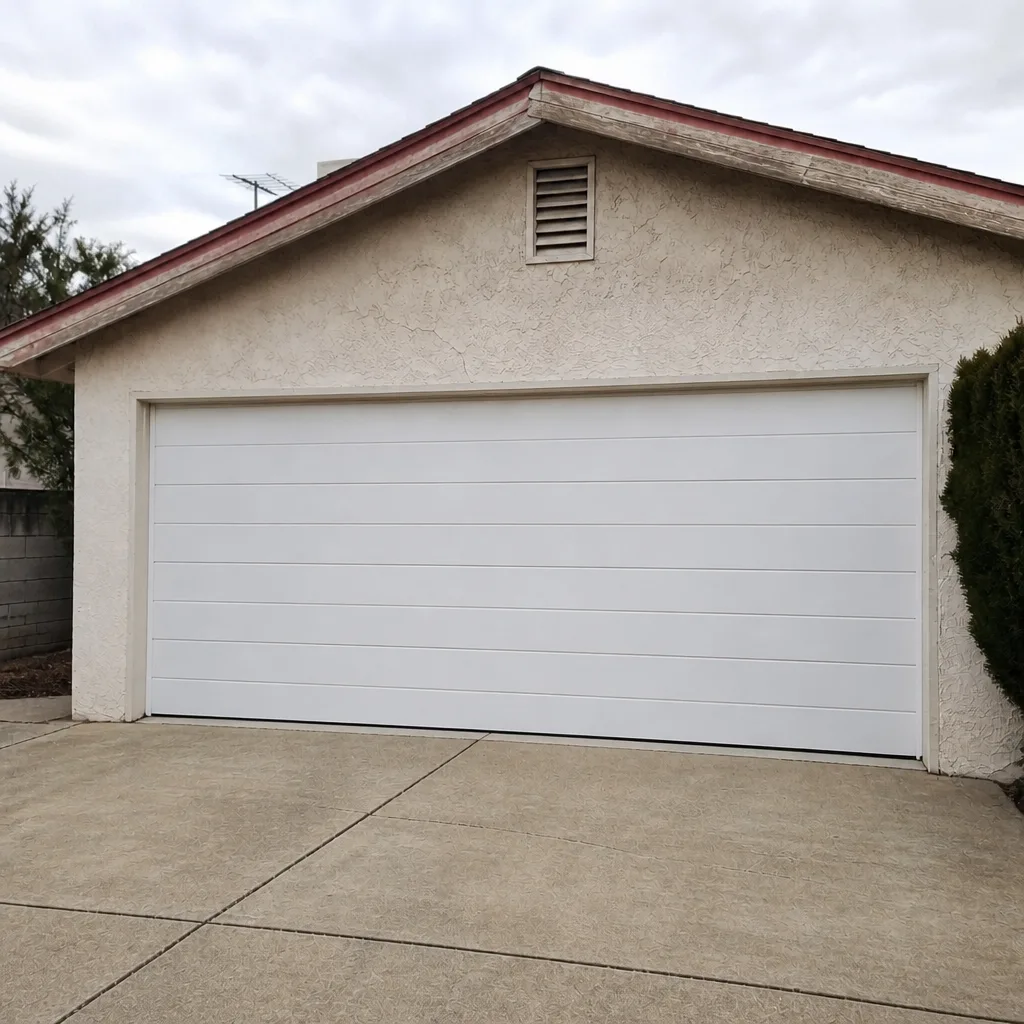 After
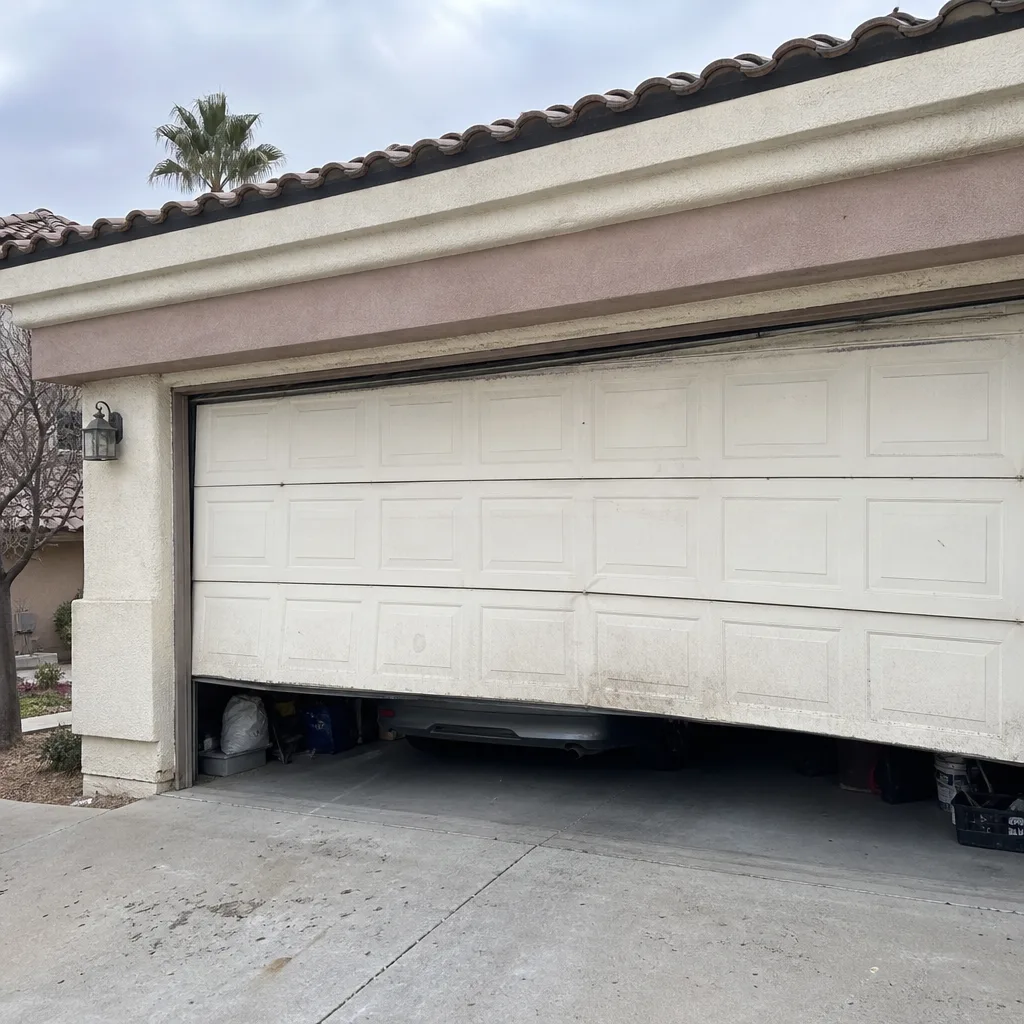 Before
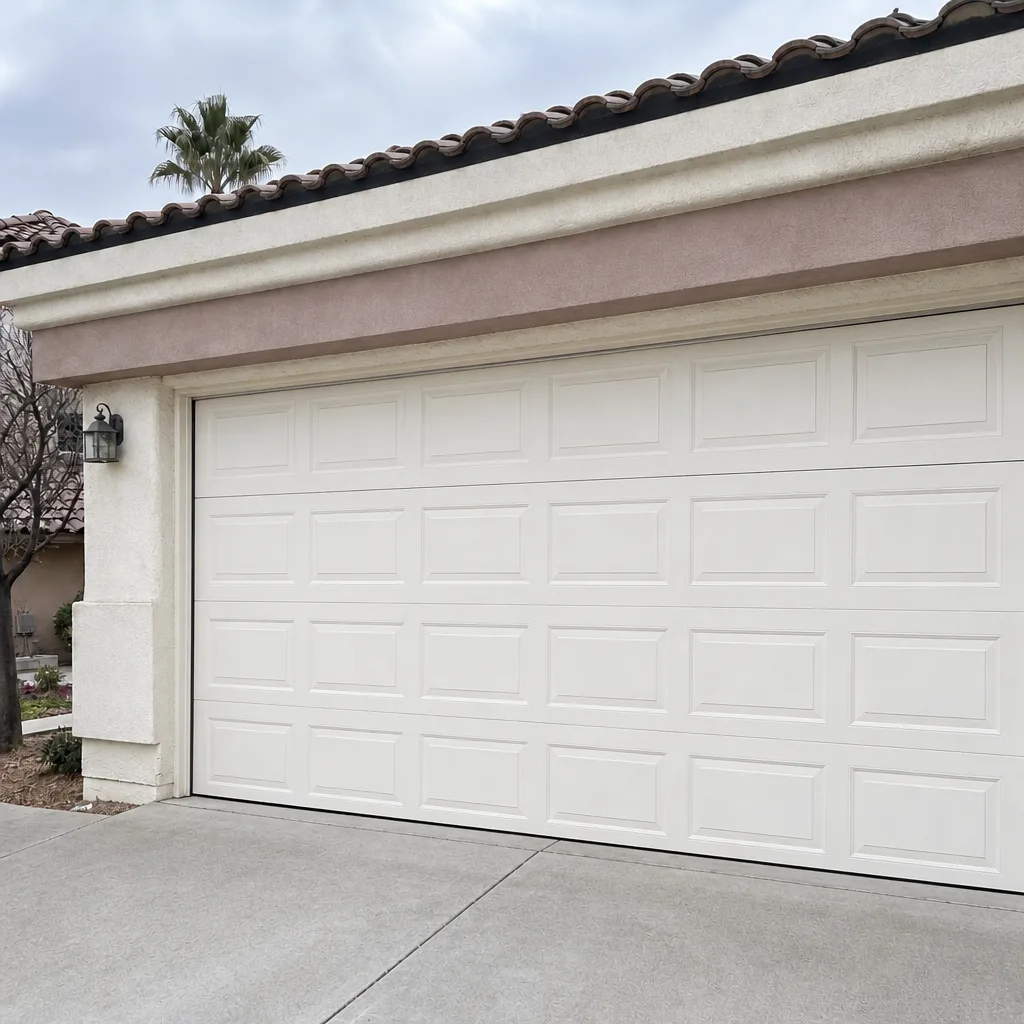 After
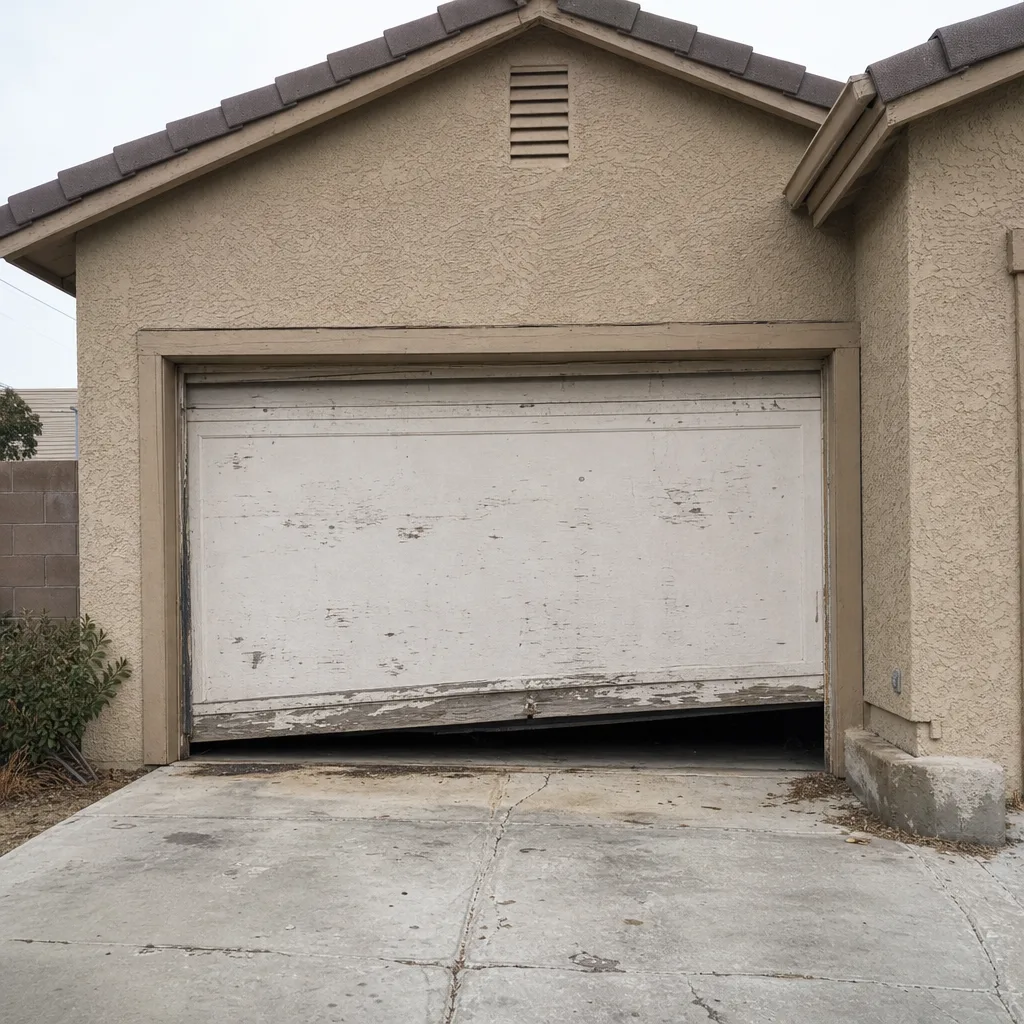 Before
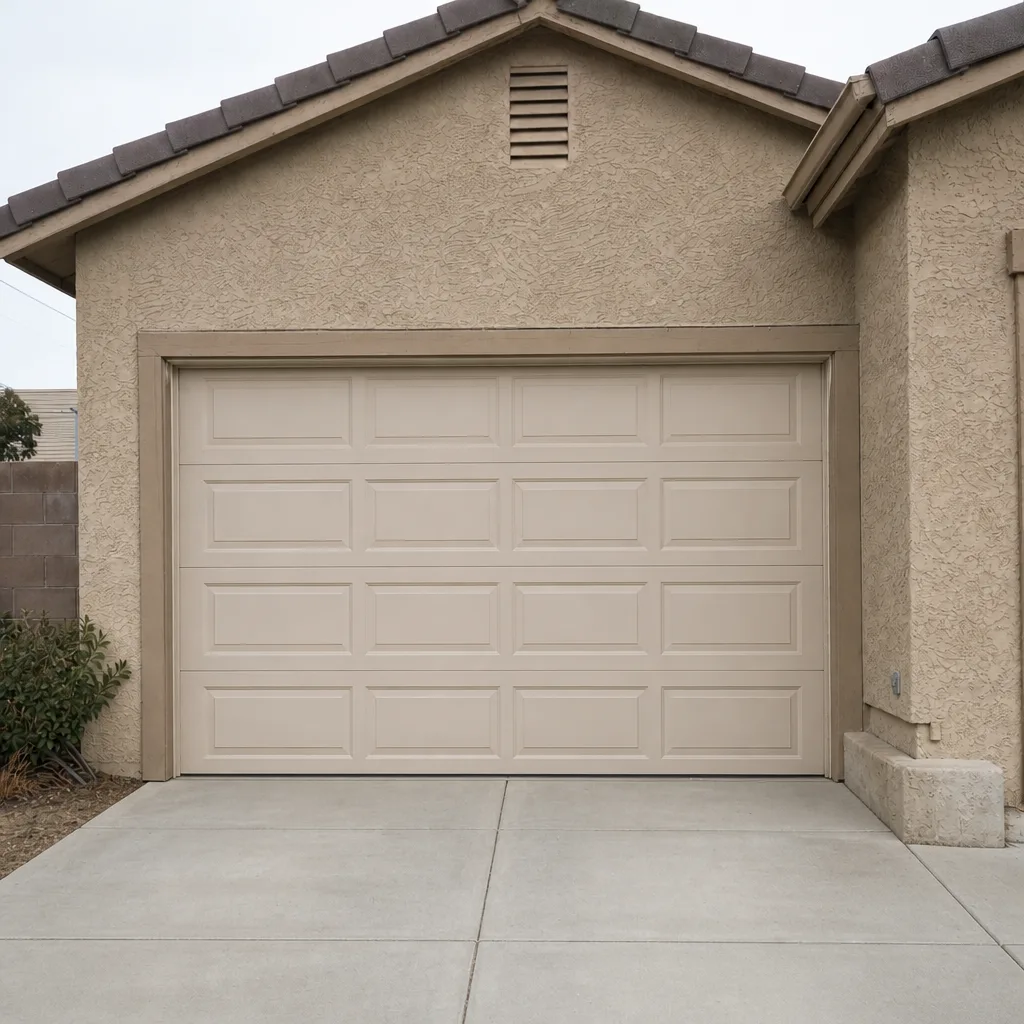 After
How to Program a Garage Door Opener in Boulder City, NV
Programming a garage door opener depends entirely on which remote type you have. If your opener was made before roughly 2000, the remote almost certainly uses fixed-code DIP switches, and you program it by matching the physical switch pattern in the remote to the pattern in the opener head or wall unit. If your opener is newer, it uses rolling-code technology and you pair it by pressing a Learn button and then the remote. Knowing which one you’re holding is the whole ballgame, and every video tutorial assumes you already have the second kind.
That gap matters here. In Boulder City, a good share of the garages we work on still run openers from the 1990s or early 2000s, mounted on the original Bureau of Reclamation-era structures. Those units are perfectly serviceable, but their programming steps look nothing like what a LiftMaster or Chamberlain how-to shows you. If you can’t identify your unit, call Mainspring Garage Door Co. Boulder City at (833) 605-8582 and describe it – we can usually identify it by sound, brand, and the color of the learn indicator and walk you through the right sequence without a service visit.
First, Figure Out Which Type of Remote You Have
Before you touch a single switch, look at the remote itself. Pop the battery cover off – most slide or pry open without tools. What’s inside tells you everything.
- Fixed-code DIP switch remote: You’ll see a small block of tiny plastic switches, usually 8 to 12 of them, numbered and set to up or down positions. No Learn button on the opener. This is the older system, and it’s common on Craftsman and Raynor units from the 1990s still mounted in Boulder City garages.
- Rolling-code remote: No switches inside. Instead you’ll find a Learn button (often red, purple, or yellow) on the opener motor head, or a “Program” button on the wall console. This is the modern standard.
- Unsure? Look at the opener head for a brand name and model sticker. A photo or a clear description over the phone is often enough for us to tell you which system you’re dealing with.
If you have a rolling-code system and want a full walkthrough of pairing remotes and keypads, our Garage Door Opener Repair & Installation in Boulder City page covers the modern procedure in detail. What follows here is the part those guides skip.
The DIP-Switch Programming Procedure (The Step Every Video Skips)
Fixed-code systems are simple once you understand the logic: the remote and the receiver in the opener must carry an identical switch pattern. There’s no pairing, no handshake, no button to press. You copy the pattern.
- Find the DIP array in the opener. On most older units it sits behind a small access panel on the motor head, or inside the wall-mounted console. It’s a matching block of switches set to a factory pattern.
- Record that pattern exactly. Note which switches are up and which are down, left to right. A phone photo works. Getting one switch wrong means the door won’t respond, and you’ll swear the remote is broken.
- Open the remote and match it bit for bit. Set each remote switch to the same up/down position as its counterpart in the opener. Same order, same count.
- Test from outside the door. Close the door, step back to a normal distance, and press the button. If nothing happens, recheck the pattern before assuming a hardware failure.
- For a keypad or second remote, repeat the same copy-the-pattern step. Every remote on that opener must match the same base pattern.
One honest caveat: fixed-code systems are less secure than rolling-code by design, because the code never changes. If you’re staying in your home long-term, replacing an old opener with a modern rolling-code unit is a reasonable upgrade. Opener installation runs $250-$550 in the Boulder City market, and we’re factory-familiar with Amarr, Wayne Dalton, Craftsman, and Raynor units if you want to match an existing door and track setup.
Why Boulder City Openers Lose Their Programming in Summer
Something local homeowners run into that no national guide mentions: rolling-code openers in extreme heat sometimes drop their memory during a power interruption. When grid demand peaks on the hottest days, brief brownouts and outages are common, and a memory reset can leave your remotes unpaired when the power returns. If your door suddenly stops responding after a summer outage, re-program the remote before you assume the opener failed.
For older openers mounted with low-headroom brackets – which is most of the original single-bay garages in Boulder City, where openings often measure 6’6″ to 7′ – there’s an extra step after a memory reset. Some of these units require a manual force calibration once the remotes are paired again. Skip it, and the door can reverse on the modified track geometry because the opener no longer knows how much force the shorter travel needs. The manual force adjustment is one of the few steps we’d rather do for you than talk you through blind, since a door that reverses mid-travel is a genuine safety concern.
Common Local Scenarios We See
Every garage in this town has its own history, and the programming snags tend to follow the housing stock. A few that come up again and again:
Original mid-century garages with unknown openers
Plenty of Bureau of Reclamation-era cottages around the historic district still have openers nobody can name – no sticker, no manual, just a plain metal head. Those are usually fixed-code units. If you can describe the housing, the color, and whether there’s a Learn button, we can usually pin it down on the phone.
Desert dust in the tracks
Fine desert dust collects in tracks and hinges faster here than in wetter climates, and a sticky door can look like a programming problem when it’s really a travel or force issue. If the door moves but reverses or stops partway, the remote is likely fine. Our home page outlines what we handle across the board.
Historic-district door replacements
If you’re replacing a faded wood door – and many in the historic district need it – the design review requirement means matching vintage styles rather than dropping in a modern steel door. Pairing a new opener to a replacement door is straightforward; getting the door approved first is the part that takes patience. New door installation here ranges from $700 to $2,200 depending on style and whether custom modification is needed for low clearances.
What It Costs If You’d Rather Have It Done
Programming a remote is a free DIY job when your system cooperates. When it doesn’t – or when a reset turns into a force-calibration problem – here’s what the work runs in Boulder City:
| Service | Typical Range |
|---|---|
| Opener repair | $120-$320 |
| Opener installation | $250-$550 |
| Track realignment | $120-$240 |
| Roller replacement | $110-$220 |
We state the flat price before any work starts, so there are no surprises on the bill. Every completed job carries the 90-Day Done Right Promise in writing – if it isn’t right, we come back at no charge. A $50 discount applies to any repair over $250, and seniors and veterans keep a standing 5% discount.
FAQs
Open the remote and look inside: a block of tiny numbered switches means DIP-switch fixed code, while no switches and a Learn button on the opener means rolling code. If there’s a Learn button, it’s rolling code. If there isn’t, it almost certainly isn’t.
Usually not. Rolling-code openers in Boulder City often lose their remote pairing during a summer brownout and just need re-programming once the power is back. Re-pair the remote first, and if the door still reverses or stops partway, the force calibration may need resetting.
In many cases, yes. If you can tell us the brand if visible, the color of the opener head, and whether there’s a Learn button or DIP array, we’ll walk you through the correct procedure at no charge. Call (833) 605-8582 and describe the unit.
For a long-term home, often yes, since fixed code never changes and offers less security. Opener installation in Boulder City typically runs $250-$550, and a modern rolling-code unit pairs cleanly with remotes and keypads. We’ll give you an honest read on whether the upgrade makes sense for your door and track.
When Programming Stops Being a DIY Job
Most remote programming you can handle yourself with the steps above. But when a door reverses unpredictably, a force calibration needs adjusting on low-headroom track, or an opener won’t accept a remote no matter what you try, it’s worth having a trained eye on it – a door that reverses mid-travel is a safety issue, not just an annoyance. Our techs arrive with the parts already on hand, most jobs finish in one visit, and we back the work in writing.
If you’d rather have it looked at, Mainspring Garage Door Co. Boulder City offers a no-pressure assessment in Boulder City – call (833) 605-8582.
Written by the team at Mainspring Garage Door Co. Boulder City, serving Boulder City, NV.