
Last updated November 18, 2026
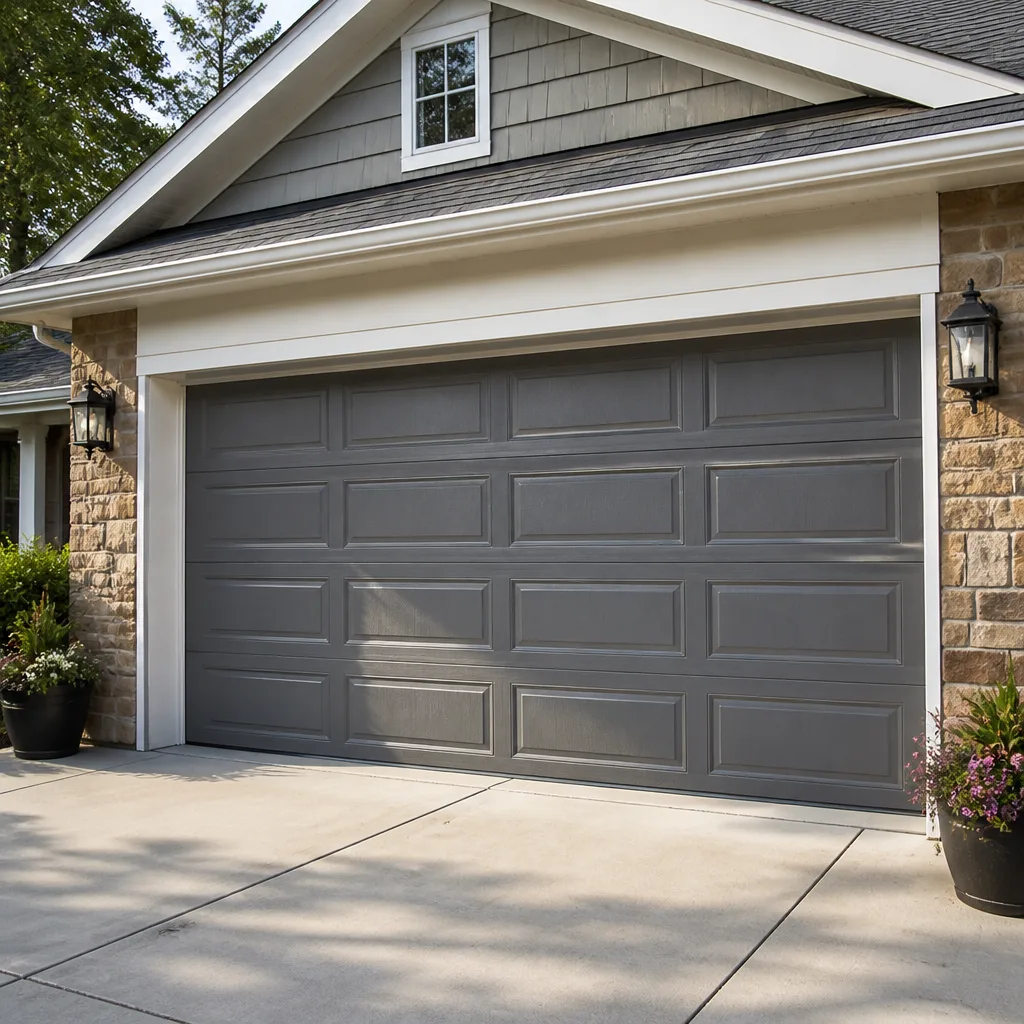 Raised-panel steel
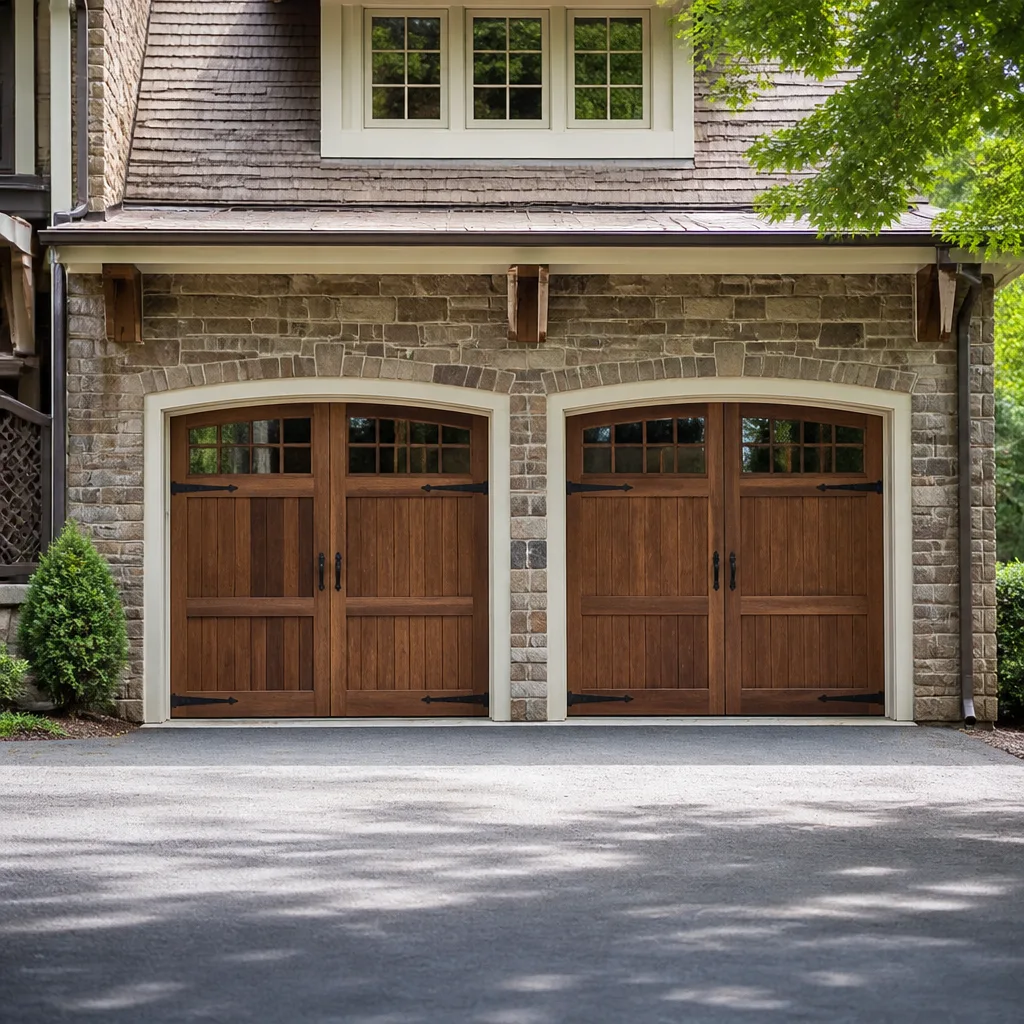 Carriage house
 Modern flush
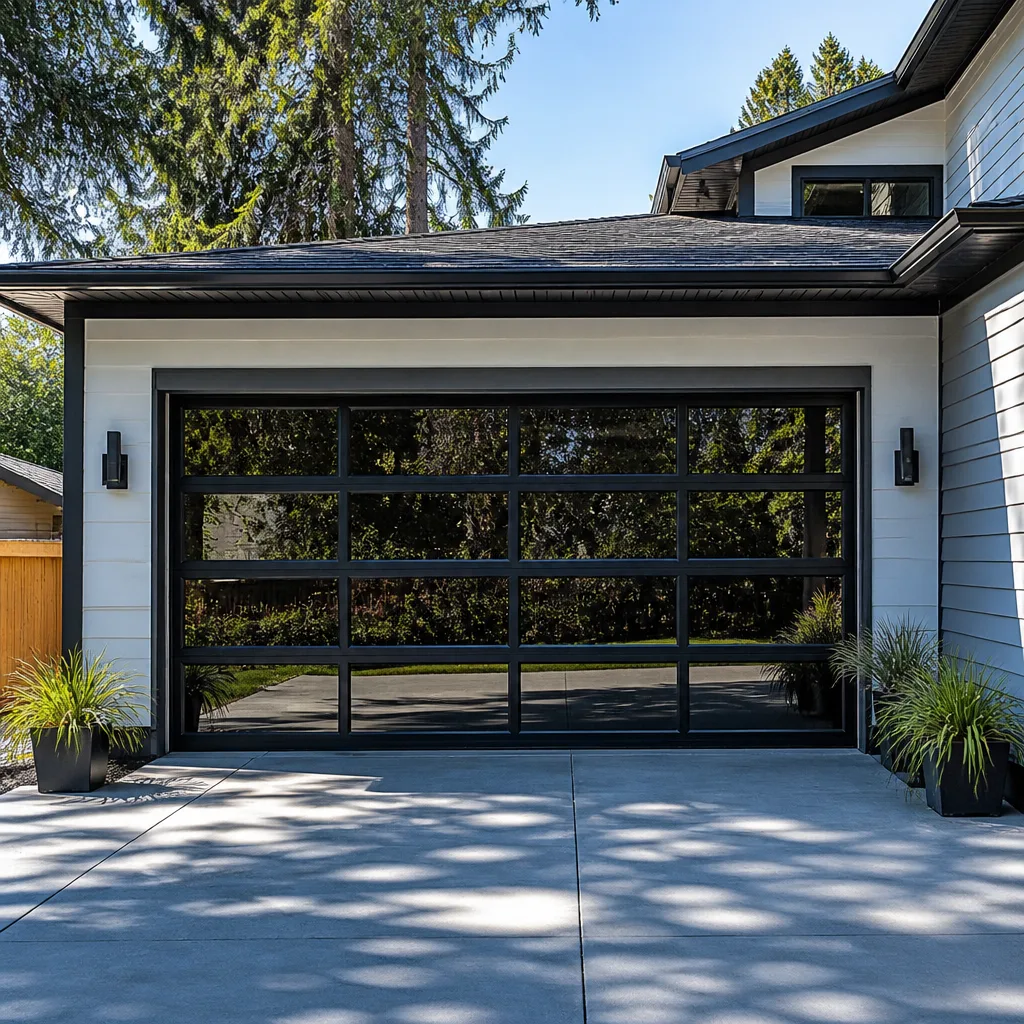 Full-view glass
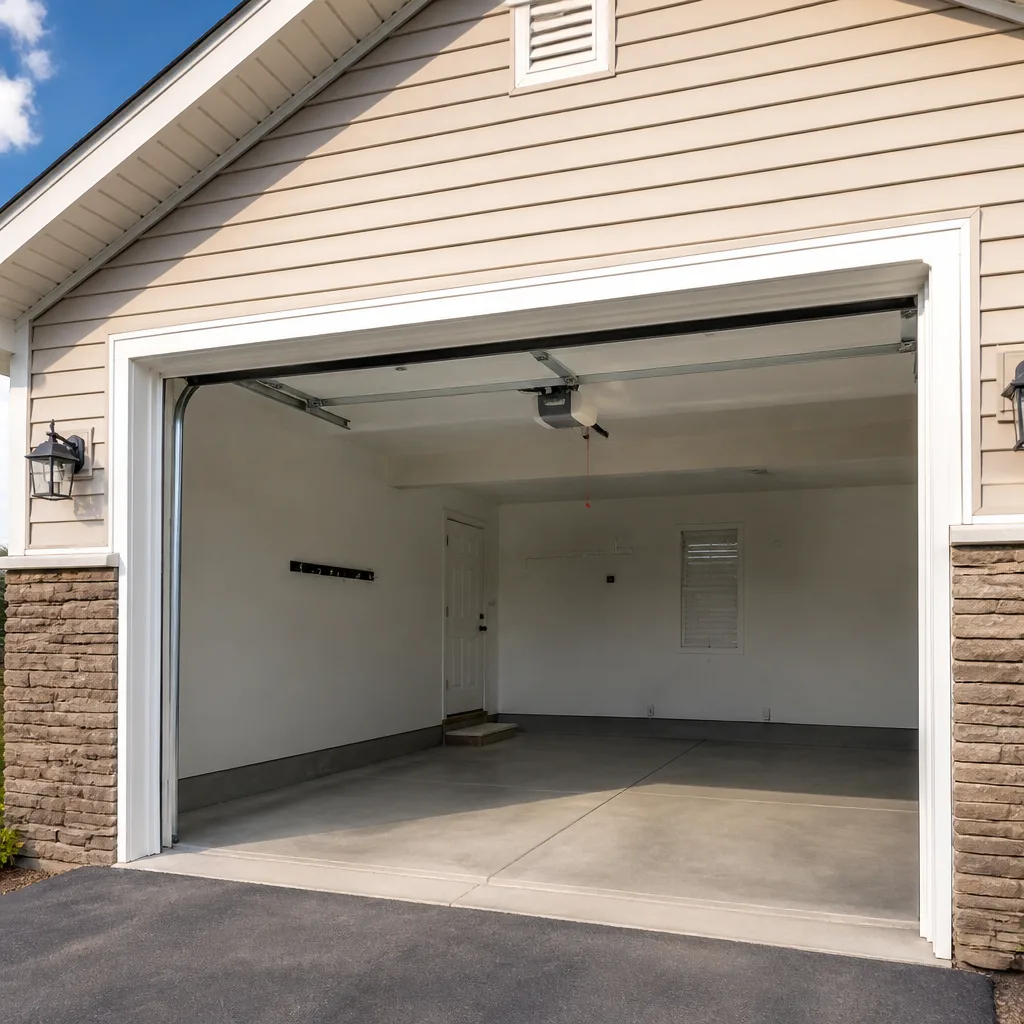 LiftMaster openers
 Chamberlain openers
Full 25-point door and opener safety check with every visit - springs, cables, rollers, tracks, and your LiftMaster or Chamberlain opener included
You get a price before we start. It does not change when the pro arrives.
Get your free estimateDIY vs Professional Emergency Garage Door: What’s Safe to Do Yourself
A broken torsion spring is dangerous on a calm Saturday afternoon. At 11 PM, with the car trapped inside, the dog loose in the yard, and a flight to catch at six, it’s a different risk calculation entirely. Emergency conditions strip away the two things that make garage door work survivable: time to think it through, and a stable starting position. Homeowners in Boulder City call us after these nights more often than you’d guess, and the story usually ends the same way. This guide maps exactly where the line between safe and dangerous moves when the pressure is on.
Quick Answer
In a true emergency, only two garage door fixes are safe to handle yourself: pulling the manual release to disengage the opener, and wiping or realigning a photo-eye sensor. Anything involving springs, cables, tracks, panels, or the door itself is a professional job, and it stays one at night. If your door is sitting on the floor with something visibly broken or bent, the DIY window is closed. Call Mainspring Garage Door Co. Boulder City at (833) 605-8582 and we’ll be honest about whether you need us tonight.
Styles & brands we work with
- Raised-panel steel
- Carriage house
- Modern flush
- Full-view glass
- LiftMaster openers
- Chamberlain openers
Table of Contents
- Why Emergency Pressure Changes the DIY Calculation
- What’s Actually Safe to Do Yourself at 2 AM
- The Two Emergency Scenarios Where DIY Is Preferred
- The Cascade Failure Risk Nobody Warns You About
- The “I’ll Just Hold It Up” Scenario
- The Clear Standard: When the DIY Window Is Closed
- Boulder City Conditions That Make Emergencies Worse
- Common Mistakes to Avoid
- When to Call a Professional
- Frequently Asked Questions
Why Emergency Pressure Changes the DIY Calculation
Garage door work in normal conditions has two built-in safety margins. The first is time: you can watch a video, read a diagram, and stop to reconsider. The second is stability: the door rests where you left it, and you control the pace. An emergency removes both at once. The door is in an unexpected position, the light is bad, the stress is elevated, and someone is waiting in the car.
We’ve seen the difference it makes. A homeowner who would never touch a torsion spring on a Sunday morning will try to lift a jammed door at midnight with a screwdriver and a flashlight. The confidence isn’t earned. It’s borrowed from adrenaline.
Here’s the core problem with torsion springs specifically. A standard residential torsion spring carries the full weight of the door, which on a typical single-car door in Boulder City runs 130 to 180 pounds. When the winding cone lets go, the spring unloads with enough force to break a wrist or worse. There’s no way to gauge that from the outside. It looks like a coil of metal. It behaves like a loaded spring.
The stakes climb further with age. Many homes off Nevada Way and the older blocks near Boulder Dam Park have doors installed decades ago, and the springs, cables, and brackets have been cycling thousands of times since. Old hardware fails more suddenly than new hardware. That’s a fact of the trade.
Add up time pressure, poor light, worn parts, and a door in an unfamiliar position, and the emergency has turned a manageable repair into a genuine safety hazard. Here’s the framework you should have in your head when the phone rings at 11 PM.
What’s Actually Safe to Do Yourself at 2 AM
This list is short by design. At 2 AM, with a flashlight and no research time, these are the operations that require no tools and no proximity to loaded hardware.
- Pull the manual release cord. On every opener, a red or orange cord hangs from the carriage. Pull it down with a steady pull, not a yank. That disengages the door from the motor and allows manual operation. This is the most important emergency skill a homeowner can know.
- Check the circuit breaker. If nothing happens when you press the wall button, walk to the panel and look. A tripped breaker on the opener circuit can look exactly like a dead opener.
- Check for a locked door. Some garage doors have a manual slide lock or a deadbolt at the side. If it’s engaged, the opener will strain and stop. That’s normal.
- Inspect the photo-eye sensors. If the door starts to close and reverses immediately, the sensors are the most common culprit. Look at both lenses at the bottom of the track. Wipe them with a clean cloth. If they’re pointed slightly off, loosen the wing nut and point them toward each other.
- Clear debris from the door path. A small stone, a rake, a soccer ball. The door reverses on contact with anything it meets.
None of this requires lifting the door, touching the springs, or working under it. All of it can be done with the lights on and the door stationary.
The Two Emergency Scenarios Where DIY Is Preferred
We’re usually the ones telling homeowners to stop and call. But there are two emergency situations where picking up the phone is the wrong move, and handling it yourself is both safer and faster. Those are power outages and misaligned sensors.
Power outage with a car inside
This is the classic scenario. The power’s out through the whole block, your car is inside, and there’s somewhere you need to be. The door isn’t broken. It’s just disconnected from power. The manual release cord is designed exactly for this moment.
Here’s the correct sequence:
- Locate the red or orange release cord hanging from the opener rail.
- Pull it straight down until you feel it disengage. Don’t yank it sideways.
- Lift the door slowly by hand. A properly balanced door should lift with reasonable effort. If it feels like you’re lifting a car hood with the hood still latched, stop. The springs may be broken, and manual lifting under a broken spring is a different situation entirely.
- After the car is out, lower the door gently. Don’t let it drop.
- When power returns, re-engage the carriage by running the opener until it reconnects, or by hand if your model allows it.
This is the one real self-service operation on the list. Learn it before you need it. Have someone in the household practice it on a calm afternoon so the first attempt isn’t at 5 AM in the dark.
Photo-eye sensor realignment
If the door closes partway and reverses, and you can see the sensor lens has been bumped, this is a five-minute job. Wipe the lens. Aim the two sensors at each other. Make sure the little indicator lights on both are lit without flickering. That’s it. You’ll know it’s fixed the moment the door closes all the way.
The sensors on LiftMaster and Chamberlain models are the most tolerant of small misalignments; Genie sensors tend to be slightly more finicky and may need more careful aiming. All of them will refuse to close if a cobweb is thick enough on the lens, which happens more in Boulder City than you’d think during wind season.
The Cascade Failure Risk Nobody Warns You About
Here’s what happens when an amateur “fixes” one symptom of a broken spring without understanding the system: every part they touch becomes a new failure point. The springs were never the only thing holding the door in balance. The cables, drums, hinges, rollers, and brackets all share the load in a careful choreography.
Consider a common sequence. The torsion spring breaks. The homeowner notices the door won’t lift, so they disconnect the opener and force the door up by hand. The cables slack, the door goes crooked, and one cable pops off its drum. Now the door is jammed at an angle with tension sitting on the wrong side. The homeowner pushes harder. The door slips off a hinge. Now the panel is bent, the track is out of alignment, and what was a $250 spring repair has become a several-hundred-dollar structural job.
We’ve seen this exact cascade play out on a door in Boulder City where the homeowner was trying to get to the airport. The spring was $250. The bent panel, cable, and track repair came to just under $900. That’s the cost of a “quick fix” that made things worse.
The physical mechanism is straightforward. Garage door systems are balanced. Break one part, and the load redistributes to the other parts. Force the door through it, and the other parts fail too. The springs, cables, and drums work together, not independently.
This is why the honest answer to “can I fix this myself?” is almost always no. It’s not that we want the call. It’s that the system is designed to punish partial repairs.
The “I’ll Just Hold It Up” Scenario
Picture the moment: the door is stuck halfway, the car is trapped, and someone says “I’ll just hold it up while you reverse out.” If we could eliminate one sentence from every emergency phone call we take, it would be that one.
The reason it fails is simple. A garage door that’s stopped halfway isn’t just sitting there. It’s in an unstable position because something in the system failed. Springs, cables, or the opener gave out. The door’s own weight is being held by whatever’s left. Add a person beneath it, and the system’s failure mode becomes a person’s injury.
We’ve heard the stories too many times. The door comes down on hands, on shoulders, on a child who wandered into the frame. In one call, the door came down on a wheelbarrow that had been positioned to prop it up, and the door stayed partially open until we arrived, but the homeowner was lucky the bar didn’t buckle. A few have not been lucky.
What to do instead: leave the car inside. Lock the door from the outside (if you can safely walk around), or leave a note not to enter. Call us, or call a neighbor to drive you. The car will be there in the morning.
A damaged door is expensive to fix. A person under a falling door is a medical bill that dwarfs any garage door repair. If you take one thing from this guide, take that.
The Clear Standard: When the DIY Window Is Closed
This is the standard we want every homeowner to carry in their head, no matter the hour.
If the door is on the floor and you can see something bent, broken, or out of place, the DIY window is closed. Full stop.
Not “maybe.” Not “just this once.” Closed. This applies regardless of what’s broken, what the door looks like, and how badly you need the car out. The moment you can see bent metal, snapped cables, or a torsion spring hanging slack, you call a professional. Tonight, tomorrow, whenever we can get there, but not by hand.
Here’s why the standard needs to be this clear. Every emergency call we take has some version of “I thought I could just…” attached to it. The “just” is doing a lot of work in that sentence. The homeowner thought they could just lift it, just push it, just nudge the spring back into place. In normal conditions, they might have been right. In emergency conditions, they weren’t.
The line is not about expertise. It’s about the conditions. At 2 AM, with a flashlight and stress, your judgment is measurably worse than it would be on a Saturday afternoon. That’s not a personal failing. It’s how humans work under pressure. Which means the decision has to be made in advance: if the door is down and visibly broken, call.
This is exactly the situation we keep the trucks stocked for. If you call us at midnight in Boulder City, we’re the ones on the phone, and the tech will show up with the right springs and cables on the truck. Garage Door Repair in Boulder City is what we do. Most nights, one visit is all it takes.
Boulder City Conditions That Make Emergencies Worse
A few things about Boulder City specifically shift the calculation on garage door emergencies.
First, the desert dust. The wind that kicks up through the Mojave between March and May carries fine sand that works its way into roller bearings, track grooves, and photo-eye lenses. We see far more “the door won’t close” calls in spring than in any other season, and most of them trace back to a dirty or misaligned sensor. The obvious fix is to wipe the lenses at the first sign of trouble.
Second, the summer heat. Torsion springs are under tension constantly, and the temperature swings in a Boulder City garage can reach 45 degrees between midday and midnight. That cycling stresses the metal over the years. Doors installed 15 or more years ago are near the end of a typical spring’s life even if they look fine, which is why we get a lot of sudden spring failures in July and August.
Third, the older housing stock around historic downtown and the streets near the Boulder City/Hoover Dam Museum. Many of those doors are original or near-original, and parts for older Clopay and Wayne Dalton models aren’t always available off the shelf. When something lets go on a 20-year-old door at night, the fix means getting the right parts, not necessarily a rush job with whatever’s on hand. We keep common parts stocked, and if we don’t have it, we’ll tell you exactly when we will.
Fourth, the two-lane reality. If your car is blocked and you need to replace it, the nearest options outside Boulder City mean a long haul. Planning the emergency, rather than reacting to it, pays off more here than in a larger metro where an Uber is five minutes away.
Common Mistakes to Avoid
- Trying to lift a door with a broken spring by hand. This is the single most common injury path we hear about. The door feels impossibly heavy because it is: the springs are the counterweight. Don’t test your strength. Test your phone.
- Pulling the manual release while the door is open. If the door is up when you pull the release, it can come crashing down because the opener is no longer holding it. Always pull the release with the door fully closed.
- Using a screwdriver or pliers on the torsion bar. The winding cone is under enough tension to break a wrist when it slips. There’s no safe improvised way to wind it. Ever.
- Holding the door up with a ladder, chair, or wheelbarrow while someone drives out. These props give a false sense of security. When the door comes down, the prop shears, and the person underneath takes the weight.
- Forcing the door open when it’s stuck at an angle. This is where bent panels and snapped cables come from. If it won’t open cleanly, stop and call. Forcing it turns a small repair into a big one.
- Ignoring a sensor problem for a week. A misaligned sensor that reverses the door may be a two-minute fix today and a dead opener tomorrow. The motor runs the door, the door hits resistance, the motor reverses, and the gear wears out over repeated cycles. Fix the sensor the same day.
- Calling the cheapest number in a panic. In an emergency, the price matters less than the workmanship. We’ve seen plenty of Boulder City homeowners pay for a “quick fix” at 2 AM that needed to be redone the following week.
When to Call a Professional
Call us when you see a broken spring, a snapped cable, a bent panel, a track that’s out of alignment, an opener that’s smoking or making grinding noises, or a door that’s stuck in an unexpected position. Call us if the door is on the floor and something visible failed. Call us if the opener runs but the door doesn’t move, or if the door reverses partway through closing and the sensor isn’t the problem.
The Garage Door Opener in Boulder City work we do most often is diagnosis under pressure. The door’s not behaving, and the homeowner can’t tell whether it’s the opener, the spring, or the sensor. That’s the call we want to take. Call (833) 605-8582. Mainspring Garage Door Co. Boulder City offers free estimates, and we quote the flat price before any work begins.
If you’re considering a replacement rather than a repair, our Garage Door Installation in Boulder City page lays out the scheduling process and what to expect. New doors are a planned job, not an emergency one. We’ll measure, order, and schedule you for a day that works.
Frequently Asked Questions
It’s safe only if the door is balanced and nothing is broken. Pull the manual release with the door fully closed, then lift slowly. If it feels heavier than usual or won’t stay up, the springs or cables have failed and you should stop and call us at (833) 605-8582. Forcing a broken door by hand is how most emergency injuries happen.
Emergency repairs in Boulder City typically range from $195 to $425 depending on what failed and the time of day, with a broken torsion spring usually in the $250 to $340 range and cable replacement around $180 to $260. We quote the flat price before any work begins, so the number you agree to is the number you pay. Call (833) 605-8582 for an exact quote. Estimates are free.
In most cases, yes. We answer every call with a live person, and when the door is stuck we work to get someone out that same day or night. Call (833) 605-8582 and we’ll give you an honest window. Same-day scheduling on repairs is a standing part of how we run.
No, not without your approval. The flat price is stated and agreed before any work starts. If we find a second problem on the door, we tell you what it costs and you decide. We don’t start work and surprise you on the invoice. That’s the square deal we offer.
Yes. The technicians we send are background-checked, uniformed, and trained as journeymen under our K.E.Y.S. values code, with up to 10 years of experience each. Every job we complete is covered by the 90-Day Done Right Promise: if the work isn’t right, we return at no charge, in writing. No arguing, no paperwork to sort through. Call (833) 605-8582 if you’d like to talk it through before scheduling.
If we replace a spring, we match it to the door’s weight and cycle rating so it’s set up to last. A correctly rated spring on a typical residential door lasts 10,000 cycles or more, which is roughly seven to ten years of daily use. If a spring fails again within 90 days of our visit, the Done Right Promise covers it. We’ll come back and make it right.
The Bottom Line
Emergency garage door work has one clear line. Pulling the manual release in a power outage, or wiping and realigning a photo-eye sensor, are safe to do yourself. Anything involving springs, cables, tracks, or panels can wait until a professional arrives. If the door is on the floor with something visibly broken or bent, the DIY window is closed. The most expensive mistake we see in Boulder City isn’t a wrong tool. It’s a homeowner trying to save a call and ending up with a bigger repair bill or a trip to urgent care. When in doubt, call. That’s what the number is for.
Call (833) 605-8582 for a free estimate. We’re here for the calm Saturdays and the panicked 2 AM calls alike. Same number, same answer. And when you’re ready to plan a bigger job, our Mainspring Garage Door Co. Boulder City home page has the rest of what we do.
Written by the team at Mainspring Garage Door Co. Boulder City.
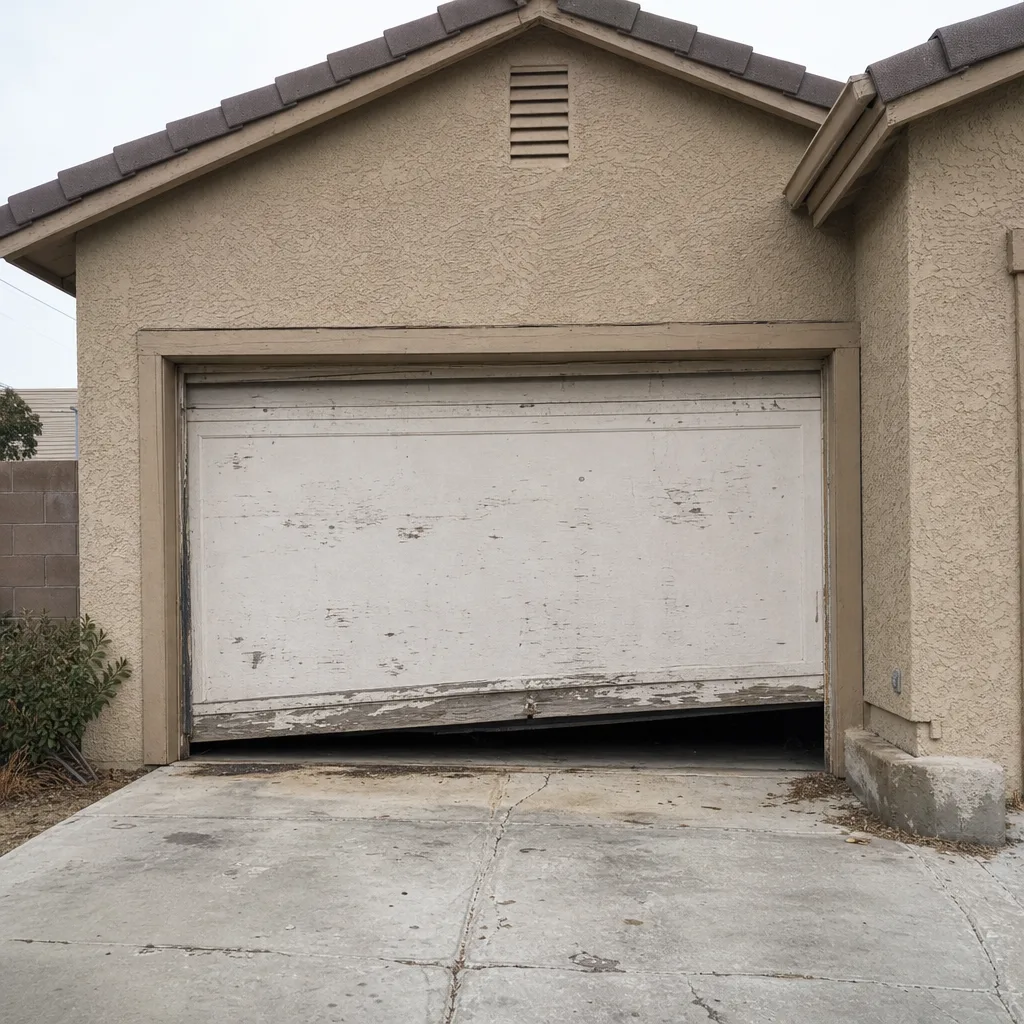
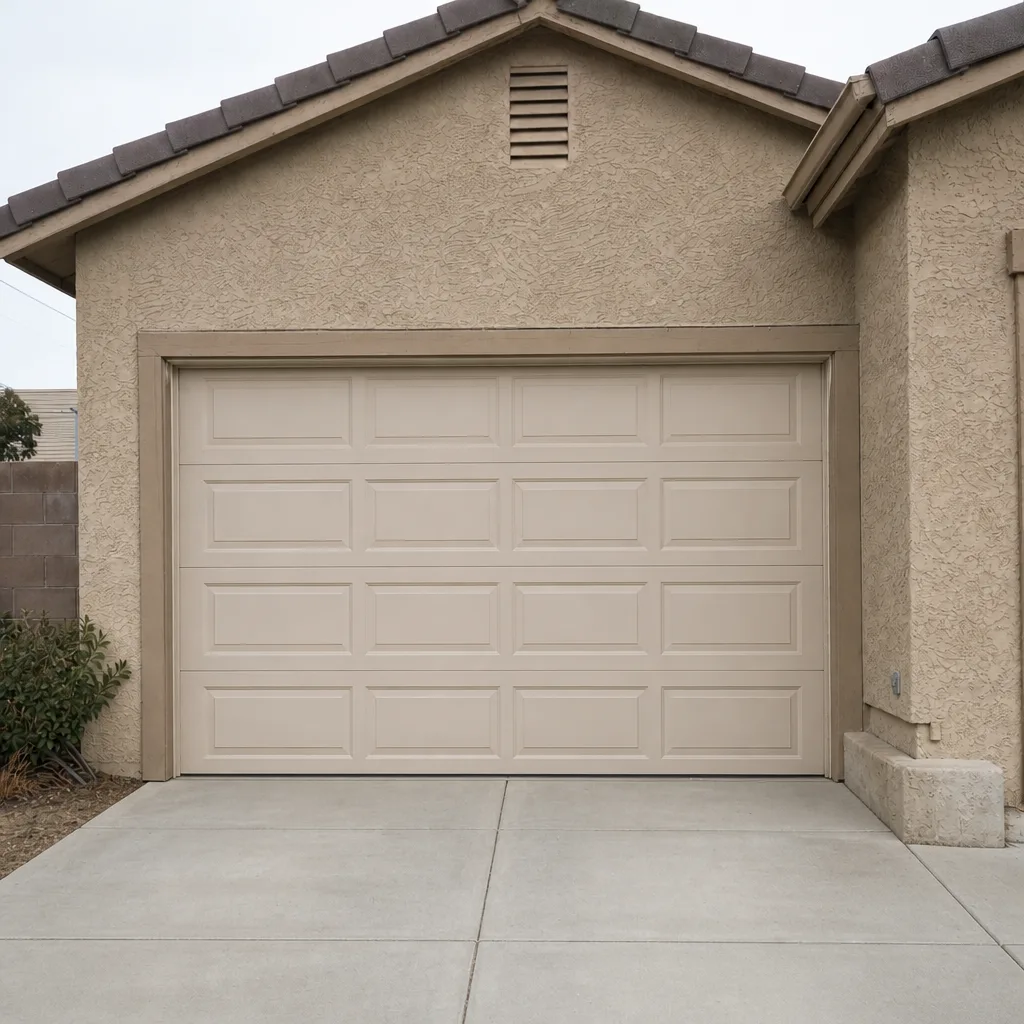
See the difference
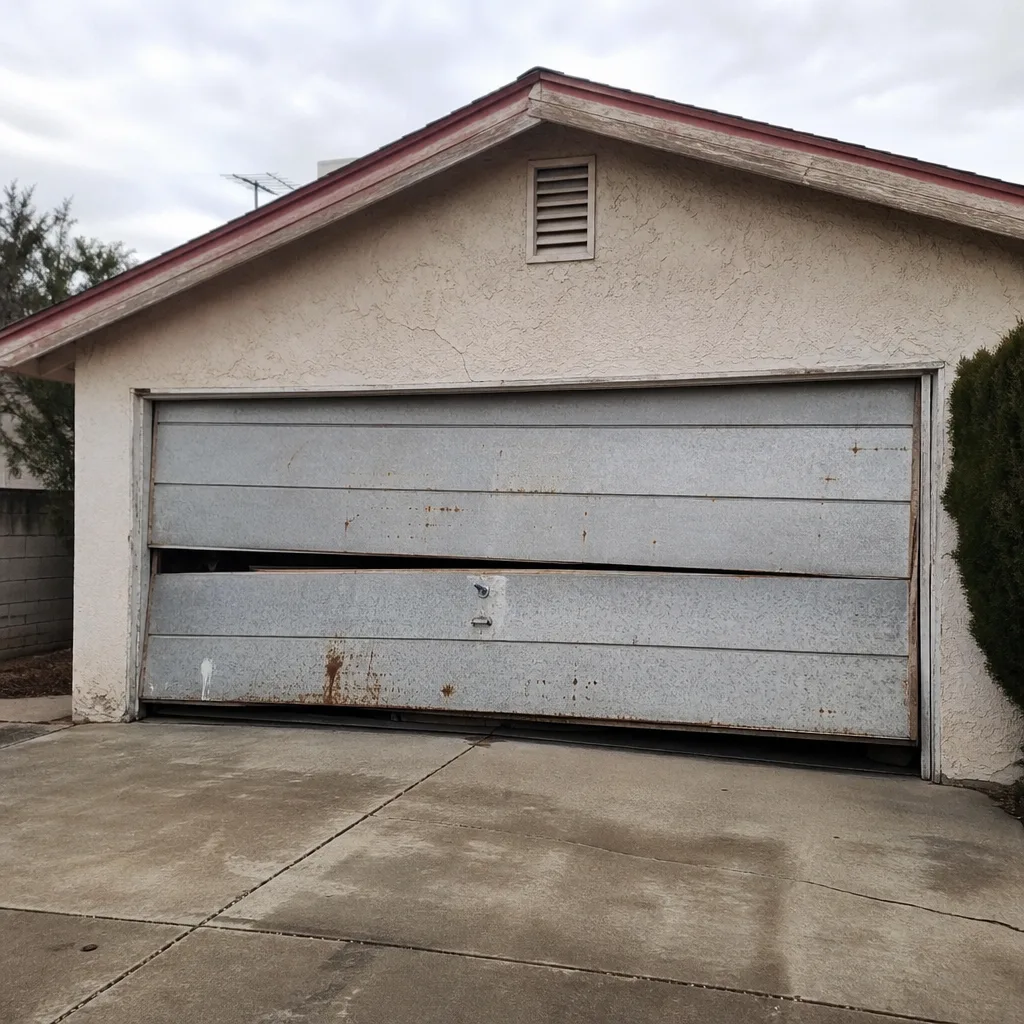 Before
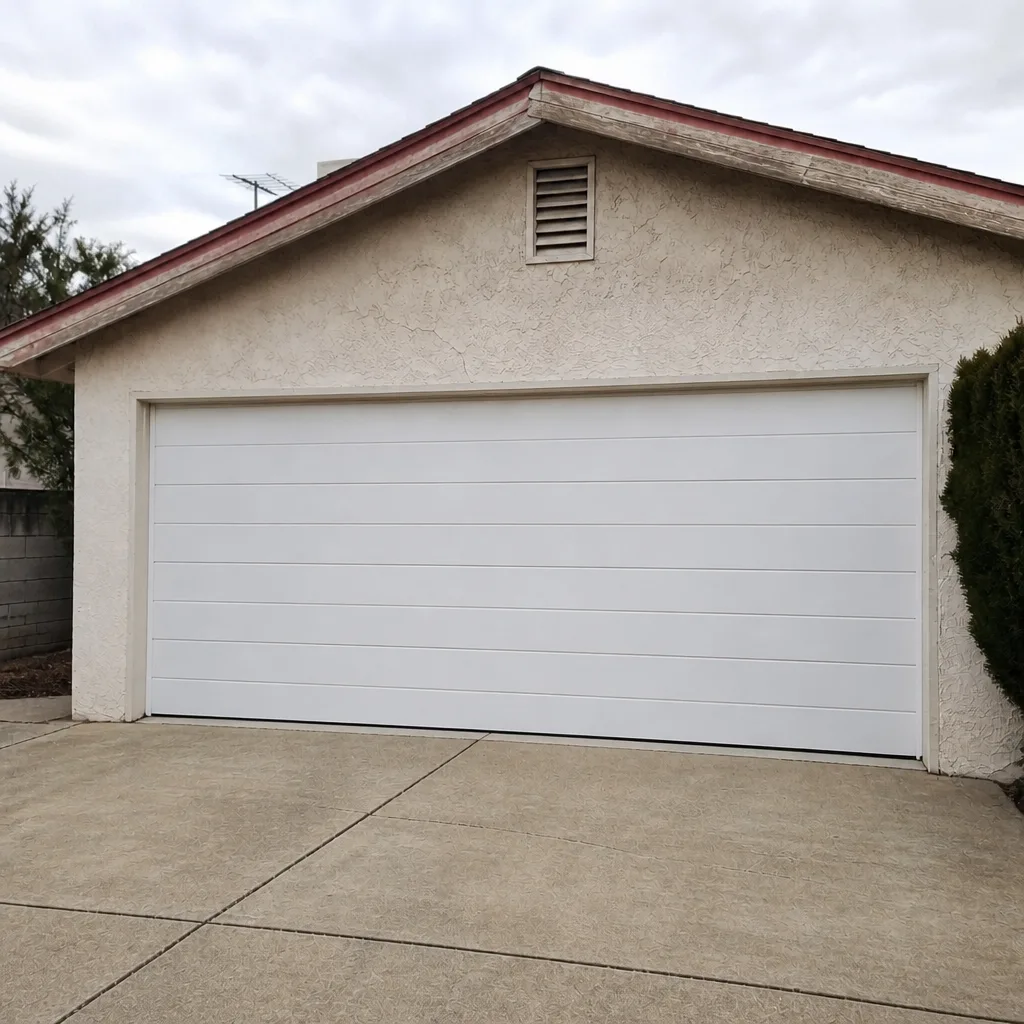 After
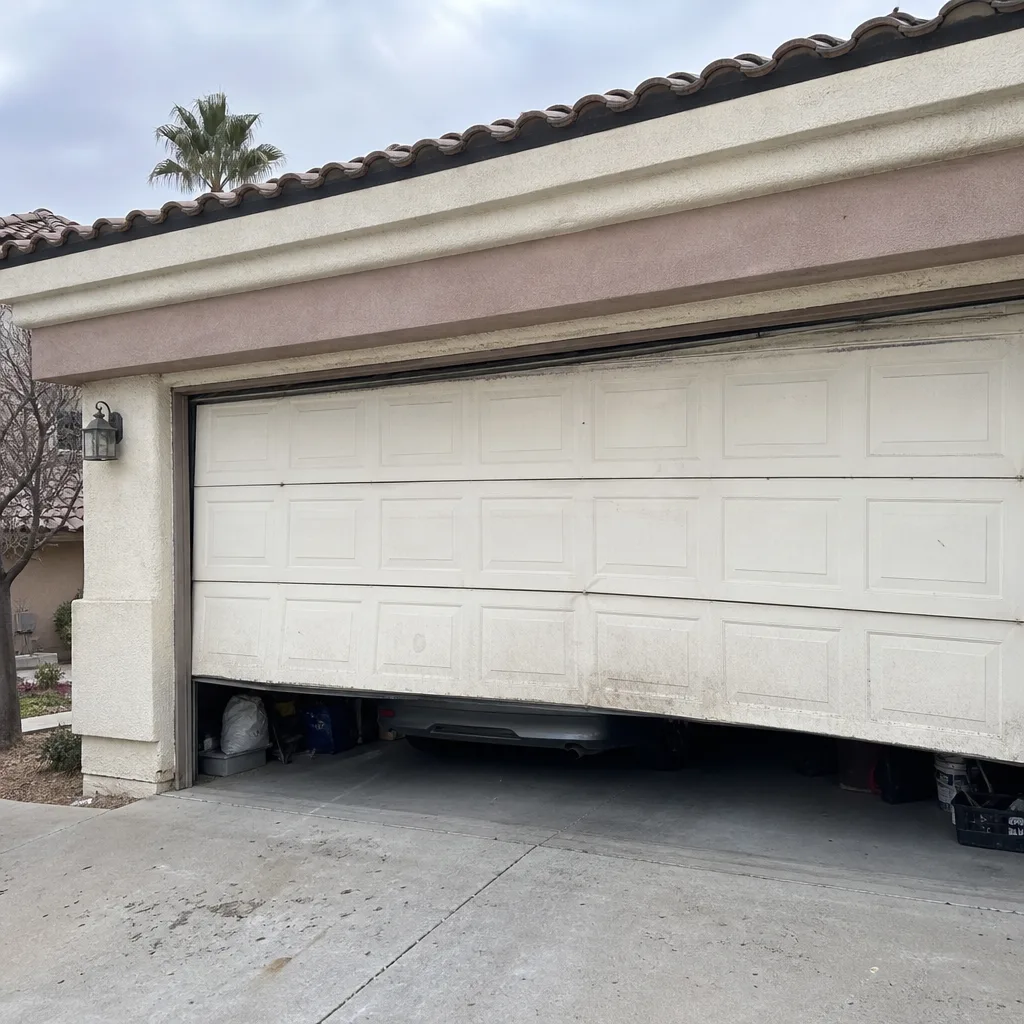 Before
 After
 Before
 After