
Last updated November 18, 2026
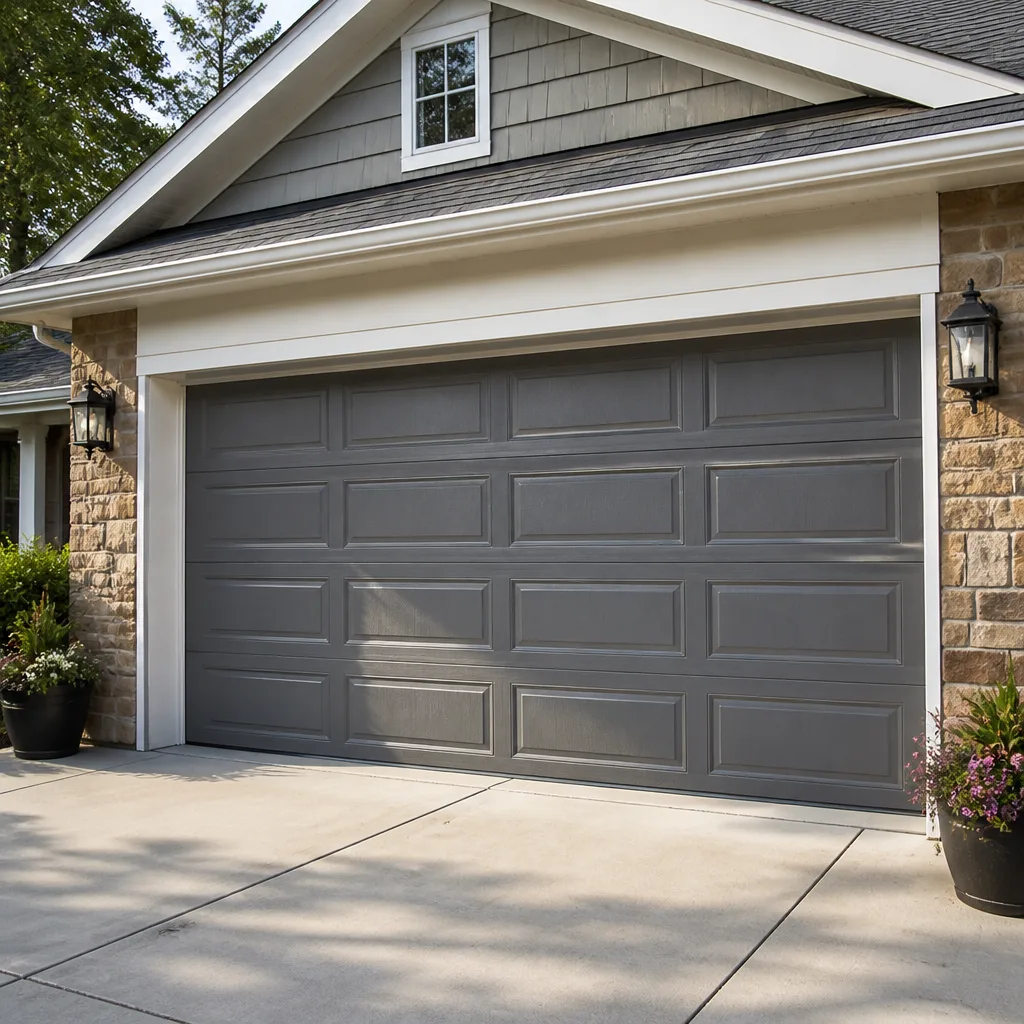 Raised-panel steel
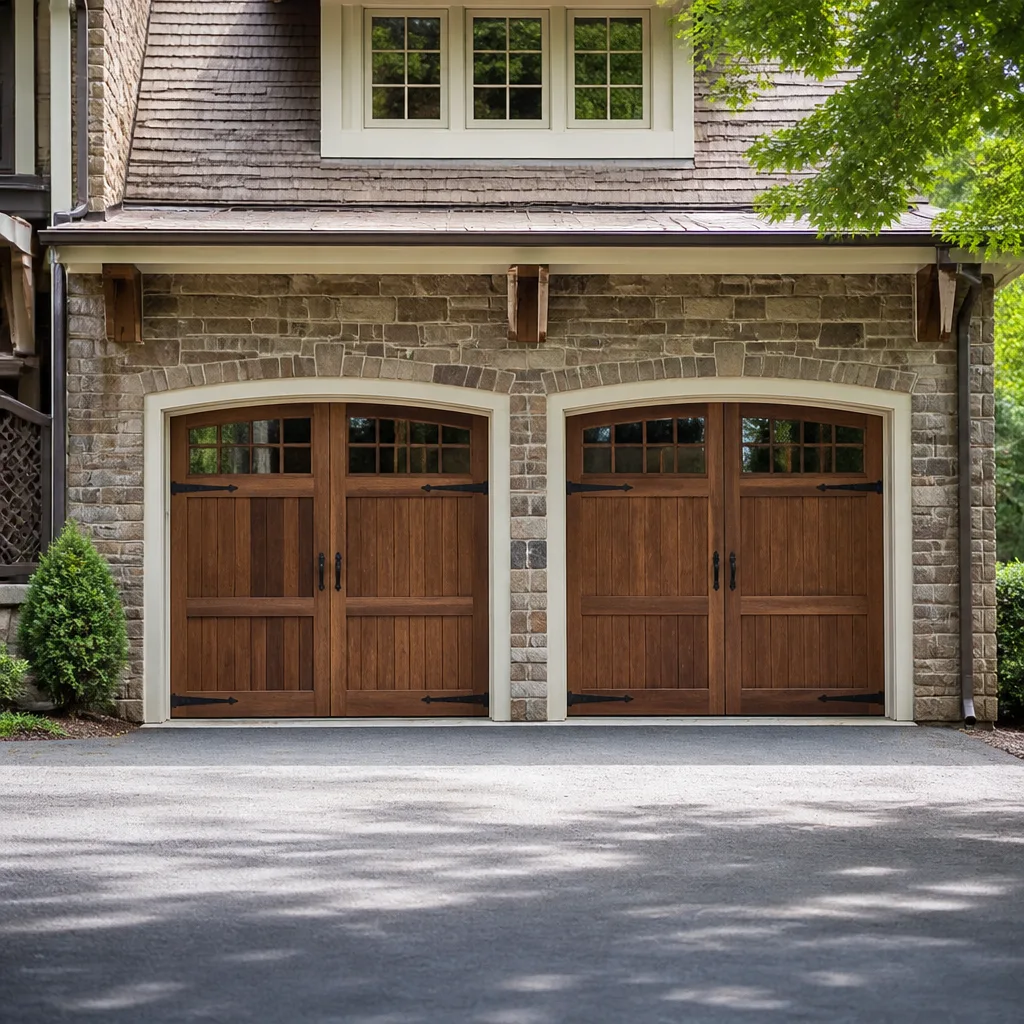 Carriage house
 Modern flush
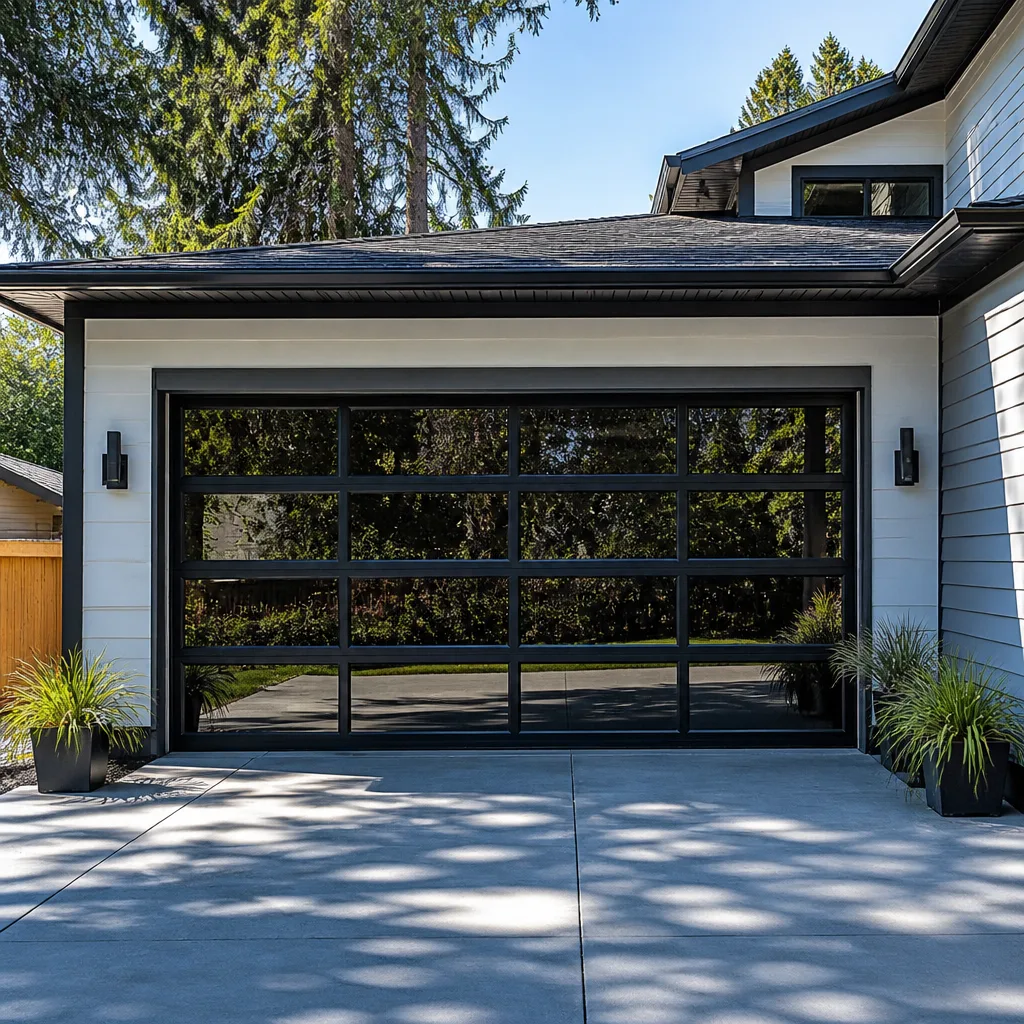 Full-view glass
 LiftMaster openers
 Chamberlain openers
Full 25-point door and opener safety check with every visit - springs, cables, rollers, tracks, and your LiftMaster or Chamberlain opener included
You get a price before we start. It does not change when the pro arrives.
Get your free estimateEmergency Garage Door Warning Signs Every Homeowner Should Know
Nine out of ten broken torsion springs show a visible gap or an audible creak in the 48 hours before they snap. The spring doesn’t fail silently. Most homeowners just don’t know what they’re hearing. A garage door rarely turns into an emergency without first giving a 48-to-72-hour warning window, and those warnings almost never look urgent while they’re happening. They sound like a small creak. They look like a door that lands a little harder than it used to.
This guide covers the signals that predict a breakdown, the slow close test that catches cable and spring failure before it strands you, and a triage system for deciding whether to monitor the door or call today. It’s written from Boulder City, where desert temperature swings put a particular kind of stress on springs and cables. Read it once, and you’ll know what your door is telling you next time it talks.
Quick Answer
The most reliable emergency garage door warning signs are unusual resistance when the door moves, asymmetric or crooked travel, new grinding or snapping sounds under load, and a door that drops the last few inches instead of lowering. Any one of these means a spring or cable has already begun to fail. Stop using the door and have it inspected the same day. A door that snaps a spring with a car under it or a person beneath it is a genuine hazard, and the danger comes from stored tension, not from the door’s weight alone.
Styles & brands we work with
- Raised-panel steel
- Carriage house
- Modern flush
- Full-view glass
- LiftMaster openers
- Chamberlain openers
Table of Contents
- The 48-to-72-Hour Warning Window
- The Slow Close Test: The Best Predictor You Can Run
- When the Door “Falls” Instead of Lowering
- Electronic Warning Signs That Predict Mechanical Failure
- The Green, Yellow, Red Triage System
- Why Boulder City Doors Fail Differently
- Common Mistakes to Avoid
- When to Call a Professional
The 48-to-72-Hour Warning Window
In our experience, a torsion spring almost never breaks without warning. The spring is a wound coil of steel carrying the entire weight of the door, and as it weakens, its behavior changes before the metal lets go. The window we watch for is the last two to three days before failure, and it produces three consistent signals:
- Unusual resistance. The door feels heavier when you lift it by hand, or the opener has to work harder to start the climb. A balanced door should lift easily about halfway and stay put. If it drops the moment you let go, the spring has lost tension.
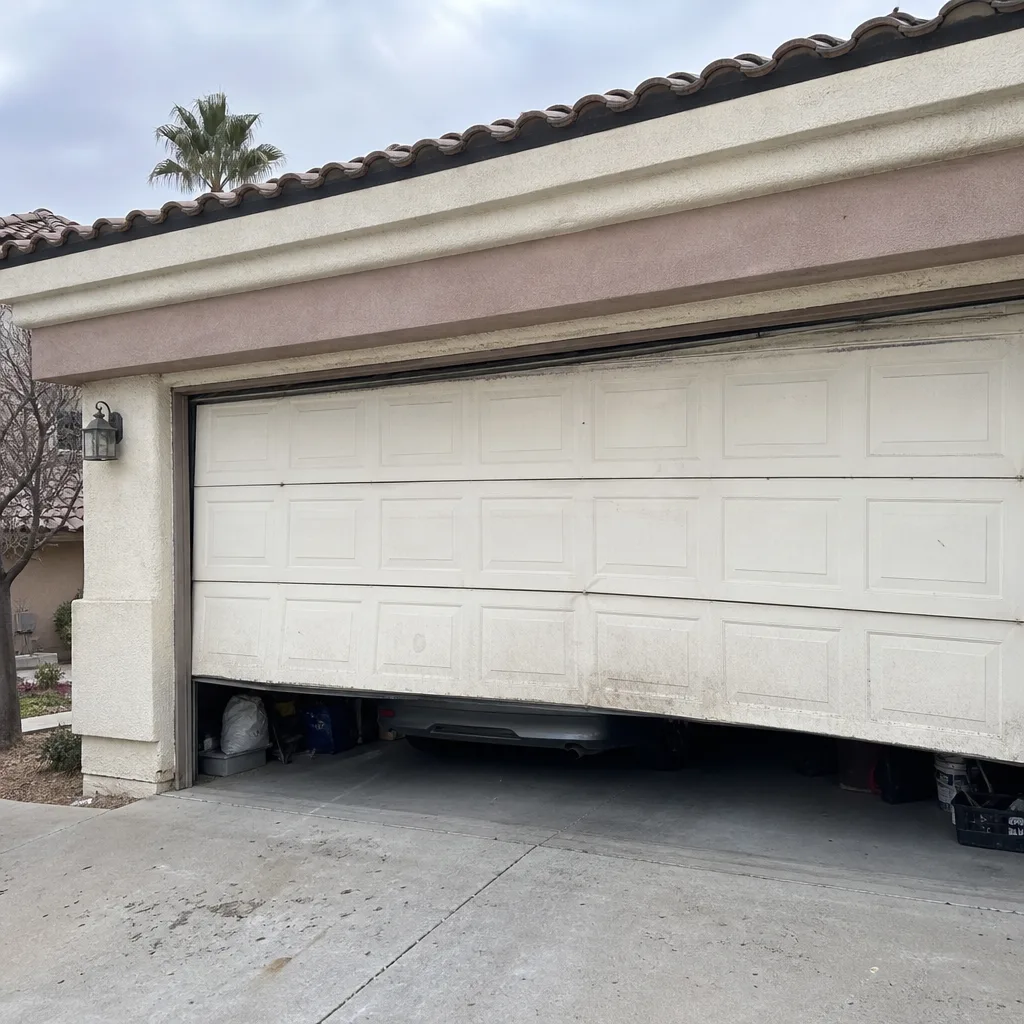
- Asymmetric movement. One side of the door rises faster than the other, or a corner lags behind. That gap is usually the first visible sign that a cable is fraying or a spring is failing on one side.
- New sounds under load. A sharp snap, a grinding groan, or a rhythmic creak that wasn’t there last week. Springs often give a short, loud creak in the final hours. If you hear it twice, treat it as a red flag.
What makes these signals easy to miss is that none of them look like an emergency. The door still opens. The opener still runs. The sound is annoying but not alarming. So the homeowner waits, and then Saturday morning the door won’t budge and the car is trapped inside. That’s the pattern we hear most often on emergency calls around garage door repair in Boulder City. Almost every one of those calls traces back to a signal that was there three days earlier.
The Slow Close Test: The Best Predictor You Can Run
If you run one check on your door this month, make it the slow close test. It takes about twenty seconds and catches the two failures that cause most genuine emergencies: a weakened torsion spring and a cable on the edge of snapping.
Here’s how it works. Stand outside the door with the opener disengaged (most openers have a manual release cord; pull it while the door is closed). Lift the door by hand to about waist height, then let it close slowly, watching the last 12 inches of travel.
- Listen to the last 12 inches. You should hear smooth, steady movement. A popping or snapping sound in that final stretch means a cable is jumping its drum or a spring is binding.
- Watch the door’s line. A door that should be level but lands one corner ahead of the other is telling you the cables are out of balance.
- Feel for the drop. On a healthy door, the final inches of travel are controlled. If the door suddenly speeds up as it nears the ground, a spring is losing tension and the door is starting to fall under its own weight.
We run this check on every tune-up call, and it’s the one thing that turns an emergency into a scheduled visit. A quick note on safety: if the door is already hanging crooked, won’t stay up, or you see a gap in the spring coil, don’t run the test. Call a pro. A torsion spring under tension can injure you seriously if it releases while you’re working near it, and we never advise a homeowner to touch one.
When the Door “Falls” Instead of Lowering
A healthy door lowers. A failing door falls. It’s a subtle difference, but once you feel it you’ll never forget it.
Lowering is controlled. You feel the motor or the spring holding back against gravity, easing the door down at a steady rate. “Falling” feels like the door gives up in the last foot or two. It speeds up, thumps into the floor, and may bounce slightly. That thump is the sound of a cable that has already partially failed or slipped on its drum. It’s not a future problem. It’s a current one.
If your door falls rather than lowers, stop using it and call the same day. In Boulder City, we get a wave of these calls when the first real cold snap follows a hot summer. The steel has expanded and contracted dozens of times, and the cable that was one strand away from failing finally lets go on the coldest morning of the year. If you’ve noticed a thump in your door lately, don’t wait for it to become a bang.
Electronic Warning Signs That Predict Mechanical Failure
Modern openers from LiftMaster, Chamberlain, Genie, and Craftsman are surprisingly good at diagnosing the door they’re attached to. When the motor has to work harder than it should, it reports that in ways most homeowners overlook.
- Straining motor. If your opener sounds like it’s laboring, pausing, or running longer than it used to, the mechanical resistance has increased. That’s usually a spring or a roller problem, not an opener problem.
- Travel limit errors. The opener “forgets” where the door should stop and reverses halfway, or stops short of the floor. Repeated limit errors are a classic early warning that the door is no longer balanced the way it was when the opener was installed.
- Repeated mid-cycle reversals. The door starts down, reverses, and tries again. The safety sensors might be dusty, or the door could be binding. Check the sensors first, then watch what happens. If the reversals continue after a clean sensor, the door’s balance has changed.
You can think of the opener as your door’s diagnostic tool. It’s telling you the mechanical side is struggling before the spring actually breaks. For more on what these errors mean and how they’re resolved, see our page on garage door opener service in Boulder City.
The Green, Yellow, Red Triage System
Not every warning sign is an emergency. The trick is knowing which ones to watch and which ones to act on today. We use a simple three-color system on every service call, and it works just as well for homeowners doing their own check.
Green: monitor. Smooth operation, a soft creak that comes and goes, or a door that opens cleanly but looks like it could use a tune-up. Schedule maintenance at your convenience. This is where the $89 seasonal tune-up pays for itself.
Yellow: schedule within a week. New noises you can’t explain. The door lands uneven. The opener has reversed mid-cycle twice. The spring looks fine but the door feels heavier than it did last month. You have a few days. Use them. Call and book a visit in Boulder City before the warning turns into a failure.
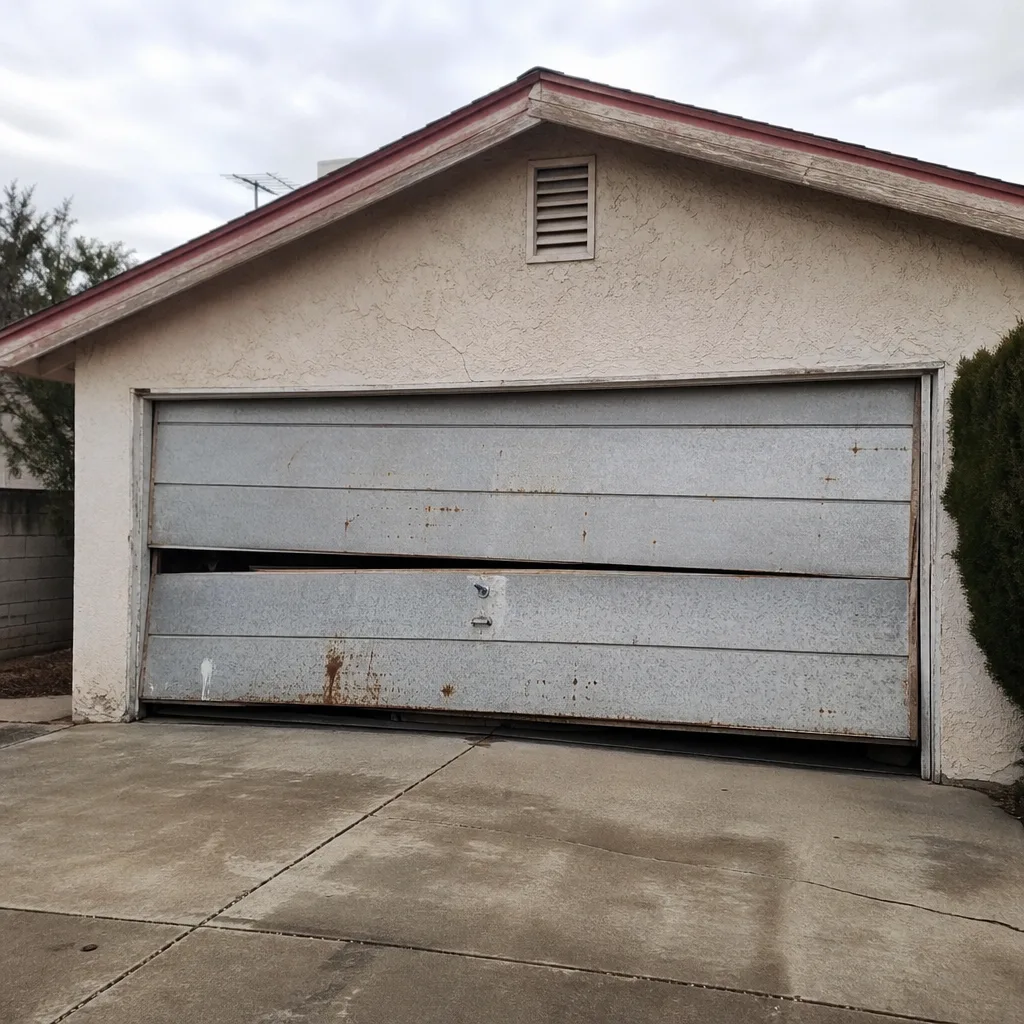
Red: stop using the door and call today. The door falls rather than lowers. You can see a gap in the spring coil. A cable looks frayed or has come off its drum. The door is crooked or won’t stay up. Someone in the household heard a loud snap. In these cases, don’t run the door, don’t force it, and certainly don’t try to fix the spring or cable yourself. Call a professional the same day.
The goal of the triage system is simple: turn a weekend emergency into a scheduled Tuesday appointment. That’s a cheaper, easier, and safer outcome every time.
Why Boulder City Doors Fail Differently
Garage doors in Boulder City work under a climate that’s harder on springs and cables than most of the country. Summers push past 100 degrees regularly, and winter mornings can drop into the 30s. That’s a swing of more than 70 degrees across the year, and the steel in every spring and cable expands and contracts with each swing. A torsion spring that might last five years in a mild climate often gives out closer to the four-year mark here.
There’s a second local factor: dust. The desert air carries fine grit that finds its way into rollers, hinges, and tracks. Over a decade, that grit turns grease into a grinding paste. Homeowners in neighborhoods like the Historic District and the areas near Bootleg Canyon often notice a door getting louder long before anything breaks. That’s the dust working its way into moving parts.
What we tell Boulder City homeowners is this: check the door once in early summer and once in late fall. Those are the two windows when a worn spring is most likely to show its last warning signs before a break. A tune-up at those points costs a fraction of an emergency repair, and it catches the problem while it’s still green.
Common Mistakes to Avoid
- Ignoring a new noise because “the door still works.” The door working is not the same as the door being safe. The knock you hear under load is often the last sound before a spring breaks.
- Assuming the opener is the problem. Nine times out of ten, a straining or reversing opener is reporting a mechanical issue with the door. Replacing the opener without fixing the door’s balance wastes money and leaves the hazard in place.
- Trying to adjust a torsion spring yourself. A torsion spring under tension can injure you severely if it releases while you’re near it. This is the single most dangerous part on a garage door, and it’s not a DIY job. In our experience, every home injury we’ve seen on a garage door traces back to a homeowner adjusting a spring or cable.
- Using BBQ grease or WD-40 on the tracks. Desert grit sticks to any oil you put on the track. Use a dry lubricant on the hinges and rollers and leave the tracks clean.
- Waiting for the door to fail completely. A door that snaps at 6 a.m. on a workday is a much bigger event than a door that gets serviced on a Tuesday afternoon. The warning window is there for a reason.
- Hiring a bid that undercuts the price by half. In Boulder City, the cost of a torsion spring replacement doesn’t change much from shop to shop. A bid far below the rest usually means a cheaper spring or no written warranty. Ask for the price in writing before any work starts.
- Skipping the second opinion. If you’ve been quoted a full door replacement and you’re not sure it’s needed, get a second look. Free second opinions on a written estimate are standard with a reputable shop, and they cost you nothing.
When to Call a Professional
Call a professional today, not next week, if the door is crooked, falls rather than lowers, won’t stay up, shows a visible gap in the spring, or has a frayed or off-track cable. Call the same day if a spring has already snapped or the door is stuck open with a car inside. And call for anything involving electricity at the opener or a wiring problem at the motor.
For green and yellow signals, a scheduled visit is the better move. Mainspring Garage Door Co. Boulder City offers free estimates throughout Boulder City, and our technicians arrive with springs, cables, and opener parts on the truck, so most jobs are done in a single visit. We state the flat price before any work starts, and every job is backed by the 90-Day Done Right Promise. Call (833) 605-8582 for a free estimate and a live person answers, any hour of the day or night. You can also start with our Mainspring Garage Door Co. Boulder City home page for the full picture of what we service.
See the difference
 Before
 After
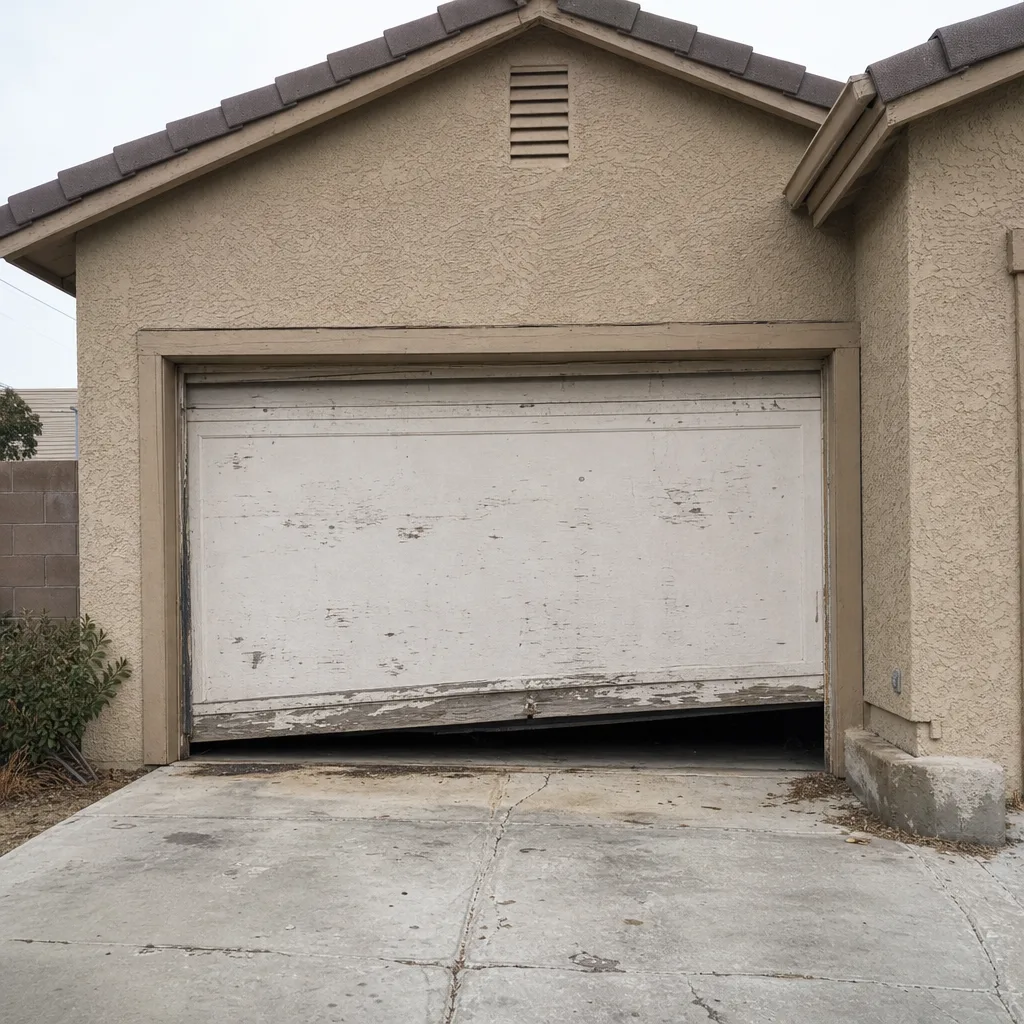
 Before
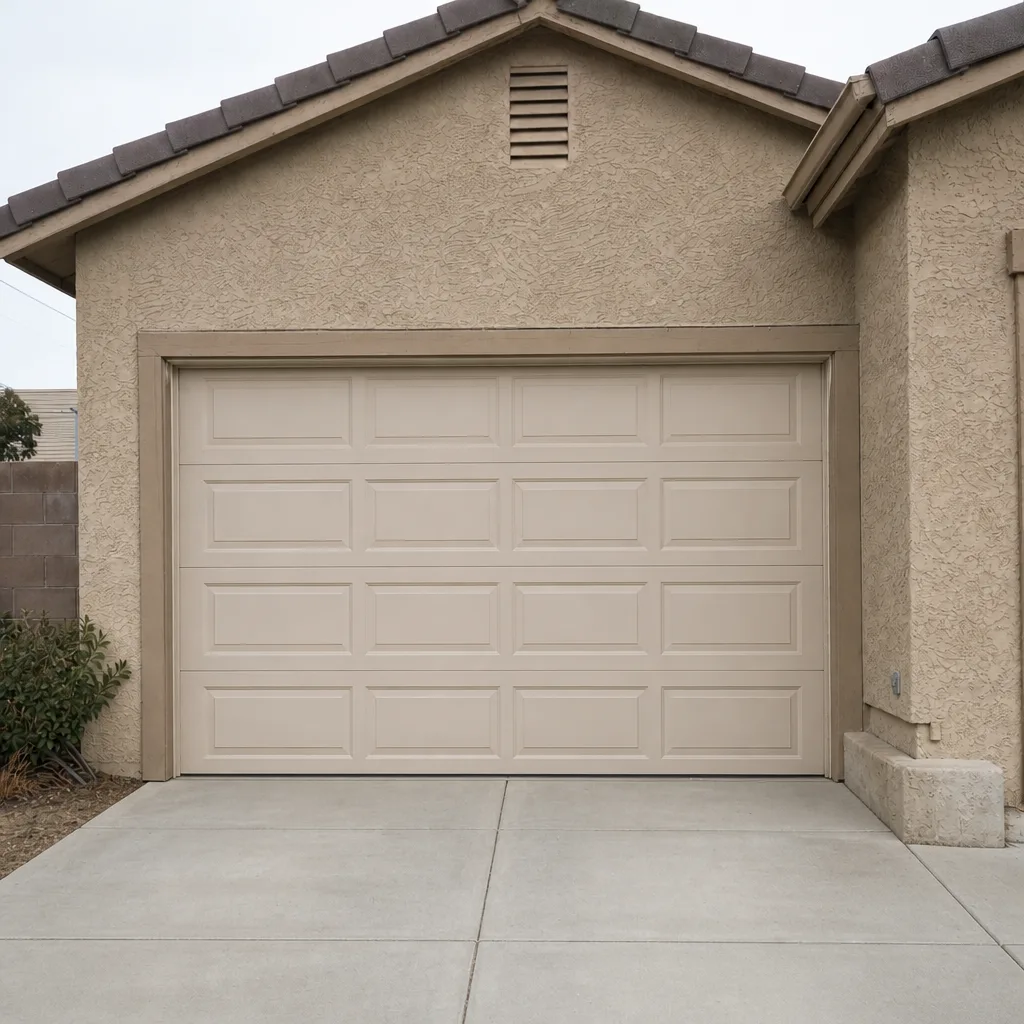
 After
 Before
 After
Frequently Asked Questions
A visible gap in the spring coil, a new creak or snap in the last two or three days, or a door that feels heavier than usual are the three clearest signs. If you see or hear any of them, stop using the door and have a technician look at it. A torsion spring under tension can injure you if it releases while you’re near it, and the gap is usually visible for a day or two before it fails.
No. A torsion spring is under extreme tension and can cause serious injury if it releases while you’re working near it. This is not a DIY repair, even for a skilled homeowner. Call a trained professional, and let them handle the tension safely with the right tools.
It means a cable has already partially failed or slipped on its drum, and the door is no longer being controlled by the lift system. That’s a current hazard, not a future problem. Stop using the door and call for same-day service. In our experience, this is the single most common pattern we see on emergency calls in Boulder City.
The safety sensors are the first thing to check. If they’re clean and aligned, a mid-cycle reversal usually means the door’s balance has changed and the opener is straining. That points to a spring or roller problem. Repeated reversals are one of the electronic warning signs that precede a mechanical failure by a few days.
Most emergency repairs run $250 to $450, with the bulk of that being the spring or cable replacement and the labor. A torsion spring replacement typically falls in the $275 to $375 range. The exact flat price is stated before any work begins, and estimates are free. Call (833) 605-8582 for an exact quote on your door.
No. The price we quote before the work is the price on the bill. If we find something different once we’re looking at the door, we tell you the updated price and you approve it before we turn a wrench. That’s the whole point of the no-surprises pricing.
The local professionals we connect you with are licensed and insured as their state requires. Our technicians have up to 10 years of experience, are background-checked, and wear uniforms on every job. We stand behind the work in writing with the 90-Day Done Right Promise, so if something isn’t right, we come back at no charge.
Twice a year is right for this climate, once in early summer and once in late fall. The dust and the temperature swings put more wear on springs and cables than a milder climate does. A seasonal tune-up catches a worn spring while it’s a scheduled visit instead of an emergency call.
The Bottom Line
Garage doors don’t fail without warning. They fall rather than lower. They creak a day or two before the spring snaps. They land crooked because a cable is fraying. The 48-to-72-hour window is real, and the slow close test is the best way to catch a problem while it’s still a Tuesday appointment instead of a weekend emergency. Run the test twice a year. Know the triage colors. Leave the springs and cables to a professional, because that’s where the real danger lives. And if you’re in Boulder City and you’ve noticed any of these signs, call Mainspring Garage Door Co. Boulder City at (833) 605-8582 for a free estimate. A live person answers, day or night, and we’ll tell you what we see before any work begins. You’ll also find pricing and scheduling detail on our garage door installation in Boulder City page if you’re deciding between repair and replacement.
Written by the team at Mainspring Garage Door Co. Boulder City.