
Last updated November 18, 2026
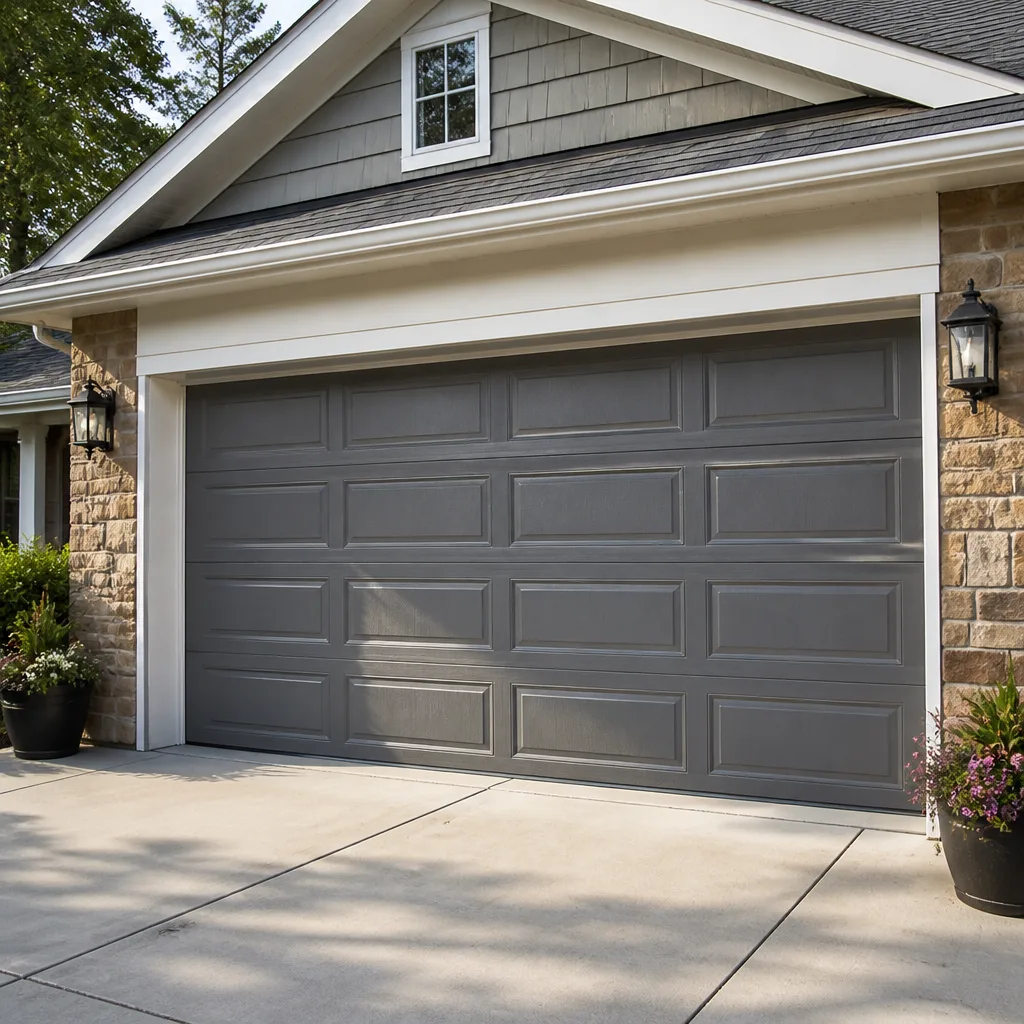 Raised-panel steel
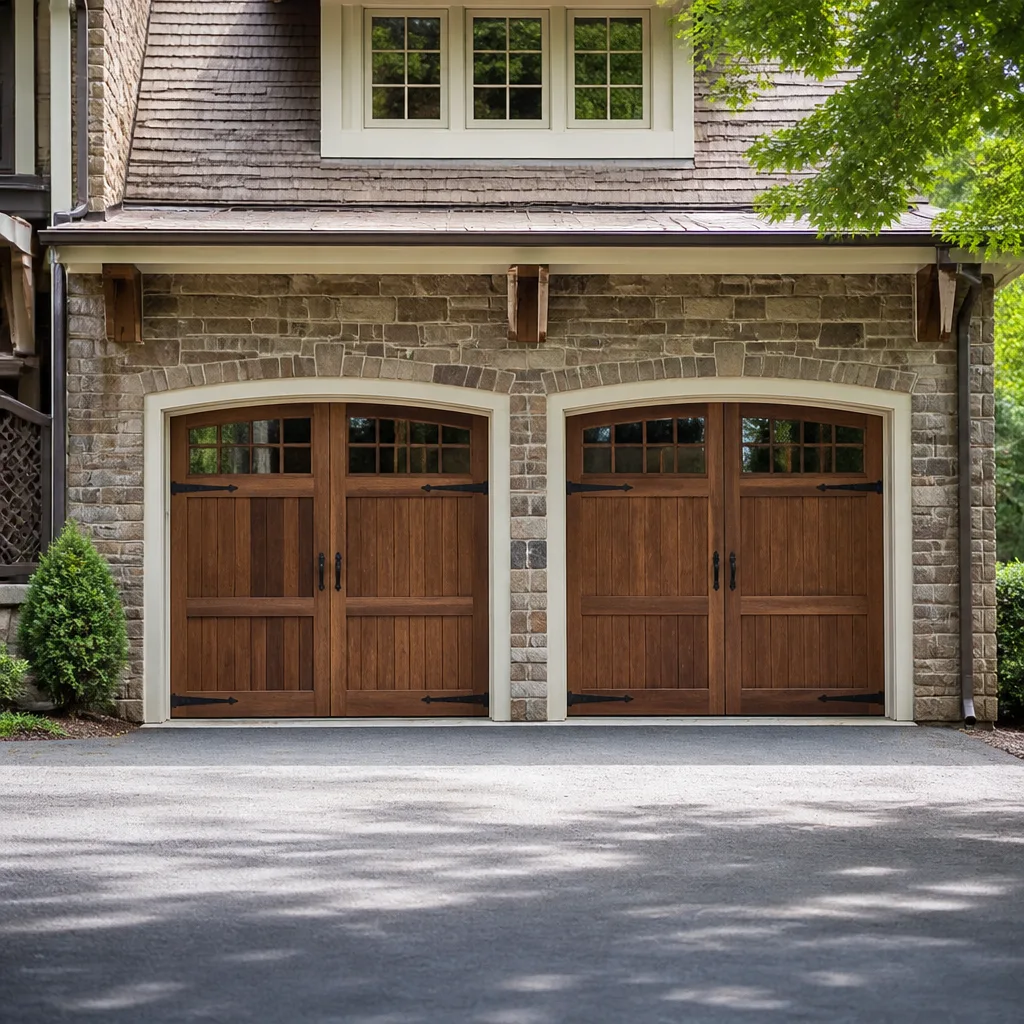 Carriage house
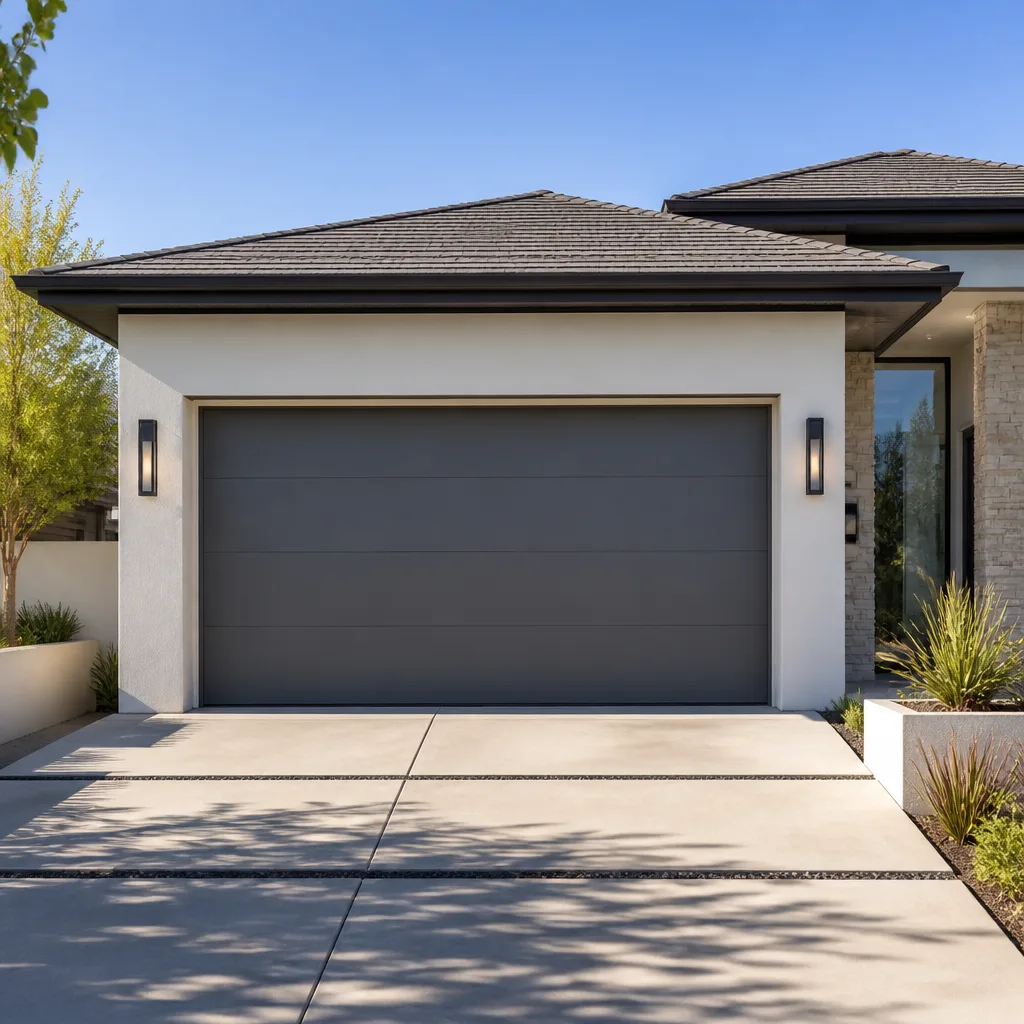 Modern flush
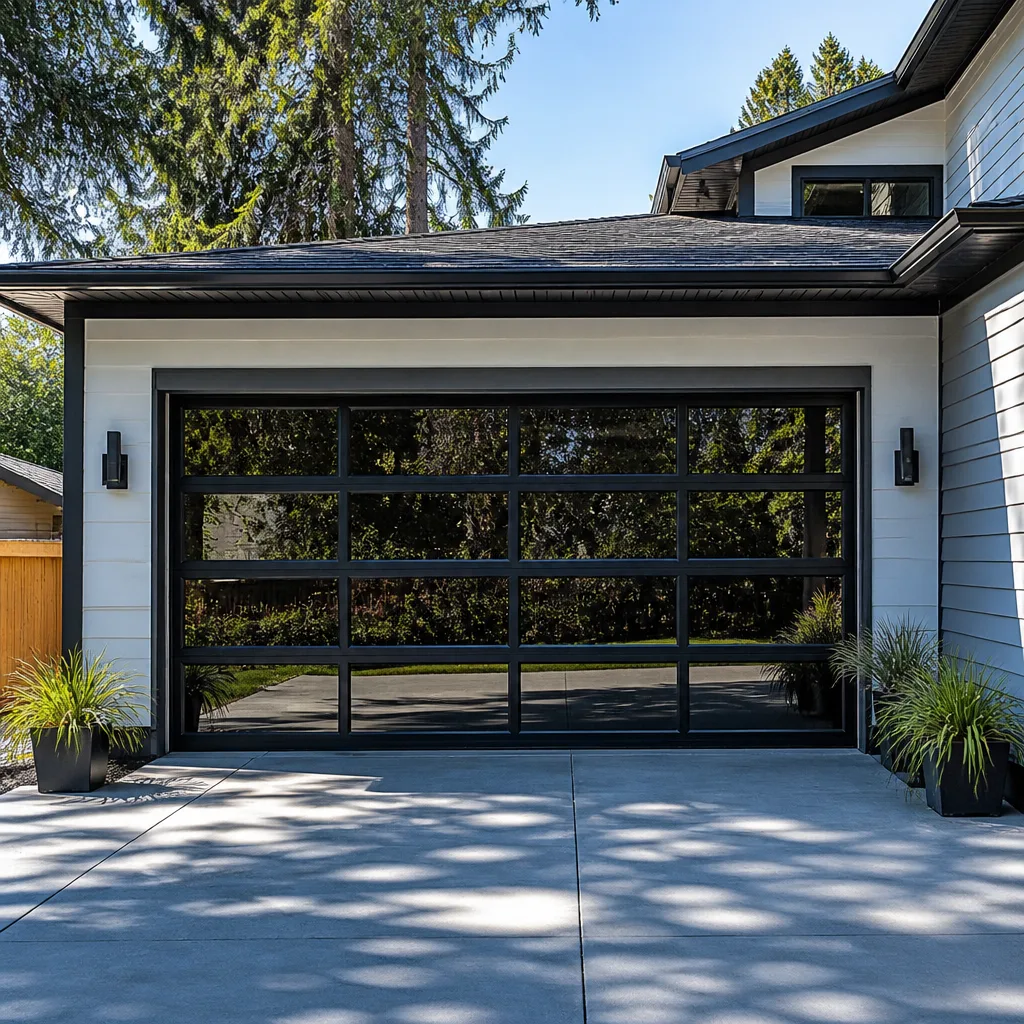 Full-view glass
 LiftMaster openers
 Chamberlain openers
Full 25-point door and opener safety check with every visit - springs, cables, rollers, tracks, and your LiftMaster or Chamberlain opener included
You get a price before we start. It does not change when the pro arrives.
Get your free estimateGarage Door Warning Signs: A Boulder City Homeowner’s Reference Guide
A garage door that hesitates for two seconds before it moves is not “just getting old.” It is showing you a measurable force imbalance, and in Boulder City’s heat that imbalance can turn into a broken torsion spring or a burned-out opener motor inside a single summer. We’ve watched it happen in Broadbent Park and on the hills above the lake, usually in July. This guide covers the early, quiet warning signs most homeowners never learn to read, the ones that give you a repair window before a small fix becomes an emergency at midnight. You’ll learn the manual balance test, the heat damage only Mojave sun causes, how to decode each noise, and the one cable check almost nobody performs.
Quick Answer
In Boulder City, the earliest garage door warning signs are a door that hesitates before moving, a slight sag across the horizontal panels, grinding or metallic popping as it travels, and paint bubbling near the bottom corners. Any one of these means the door is out of balance or its hardware is under heat stress, and it should be checked by a technician before summer pushes it into failure.
Styles & brands we work with
- Raised-panel steel
- Carriage house
- Modern flush
- Full-view glass
- LiftMaster openers
- Chamberlain openers
Table of Contents
- The manual balance test every Boulder City homeowner should know
- Heat-specific warning signs the Mojave sun creates
- What each garage door noise is telling you
- Reading your opener as a diagnostic tool
- The cable check almost nobody does
- Spring stress: the sound you must not ignore
- A seasonal checklist for Boulder City doors
The Manual Balance Test Every Boulder City Homeowner Should Know
This is the single most useful check a homeowner can perform, and it takes about a minute. It tells you whether your door’s springs are carrying the weight they were built to carry, or whether they’re quietly losing tension month by month.
Here’s how to test it safely. Do this with the door closed, standing to the side of the door, never underneath it.
- Pull the red emergency release handle to disconnect the door from the opener.
- Lift the door by hand to about waist height, then to halfway open.
- Let go. A healthy door should stay put at the halfway point, or drift only slightly.
- Lower it gently. It should travel down smoothly without falling or requiring force.
What the result means. A door that stays where you leave it is balanced. A door that sinks on its own, slams down, or needs two hands to lift is out of balance, and that is a call-today result. It means the springs are fatigued or the door has gained weight from moisture or heat warping, and the opener motor is working overtime to make up the difference.
Boulder City sits at roughly 2,500 feet with a dry, high-desert climate, and that combination stresses torsion springs in a particular way. The coils cycle through wide temperature swings between a cold winter night and an afternoon at triple digits. That expansion and contraction fatigues the steel faster than in a milder climate, so a door that tested fine last October may fail the balance test by June. Run this test twice a year: once in spring, once in late fall. If your door fails, our Garage Door Repair in Boulder City team can rebalance it and check the springs before anything breaks.
Heat-Specific Warning Signs the Mojave Sun Creates
Most warning sign guides describe failure that looks the same in Maine as in Nevada. Boulder City’s sun produces a distinct set of heat symptoms, and recognizing them early is what separates a small repair from a full panel replacement.
- Sag across the horizontal sections. Look at the door from the side and follow the top edge. If a middle section dips relative to the rest, the panel has absorbed heat and lost structural rigidity. Sagging sections scrape the track and wear the rollers unevenly.
- Panel warping visible at the seams. Run your eye down the vertical seams between sections. A gap that widens toward one end, or a seam that no longer lines up, means a panel is warping. On steel doors this often shows within two summers of the first small buckle.
- Paint bubbling near the bottom corners. The bottom corners catch reflected heat off the driveway and hold moisture from morning dew or sprinkler splash. Bubbling paint there usually means rust is starting underneath, and rust at the bottom section is the first stage of a door that will need replacing.
- A door that runs louder in August than in April. Heat softens lubricant and expands metal. If the door gets noticeably noisier as summer peaks, the hardware is telling you it needs service.
We’ve seen this pattern repeatedly in the older homes near the historic district, where original wood and steel doors have taken decades of desert sun. A door that sags or warps is not always a replace-it situation. Sometimes a panel swap and a track adjustment restore it. Factory-familiar brands like Clopay and Amarr use panels that hold up better under UV than older stock, and our Garage Door Installation in Boulder City team can tell you when a repair makes more sense than a new door.
What Each Garage Door Noise Is Telling You
Noise is a diagnostic. Every sound a door makes has a specific cause, and learning to sort them keeps you from ignoring a serious problem or paying for a repair you don’t need.
- Squeaks and squeals. These are almost always lubrication issues, usually dry hinges, rollers, or the torsion bar bearings. A light application of garage door lubricant on the hinge points and roller stems quiets most of it. This is the one noise you can often resolve yourself.
- Grinding or rumbling. Grinding points to worn or flat-spotted rollers, or a track that has bent out of alignment. Left alone, a grinding roller will chew the track, and a damaged track is a bigger repair than a roller swap.
- Metallic pops or a loud bang. A pop during operation is spring stress, and a single loud bang from the garage is often the sound of a torsion spring breaking. Stop using the door and call a technician. This is not a DIY fix.
- A rhythmic thumping or clicking. A loose panel, a misaligned hinge, or a roller that has jumped its track. Have it checked before it jumps completely and drops the door.
Torsion springs store enormous energy, and the cables and drums that hold them under tension can cause serious injury. Never attempt to adjust, remove, or replace a spring or cable yourself. That work belongs to a trained technician with the right tools and the training to stay clear of the stored force. What you can do is listen, note what you hear, and call when the sound changes.
Reading Your Opener as a Diagnostic Tool
Your opener is not just a motor. It’s a sensor that reports the health of the whole door, and its behavior changes before the mechanical parts fail visibly. Watch for these three signals.
- Cycle time changes. If the door takes noticeably longer to open or close than it did a year ago, the opener is straining against a door that has gone out of balance. Slower travel means more resistance, and resistance wears the motor.
- Remote range shrinkage. When you have to press the remote from closer to the house, or the door only responds when you’re right in front of it, the opener’s receiver or the remote battery is weakening. A shrinking range that isn’t the battery points to opener electronics nearing end of life.
- Random reversing or refusing to close. If the door reverses before it touches the ground or stops partway, the safety sensors are misaligned or the opener’s force settings have drifted as the door’s weight changed. This is a safety issue, not a nuisance.
We work with Genie and LiftMaster openers regularly, and the pattern holds across brands: the opener usually starts complaining a month or two before the door itself fails. If your opener is older than about fifteen years, a drift in cycle time is your cue to have both the opener and the door checked together. Our Garage Door Opener in Boulder City service can diagnose whether the opener needs a setting adjustment or whether the door is the real problem.
The Cable Check Almost Nobody Does
Here is the visual inspection most homeowners never perform, and it’s the one that catches the most dangerous failure before it happens. Look at your garage door cables from the side, not the front.
Cables run vertically down each side of the door to the bottom bracket, and up to the drum at the top. From the front, they look fine. From the side, standing at the edge of the opening and looking along the cable, you can see fraying, kinks, or a cable that has started to unravel near the drum.
- Frayed or bird-caged cable near the drum. The strands are separating and the cable is close to snapping. A snapped cable can whip with force, and it drops the door. Stop using the door and call a technician.
- A cable that looks slack or has slipped off its drum. The door is out of balance or a drum is misaligned, and operating it risks jamming the door mid-travel.
- Rust streaking along the cable. Corrosion weakens the cable over time. In Boulder City, cables near the bottom of the door are most exposed to sprinkler splash and driveway moisture.
Since cables are under the same stored tension as the springs, this is an inspection, not a repair. Do the visual check, note what you see, and let a professional handle any cable service. If a cable is fraying, our Mainspring Garage Door Co. Boulder City home page is the place to reach us for a fast diagnosis.
Spring Stress: The Sound You Must Not Ignore
Your door’s spring is what carries its entire weight, and in Boulder City’s climate that spring is doing demanding work. A torsion spring is rated for a set number of open-and-close cycles, and heat accelerates the fatigue. When a spring weakens, the door grows heavier by the week, and the opener quietly compensates until it can’t.
Watch for these spring-stress signals:
- A metallic pop or clang during operation.
- The door rising a few inches and stopping, or opening halfway and reversing.
- A visible gap in the torsion spring coil above the door.
- A door that feels unusually heavy when you lift it by hand.
Any one of these is a stop-using-it signal. A weakened spring can fail completely without much warning, and a broken spring leaves the door stranded, often with a car trapped inside. The good news is a spring replacement is a same-visit job when a technician arrives with the right spring on the truck. Because we carry springs, cables, and openers as standard stock, most jobs finish in one visit with no waiting on parts.
A Seasonal Checklist for Boulder City Doors
Two short checks a year, timed to the desert calendar, catch most problems while they’re still small.
- Spring check (April or May). Run the manual balance test. Inspect horizontal sections for sag. Look for paint bubbling at the bottom corners. Lubricate hinges and rollers. Schedule a tune-up before the first heat wave.
- Fall check (October or November). Re-run the balance test after the summer’s temperature swings. Inspect cables from the side. Clear debris from the tracks and test the safety sensors. Check that the opener’s cycle time still feels normal.
- Any time: listen for a change in noise. A new sound is a new problem, and catching it early is the whole point of this guide.
Common Mistakes to Avoid
- Ignoring a two-second hesitation. That pause is a force imbalance, and in Boulder City’s heat it can progress to a broken spring within one summer. A short delay today is a cheaper fix than a breakdown in August.
- Assuming every problem means a new door. A sagging or noisy door is often fixable with a panel swap, new rollers, or a track adjustment. Get a repair quote before you budget for replacement.
- Trying to adjust a spring or cable yourself. The stored energy in a torsion spring can cause serious injury. This is the one repair that always belongs to a trained professional.
- Confusing a lubrication squeak with a mechanical failure. A squeak is usually a dry hinge or roller, not a bad door. A grinding sound is the one to take seriously.
- Skipping the balance test because the opener “still works.” A working opener can mask a failing spring for months while it strains against a heavier door.
- Overlooking the bottom corners. Paint bubbling and rust there start small and spread. Catching them early saves the bottom section.
- Waiting for the door to fail to call anyone. Warning signs exist precisely so you can act during the repair window, before a fix becomes an emergency.
See the difference
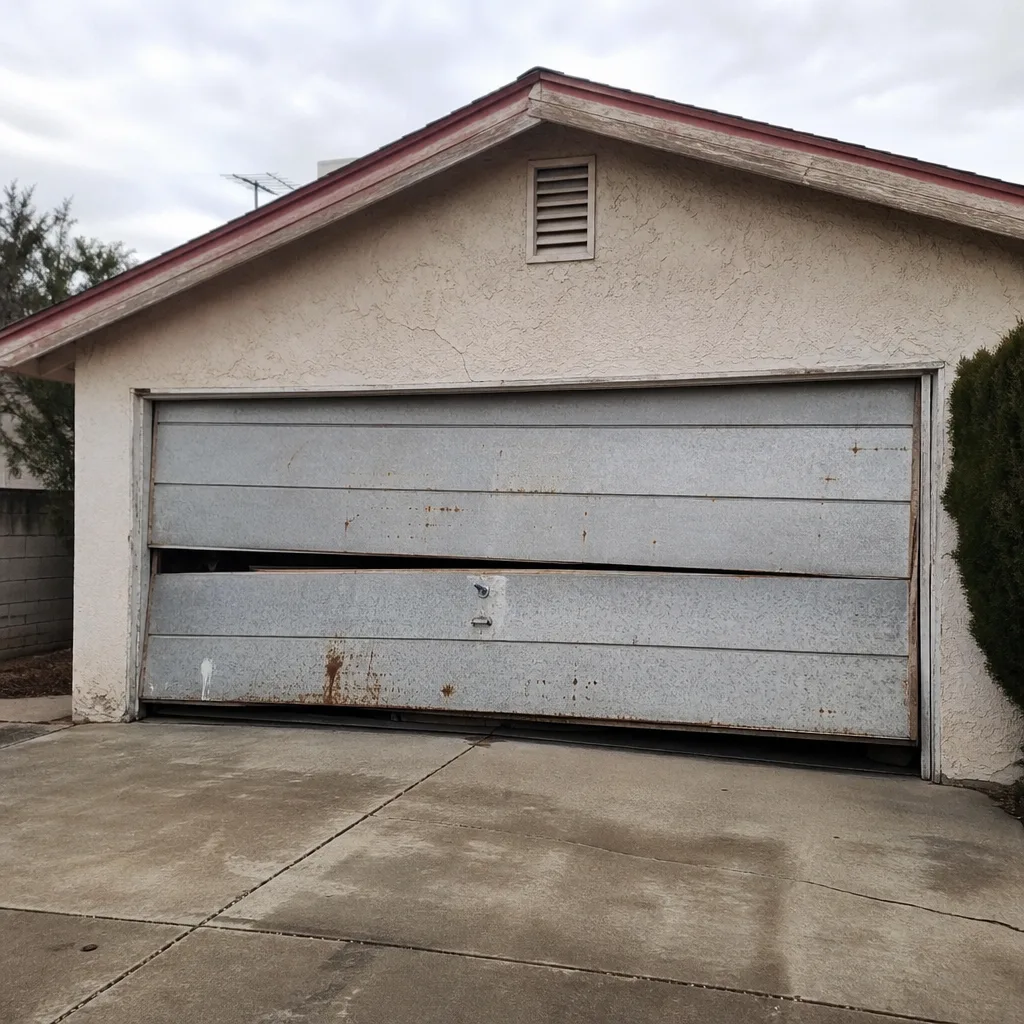 Before
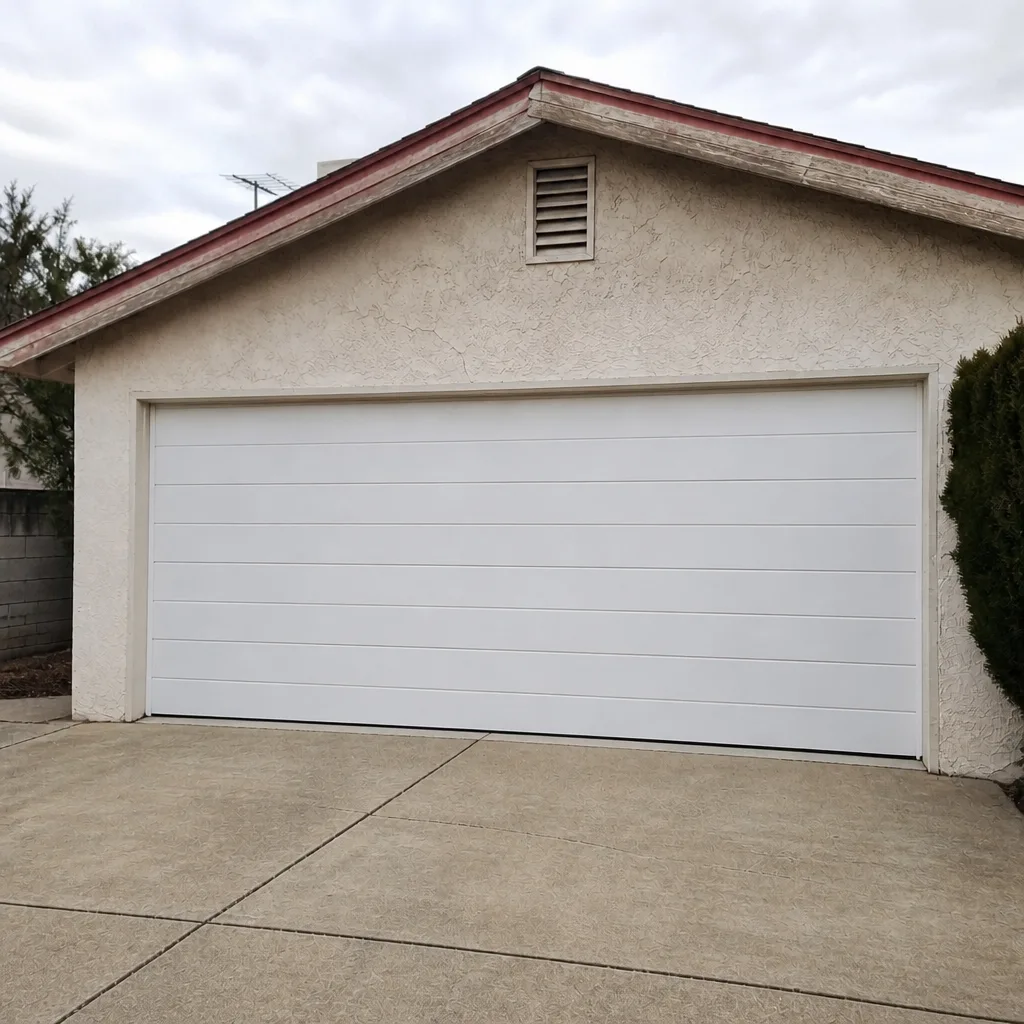 After
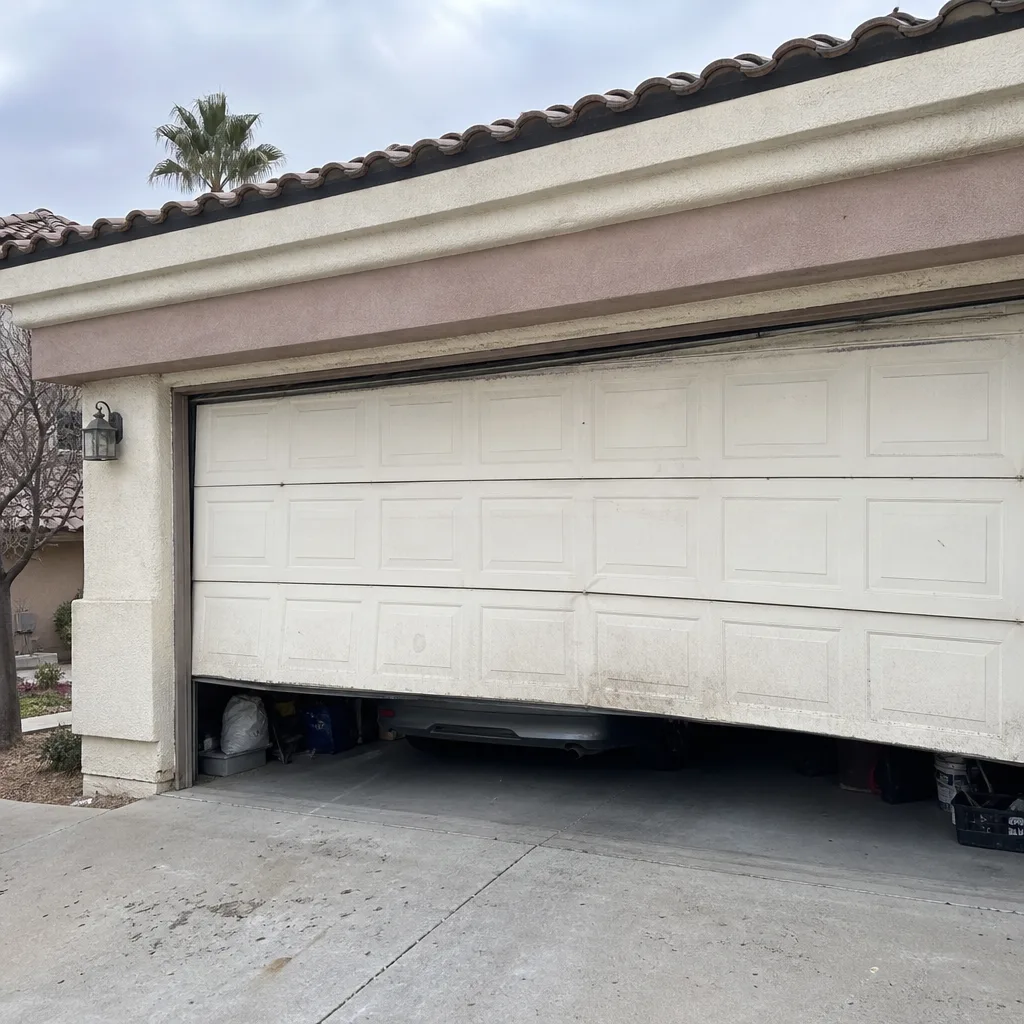 Before
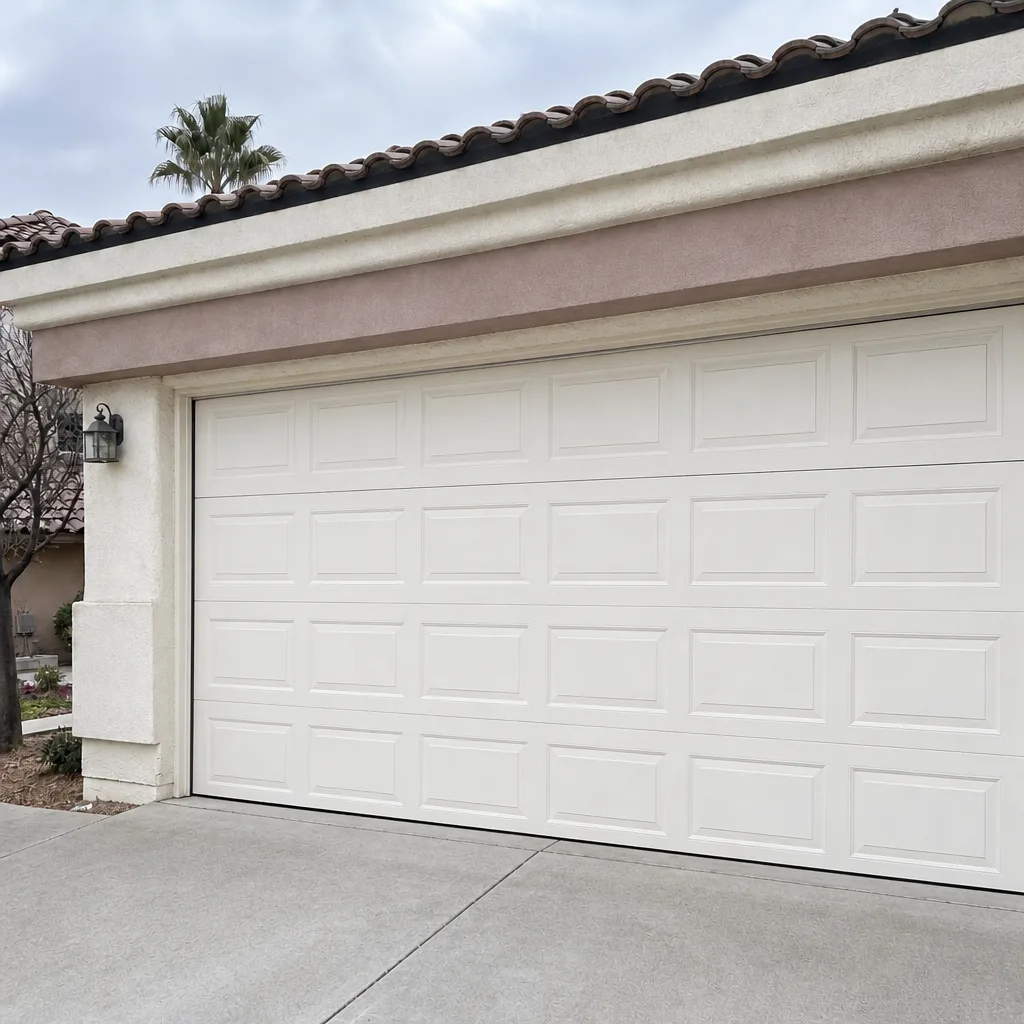 After
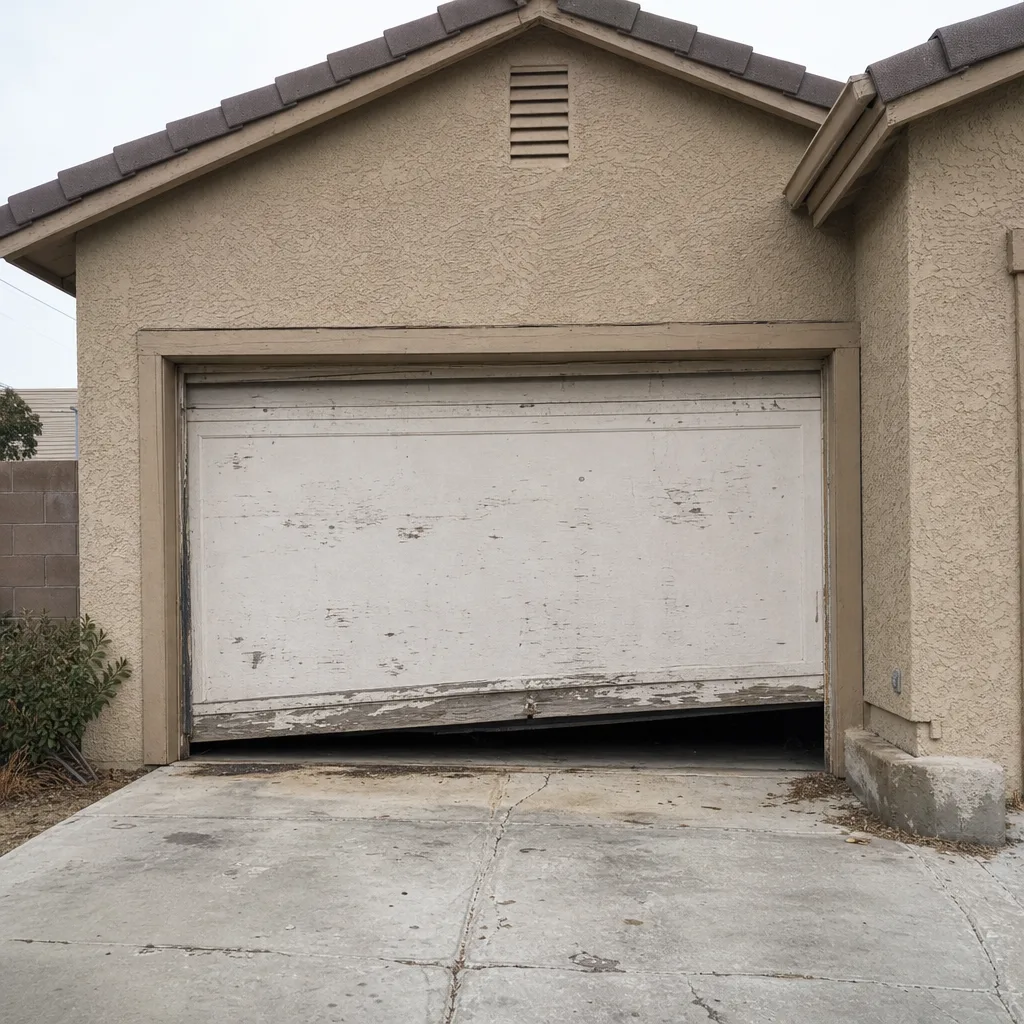 Before
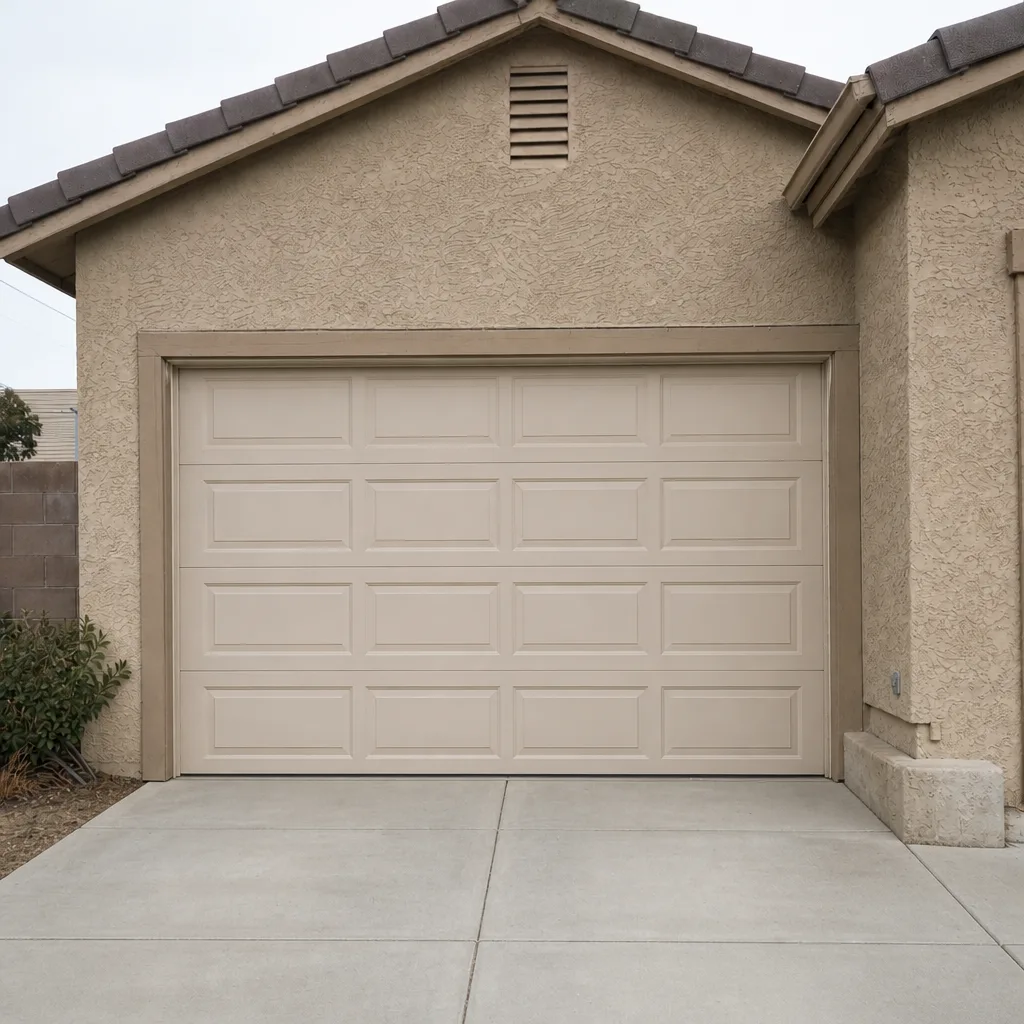 After
When to Call a Professional
A door that fails the manual balance test, sinks on its own, or needs two hands to lift should be seen by a technician. So should any metallic pop, a visible gap in the spring, a frayed cable near the drum, a door that reverses before touching the ground, or a sag you can see from the side. These are the signals that something under stored tension is at risk, and the safe move is to stop using the door and call. Mainspring Garage Door Co. Boulder City offers free estimates in Boulder City – call (833) 605-8582. The flat price is quoted and agreed before any work starts, a live person answers every call around the clock, and every job is backed in writing by our 90-Day Done Right Promise.
Frequently Asked Questions
A door that hesitates before moving is the most common early sign, and it means the force balance is off. In Boulder City’s heat, that hesitation gets worse fast because the spring fatigues through wide temperature swings. Run the manual balance test, and if the door sinks on its own, call for a check.
Yes, if you follow the steps carefully and never stand under the door. Disconnect the opener with the emergency release, lift the door by hand to halfway, and let go. A healthy door stays put. A door that sinks or needs force to lift is out of balance, and you should call a technician rather than touch the springs.
Heat softens lubricant and expands metal, so a door with dry hinges or worn rollers runs noisier in Boulder City’s summer. A squeak is usually a lubrication issue you can handle. Grinding, rumbling, or a metallic pop is a mechanical problem worth a professional look.
Grinding usually means worn or flat-spotted rollers or a track that has bent out of alignment. Left alone, it chews into the track and turns a small repair into a larger one. Have it checked before the rollers damage the track.
A shrinking remote range usually points to a weak remote battery or an opener receiver nearing end of life. Try the battery first. If a fresh battery doesn’t fix it, have the opener checked, since range loss often comes a month or two before other opener problems.
Twice a year catches most problems while they’re small. Do a spring check in April or May before the heat, and a fall check in October or November after it. Listen for new noises any time, and treat a metallic pop as an immediate reason to call.
The Bottom Line
The warning signs that matter most are the quiet ones: a two-second hesitation, a slight sag, a grinding roller, paint bubbling at a bottom corner. In Boulder City’s high-desert climate these progress faster than homeowners expect, and the repair window closes with the summer heat. Learn the manual balance test, check your cables from the side, sort your door’s noises, and watch your opener’s behavior. Do this twice a year and you’ll catch small problems while they’re still small. When a signal shows up, call. Mainspring Garage Door Co. Boulder City offers free estimates and a written price before any work begins – call (833) 605-8582.
Written by the team at Mainspring Garage Door Co. Boulder City.