
Last updated November 18, 2026
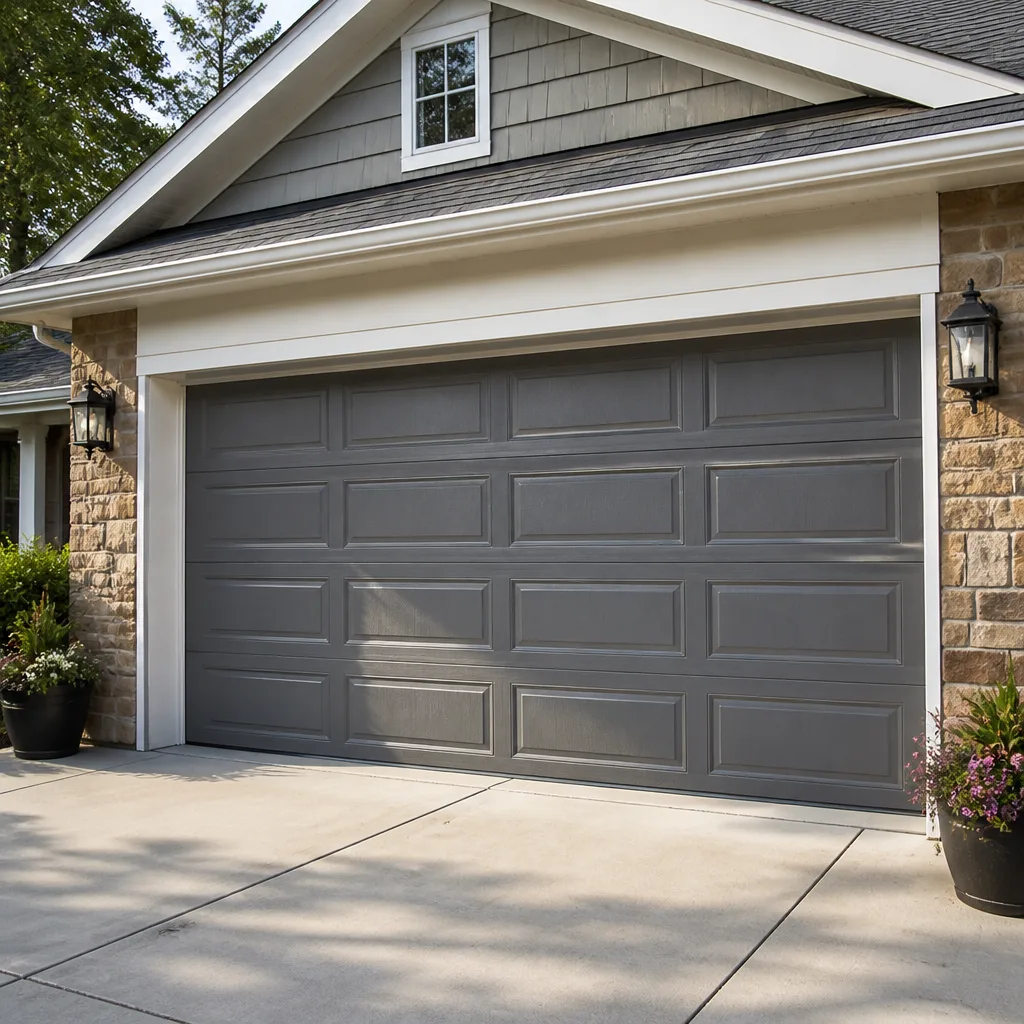 Raised-panel steel
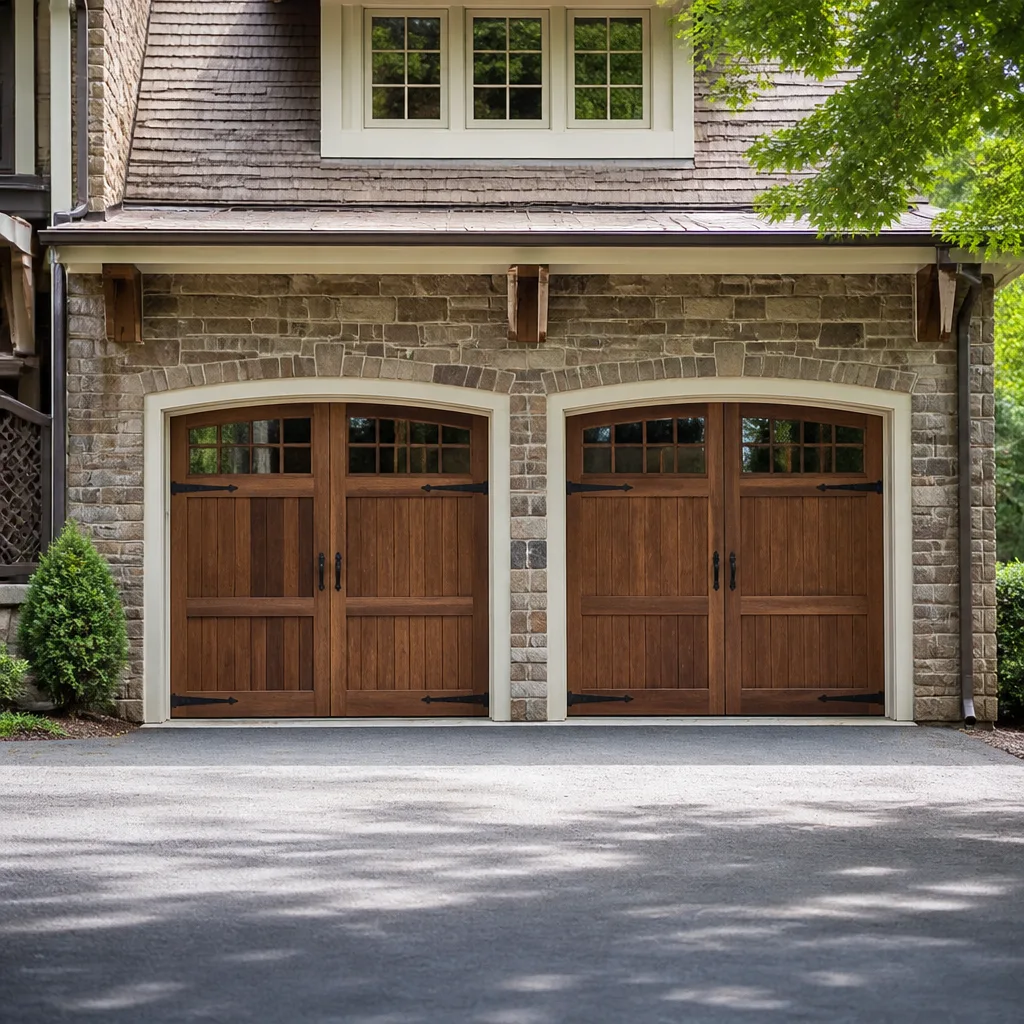 Carriage house
 Modern flush
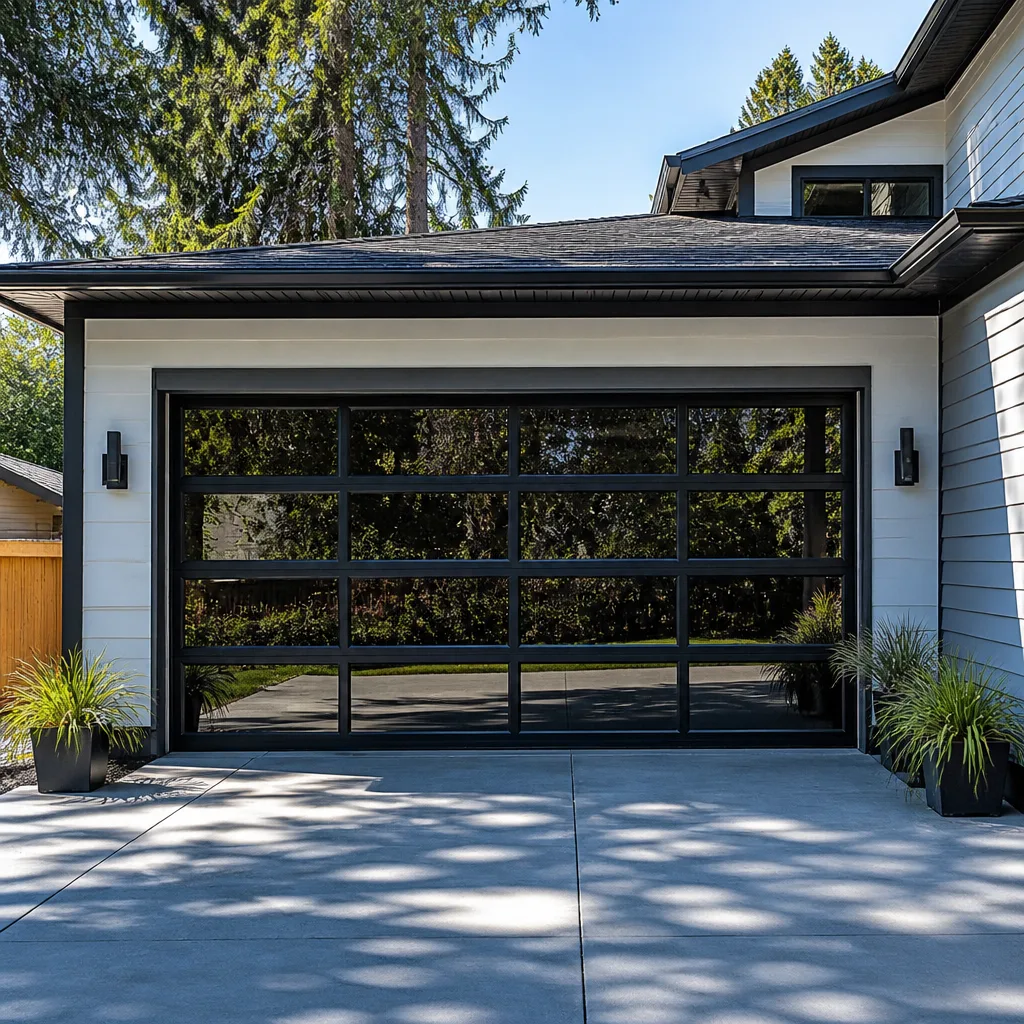 Full-view glass
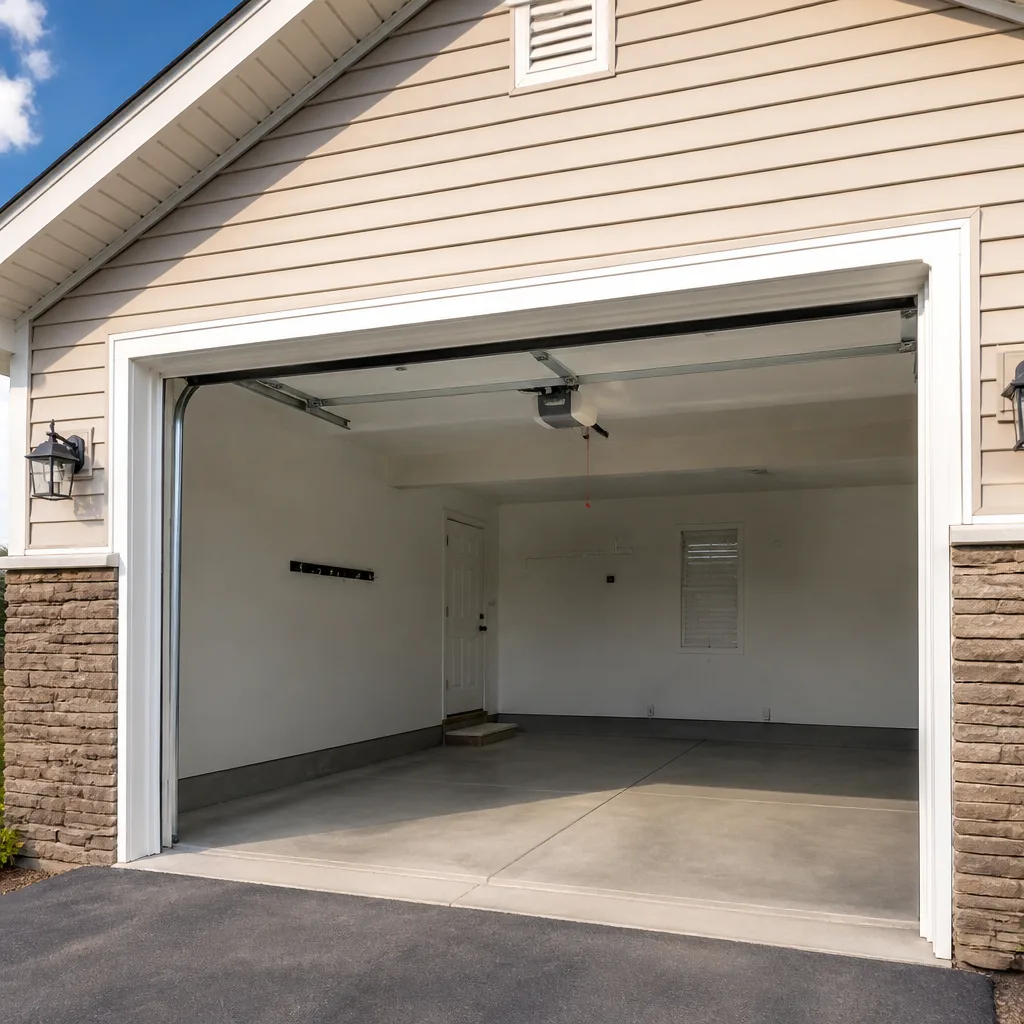 LiftMaster openers
 Chamberlain openers
Full 25-point door and opener safety check with every visit - springs, cables, rollers, tracks, and your LiftMaster or Chamberlain opener included
You get a price before we start. It does not change when the pro arrives.
Get your free estimateSeasonal Garage Door Care for Boulder City: Year-Round Homeowner’s Guide
Most national maintenance calendars split the year into four tidy quarters. Boulder City doesn’t work that way. We get one brutal season – summer, where garage interiors routinely sit at 110°F and the door skin itself can hit 140°F in direct afternoon sun – and three supporting acts. Smart maintenance weights effort accordingly. The single most effective window of the year is a narrow one: October through early November, after the heat breaks and before the occasional winter freeze. Miss it and you’re either sweating through a tune-up in 105°F or reacting to a failure instead of preventing one. This guide lays out a realistic twelve-month calendar built around Boulder City’s actual climate, not a template written for Ohio.
Quick Answer
In Boulder City, schedule your one big garage door inspection in October or early November – that pre-winter visit carries most of the year’s preventive weight. Summer is for operating adjustments only (force settings, lubrication, ventilation), winter is mostly watch-and-wait for rare freeze nights, and spring is cleanup after dust storm season. Skipping the fall window is the number one reason we see spring failures in Boulder City in the following July.
Styles & brands we work with
- Raised-panel steel
- Carriage house
- Modern flush
- Full-view glass
- LiftMaster openers
- Chamberlain openers
Table of Contents
- Why Fall Is the Real Maintenance Season in Boulder City
- The October Pre-Winter Inspection: A 9-Point Checklist
- Summer in Boulder City: Operating Adjustments, Not Repairs
- Winter Freeze Risk on Bottom Seals and Weatherstripping
- Spring Dust Storm Aftermath: What to Clean and Re-Lubricate
- A 12-Month Boulder City Garage Door Calendar
- Why the Schedule Matters More Than the Individual Tasks
Why Fall Is the Real Maintenance Season in Boulder City
Boulder City’s climate doesn’t hand you four equal seasons. Summer dominates – roughly five months of sustained heat, with June through September averaging highs above 95°F and July pushing 105°F on a regular basis. Everything else is compressed. That changes the math on when maintenance actually accomplishes something.
October and early November are the only weeks where all three conditions line up: temperatures are mild enough for a technician to work safely on ladders and tracks, the daily thermal expansion and contraction cycle has finally eased, and you’re still ahead of the rare freeze nights that show up in December and January. That window is when worn springs, frayed cables, and dried-out rollers are easiest to identify and least likely to fail under stress.
We’ve seen this pattern for years in Boulder City. A door that gets its fall inspection almost never surprises its owner in February. A door that doesn’t tends to fail in the worst possible month – usually late July, when the heat has done its slow damage and the homeowner is loading the car for a Lake Mead trip.
There’s a second reason fall matters here. Boulder City sits at roughly 2,500 feet, high enough that winter overnight lows dip into the 30s several times a season. That’s nowhere near what a mountain town sees, but it’s enough to harden the rubber bottom seal and shrink the gaps in your weatherstripping. The fall inspection is when you catch that before it turns into a cold draft coming through the gap under the door.
If you only do one thing to your garage door all year in Boulder City, make it the fall inspection. Everything else in this guide builds from that anchor point.
The October Pre-Winter Inspection: A 9-Point Checklist
Here’s the checklist we run on every fall tune-up in Boulder City. You can walk through items 1 through 5 yourself. Items 6 through 9 involve springs and cables under tension – do not touch those. Ask a trained technician.
- Balance test. Disconnect the opener (pull the release handle) and lift the door halfway by hand. It should stay put. If it drifts down or feels heavy, the spring tension is off.
- Visual spring inspection. Look at the torsion spring above the door or the two extension springs on the sides. A visible gap in the coil means the spring is broken. Do not attempt to remove or adjust it.
- Cable condition. Cables should be taut and free of fraying or kinks. Any sign of wear means stop using the door and call a professional.
- Roller and hinge check. Wobble each roller in its hinge. Steel rollers with flat spots or nylon rollers with cracks should be replaced.
- Weatherstripping and bottom seal. Run your hand along the bottom seal and around the frame. Any spot with daylight or a soft, crumbly feel needs attention before winter.
- Track alignment. Tracks should be parallel and free of dents. A bent track is a safety issue, not a DIY fix.
- Opener force and travel limits. Test that the door reverses when it meets an obstruction (a 2×4 laid flat is the standard test). Force settings that are too high mask a larger problem.
- Hardware torque. Every bolt on the hinges and brackets should be snug. Loose hardware is loud and accelerates wear.
- Lubrication pass. A light application of garage door lubricant on hinges, rollers, and the spring (not the tracks) sets the door up for the dry winter months.
That’s roughly a 45-minute job for a technician and about 15 minutes of it is safe for a homeowner. If any of items 2, 3, or 6 turn up a problem, stop and call. Springs and cables are under enough tension to cause serious injury – they’re the one part of this door that genuinely is not a homeowner task.
Summer in Boulder City: Operating Adjustments, Not Repairs
Summer is not the season for maintenance projects in Boulder City. It’s the season for operating adjustments that keep the door working through the heat – and for not making the door worse.
Heat does three specific things to a garage door. First, metal expands. A door that’s adjusted tightly in April can bind slightly by July, which strains the opener. Second, the opener’s force settings sometimes need a small increase to overcome that added friction – but not too much. Third, the rubber bottom seal gets soft and can stick to the concrete floor on a hot afternoon.
What to adjust in summer
- Opener force settings. On a LiftMaster or Chamberlain unit, the force adjustment is usually a small dial or a digital setting on the back of the motor head. A trained technician can nudge it up slightly if the door is straining. Cranking it up to solve a binding problem is a mistake – it masks the real cause and stresses the motor.
- Ventilation. If your garage has a window or vent, open it during the hottest part of the afternoon. An attic fan or a small box fan near the opener reduces heat buildup around the motor housing and extends opener life.
- Seal lubrication. A light coat of silicone spray on the bottom seal keeps it from sticking to the slab.
What not to do in summer
Don’t pressure-wash or hose down a door that’s been sitting in direct sun. The thermal shock can crack paint and warp panels. Don’t leave the door propped open for hours in the afternoon – dust and grit from the surrounding desert settles on the tracks and rollers. And don’t run a heavy-duty cycle of open-close-open-close on a hot day to “test” the door; heat plus repeated cycles is hard on the opener motor.
If a door is failing in the summer heat, it generally means something was already worn. That’s where the fall inspection pays off. If yours skipped it and you’re dealing with a strained or stuck door now, garage door repair in Boulder City is generally a same-day matter.
Winter Freeze Risk on Bottom Seals and Weatherstripping
Boulder City winter is mild by any standard – daytime highs in the 50s and 60s. But we do get overnight lows in the high 20s and low 30s several times each season, and those nights matter for one specific component: the rubber bottom seal.
What happens is this. The rubber seal is compressed against the concrete every time the door closes. On a cold night, moisture that collected under the seal during the day can freeze and bond the rubber to the slab. When you open the door the next morning, the seal tears or rips away from the aluminum retainer.
How to handle a stuck seal without cracking it
- Before opening the door on a forecast freeze night, check the seal with your hand. If it feels bonded, don’t force it.
- Warm the seal with a hair dryer on low, moving along the bottom edge. This softens the rubber and releases the bond.
- Once it’s free, apply a thin coat of silicone spray or a light rub of paraffin along the seal to reduce future sticking.
- If the seal is already cracked or torn from a previous freeze, replace it. A cracked bottom seal lets cold air, dust, and the occasional scorpion into your garage.
We see this on maybe a dozen doors per season in Boulder City – usually older doors with a hardened original seal that hasn’t been replaced in a decade. A new bottom seal is one of the least expensive parts on the door and one of the most satisfying to fix.
Weatherstripping around the door frame has a similar winter issue. Cold causes the foam or rubber to shrink and pull away from the corner joints. If you see daylight at a corner in January, that’s normal contraction and not necessarily a defect. Check it again in April. If the gap is still there in spring, it’s time to replace.
Spring Dust Storm Aftermath: What to Clean and Re-Lubricate
We don’t use the word haboob lightly. The dust storms that roll through the Mojave in March and April are the single biggest cause of premature garage door wear in Boulder City. A heavy dust event pushes fine grit into every track, hinge, and roller. Left alone, that grit grinds down the rollers and works its way into the opener’s chain or belt drive.
Post-dust-storm cleanup
- Vacuum the tracks. Use a shop vac with a narrow nozzle. Run it up both vertical tracks and along the horizontal section. Don’t use a blower – it just moves the grit around.
- Wipe the rollers and hinges. A rag dampened with a light cleaner (not a solvent) removes the grit that’s worked into the roller body.
- Re-lubricate. Once everything is clean and dry, apply fresh garage door lubricant to the hinges, rollers, and spring. Skip the tracks – lubricant attracts dust and turns into a paste.
- Check the opener. If your opener is a chain drive (common on LiftMaster and Chamberlain units), inspect the rail for grit and wipe it down. A Genie belt-drive unit needs less attention here, but the belt should still be checked for fraying.
- Look at the seals. Fine dust works into weatherstripping at the corners. Wipe it with a damp rag and check for cracks.
If the door starts running rough or noisy after a heavy dust event, it’s usually a lubrication problem, not a mechanical one. A $89 Seasonal Tune-Up covers all of this in one visit, and it’s the version of the job that gets done thoroughly rather than in a hurry.
A 12-Month Boulder City Garage Door Calendar
Here’s the calendar we recommend for Boulder City homeowners. It’s weighted heavily toward the fall because that’s when the work matters most.
- January: Watch for freeze nights. Check bottom seal for sticking. Nothing else needed.
- February: Same as January. If you haven’t replaced an old bottom seal in a decade, order one now – it’s the part that fails most in winter.
- March: First dust storm season. Vacuum tracks after any major event, re-lubricate. Check rollers for grit damage.
- April: Second dust storm season. Same routine. This is a good month to check weatherstripping for cracks.
- May: Pre-summer check. Test the opener’s auto-reverse function. Confirm the force setting isn’t maxed out. Light lubrication pass.
- June: Summer begins. Ventilate the garage. Silicone spray on the bottom seal to prevent sticking to the slab.
- July: Peak heat. Don’t stress-test the door. If it starts straining, that’s a real signal, not a heat artifact – call.
- August: Same. Keep an eye on the opener motor housing for excessive heat buildup.
- September: Heat starts to break late in the month. Nothing to do yet, but schedule your October inspection.
- October: The main event. Full 9-point pre-winter inspection. This is the one that matters.
- November: Finish any repairs recommended in October. Replace worn weatherstripping before the cold sets in.
- December: First freeze nights. Watch the seal. Otherwise, the door should be ready for the year.
Notice that six of twelve months require almost nothing. That’s the point. The Boulder City climate is forgiving for ten months of the year and demanding for two. Weight your effort accordingly.
Why the Schedule Matters More Than the Individual Tasks
Most garage door maintenance guides focus on the tasks – lubricate this, check that. Those matter. But the reason doors fail in Boulder City isn’t usually a missed task. It’s missed timing. A door that gets its spring tension checked in July is being checked after five months of heat stress has already done its damage. A door that gets it checked in October is being checked at the only moment when it’s easy to fix.
There’s a second reason timing matters here. Boulder City is small. When a spring breaks in July and every other homeowner is calling the same week, you’re competing for attention. When you book a fall inspection in October, you’re scheduling ahead, you’re saving money, and you’re getting the technician who has time to do the job thoroughly.
We’ve kept that scheduling logic in mind when building every service we offer. Fall tune-ups book ahead. Emergency repairs happen same-day. Installation – like a new Clopay or Amarr door – gets measured, ordered, and scheduled properly. That’s the difference between a square deal and a rushed job.
Common Mistakes to Avoid
- Treating fall like just another season. In Boulder City, fall is the maintenance season. Treating October like April costs you the one window of the year when a full inspection is easy and effective.
- Using WD-40 on the tracks. It’s a solvent, not a lubricant. The tracks should be clean and dry. WD-40 on the springs and hinges, or a proper garage door lubricant, is fine – but the tracks need to stay dry or they’ll collect dust.
- Adjusting opener force to mask a binding door. If the door is straining in summer, the fix is the door, not the force setting. Cranking the dial causes premature motor failure.
- Forcing a frozen bottom seal. On a cold night in Boulder City, a stuck seal is normal. Warm it before opening. Forcing it tears it.
- Skipping the post-dust-storm cleanup. A March or April dust event leaves grit in every moving part. Waiting until fall to clean it means six months of grinding wear.
- Ignoring a stretched or frayed cable. Cables are under serious tension. A visibly frayed cable is a call-a-professional-now situation, not a next-month item.
- Skipping the pre-summer opener check. An auto-reverse that doesn’t work in May is a safety issue, not a convenience one. Test it once before the heat arrives.
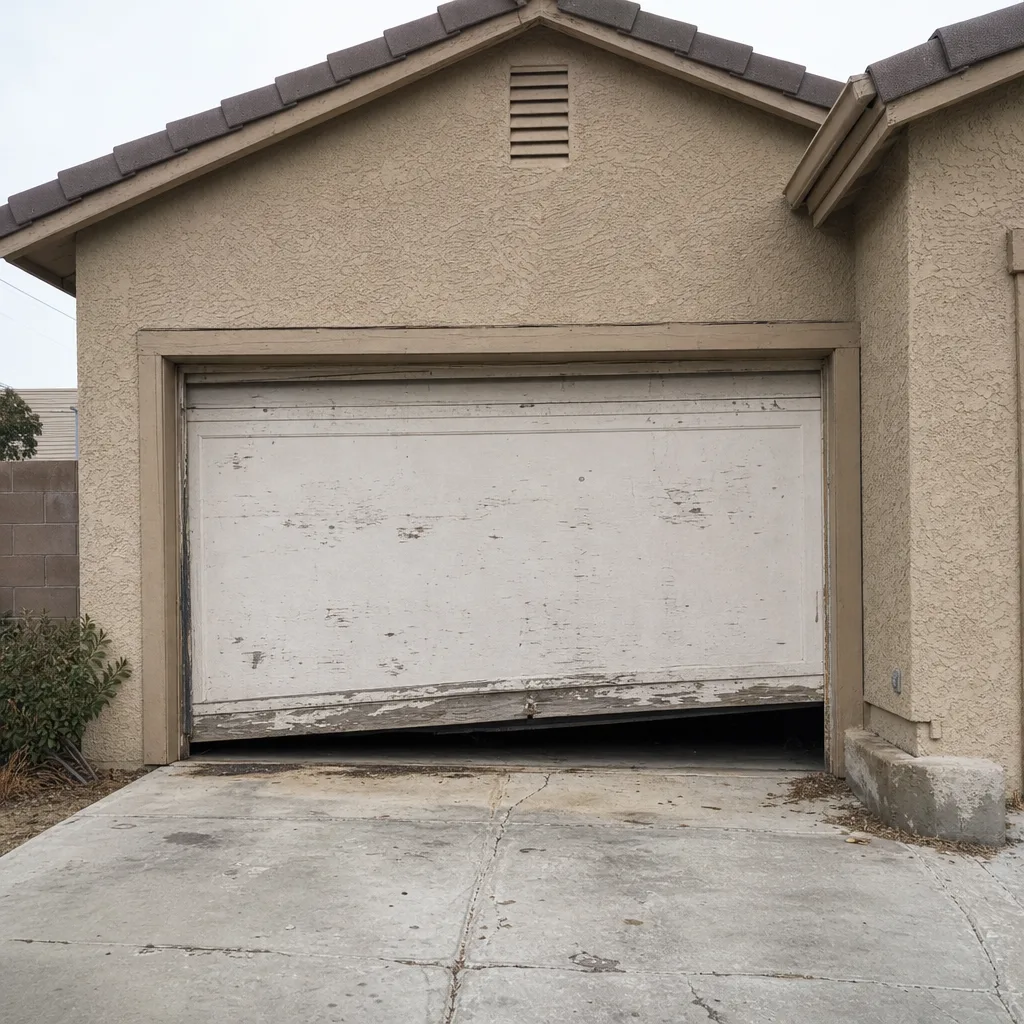
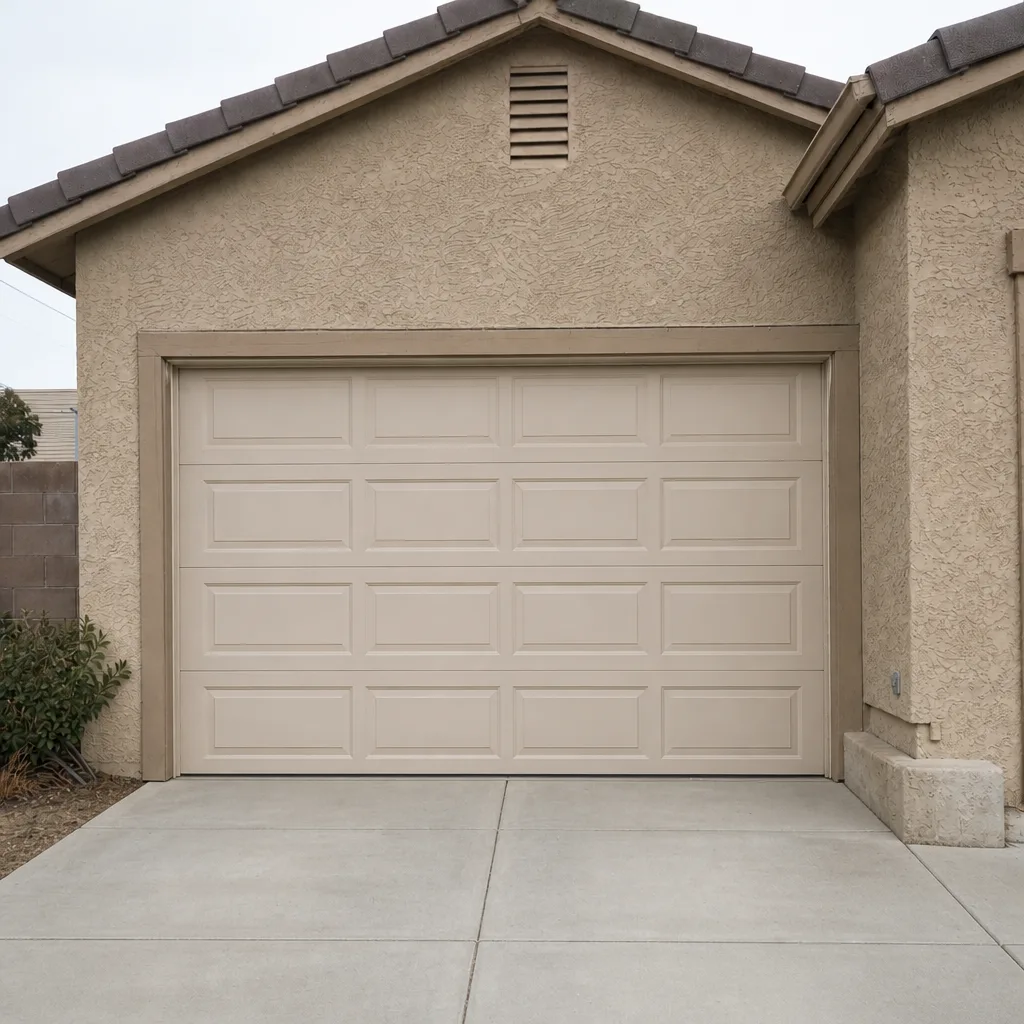
See the difference
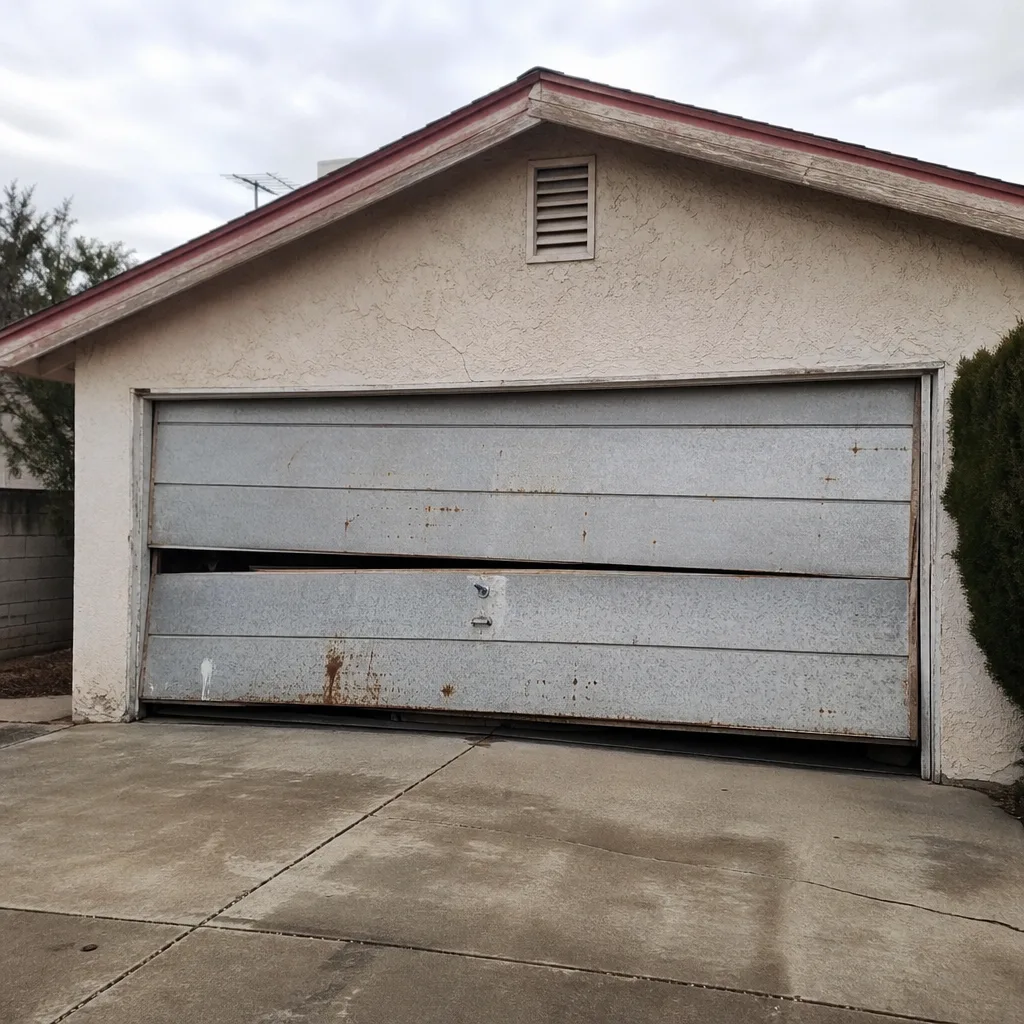 Before
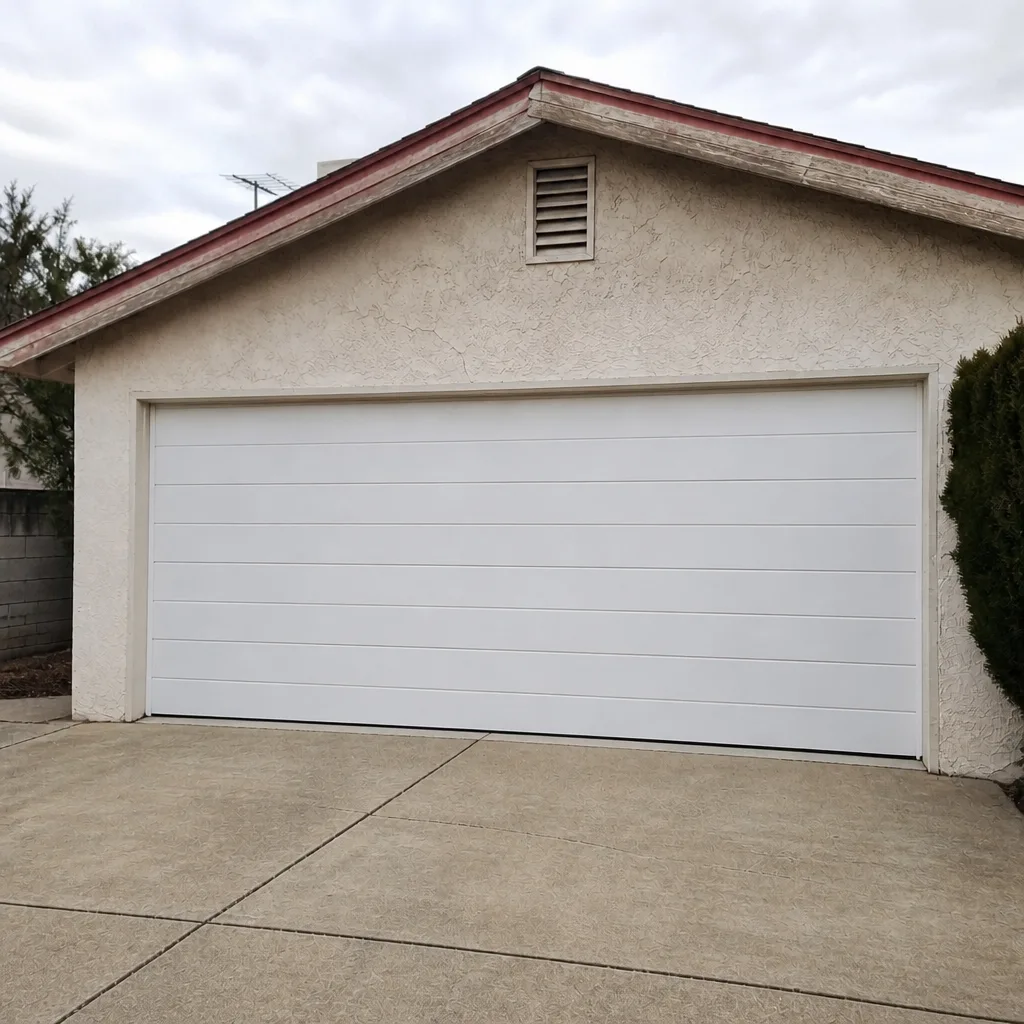 After
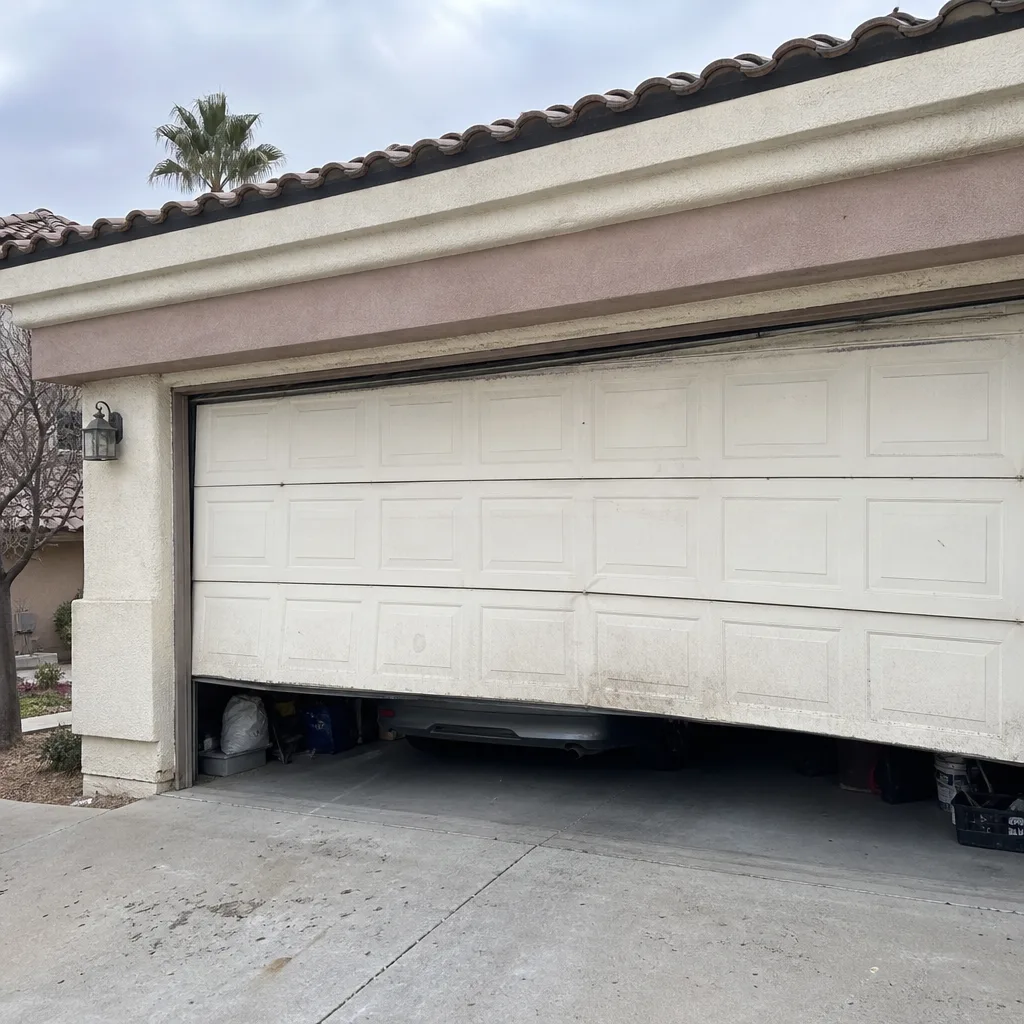 Before
 After
 Before
 After
When to Call a Professional
Many of the tasks in this guide are safe for a homeowner with a ladder and a shop vac. Some are not. Call a professional for anything involving springs, cables, torsion bars, or a door that isn’t running evenly. Springs and cables are under enough tension to cause serious injury if handled wrong, and a bent track or misaligned panel is a structural issue, not a DIY fix. Call us if you’ve felt a door slip, if the opener reverses on its own, if you see a gap in a torsion spring, or if the bottom seal is torn. Mainspring Garage Door Co. in Boulder City offers free estimates – call (833) 605-8582 and we’ll get you a straight answer and an upfront price before any work begins. Our technicians have up to 10 years of experience with every major brand, including LiftMaster, Chamberlain, Genie, and Clopay. Every job is covered by our 90-Day Done Right Promise, in writing.
Frequently Asked Questions
October is the best month, and early November is the second-best. Those are the weeks when temperatures are mild enough for a technician to work thoroughly, the daily heat cycle has eased, and you’re still ahead of the winter freeze nights. A fall inspection carries more preventive weight than a spring or summer visit.
Once a year is enough for most Boulder City homes – and it should be the fall visit, not a spring one. Higher-use doors (three or more cycles a day) can benefit from a second lighter check in May ahead of summer. Homes with older doors, wooden doors, or doors that have never been serviced may need more attention in the first year.
Yes, but mostly as a maintenance issue, not a damage issue. The haboob season from March through May pushes fine grit into every track, roller, and hinge. Vacuum and re-lubricate after any major event. Skip it and you accelerate roller wear by a noticeable margin over a three- to five-year period.
It can, but Boulder City winters rarely get cold enough to freeze the seal solid. What happens more often is that moisture collects under the seal during the day, freezes at night, and the rubber bonds to the slab. When you open the door the next morning, the seal tears rather than cracks. Warming the seal with a hair dryer before opening prevents it.
Only if a trained technician has confirmed the door is in good operating condition and simply needs a small adjustment. Turning the force up to compensate for a binding door is a mistake – it stresses the motor and masks a bigger problem. If your door is straining in the heat, the fix is usually lubrication, roller replacement, or spring tension, not the force dial.
Yes. A working garage door and a well-maintained garage door are not the same thing. The $89 Seasonal Tune-Up catches the small problems (worn rollers, dried seals, low spring tension) before they turn into a repair – or a summer failure. If it’s been more than a year since your last service, that’s the signal.
The Bottom Line
Boulder City doesn’t hand you four equal seasons. It gives you one sustained summer, a mild winter, a short spring dust season, and a narrow fall window that does most of the preventive work for the entire year. That fall window – October through early November – is the anchor. If you hit it, the rest of the year is mostly watch-and-wait. If you miss it, you’re reacting. Springs and cables are not a homeowner job – those are the one part of this door that can genuinely hurt you. Everything else in this guide is manageable with a bit of time and the right schedule. If you’ve been putting off the fall visit, it’s not too late to book one. Call (833) 605-8582 for a free estimate – we’ll tell you honestly what your door needs and quote the price upfront before any work starts. Garage door installation in Boulder City and garage door opener in Boulder City services are scheduled the same way: measured, quoted, and done right.
Written by the team at Mainspring Garage Door Co. Boulder City.