
Last updated November 18, 2026
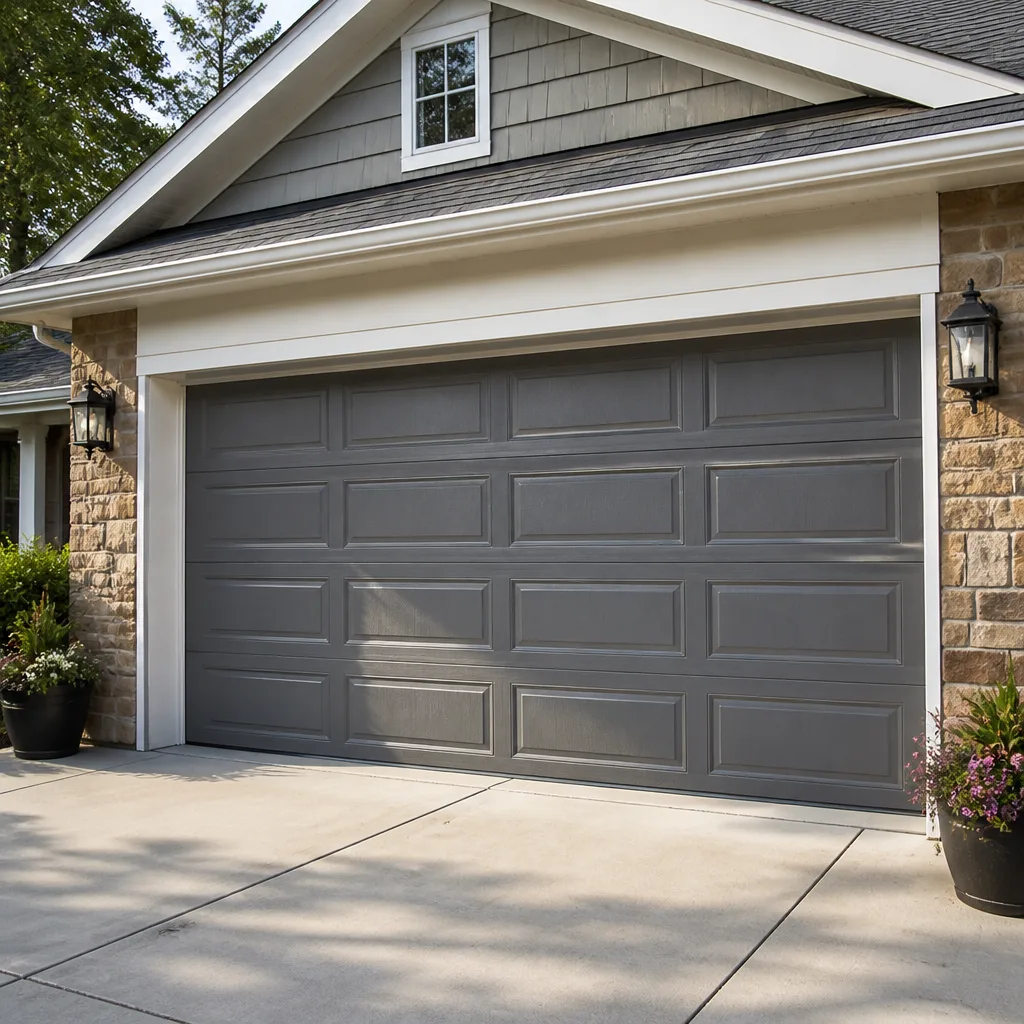 Raised-panel steel
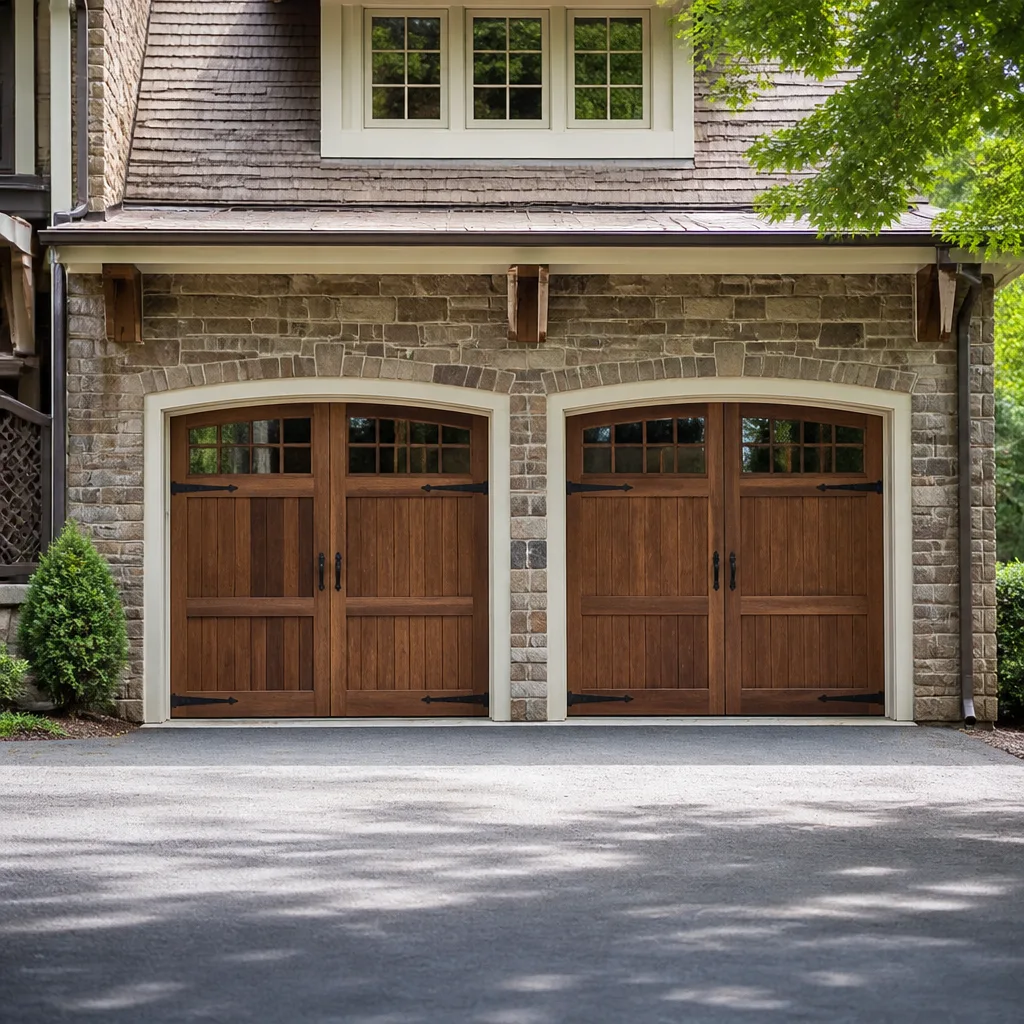 Carriage house
 Modern flush
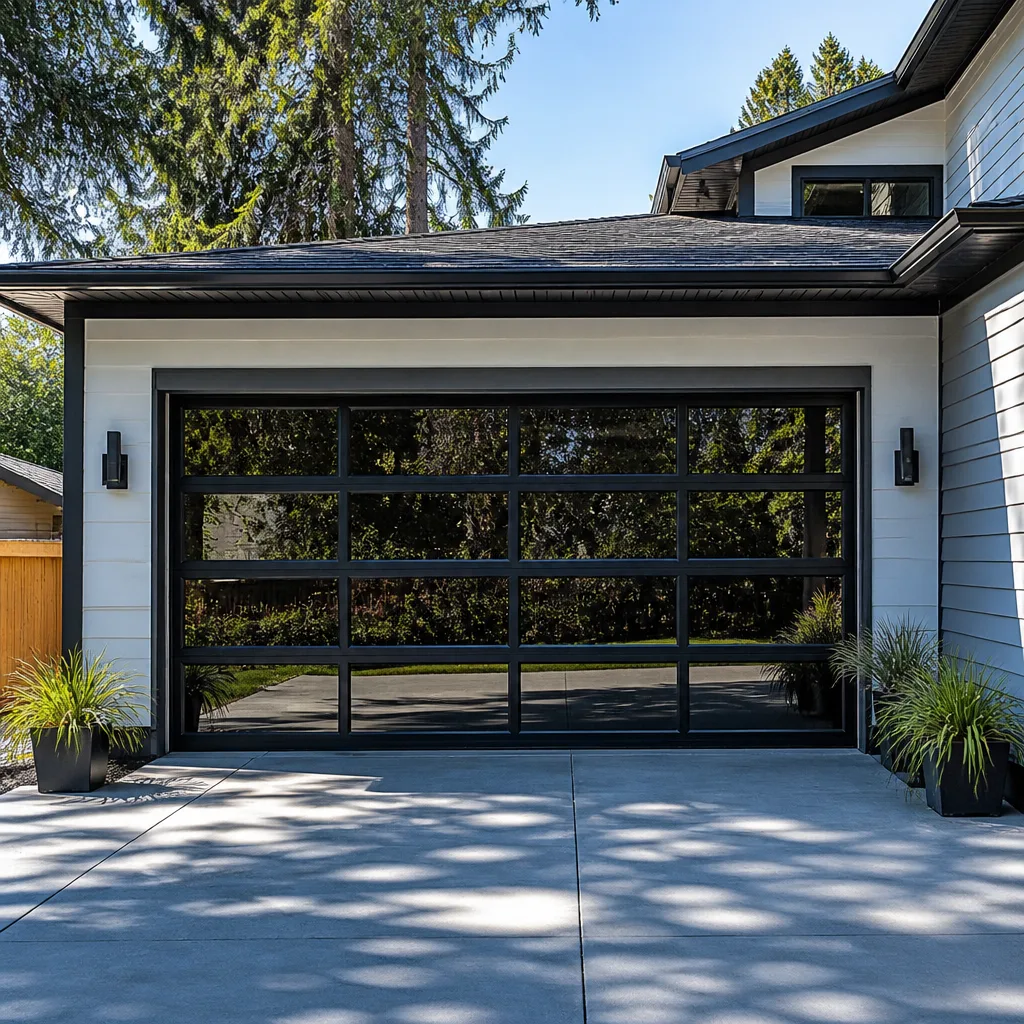 Full-view glass
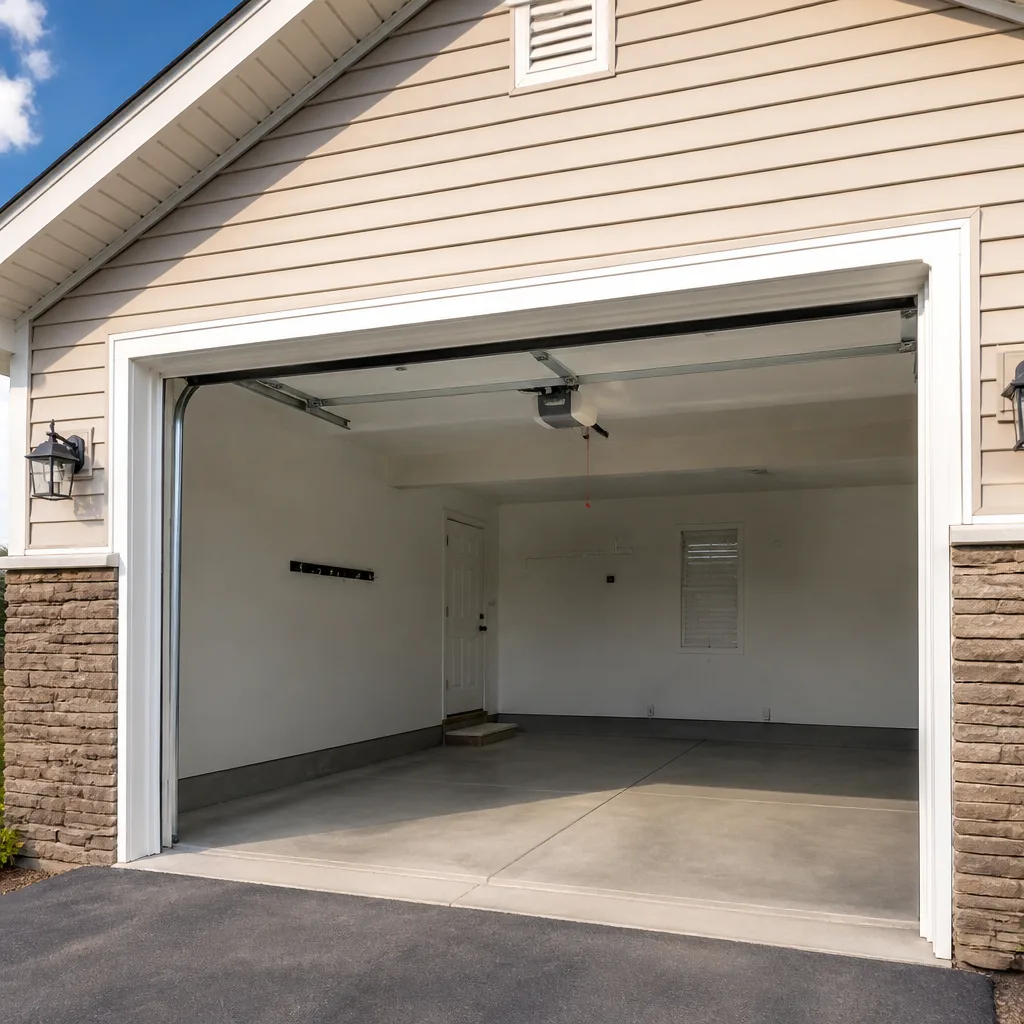 LiftMaster openers
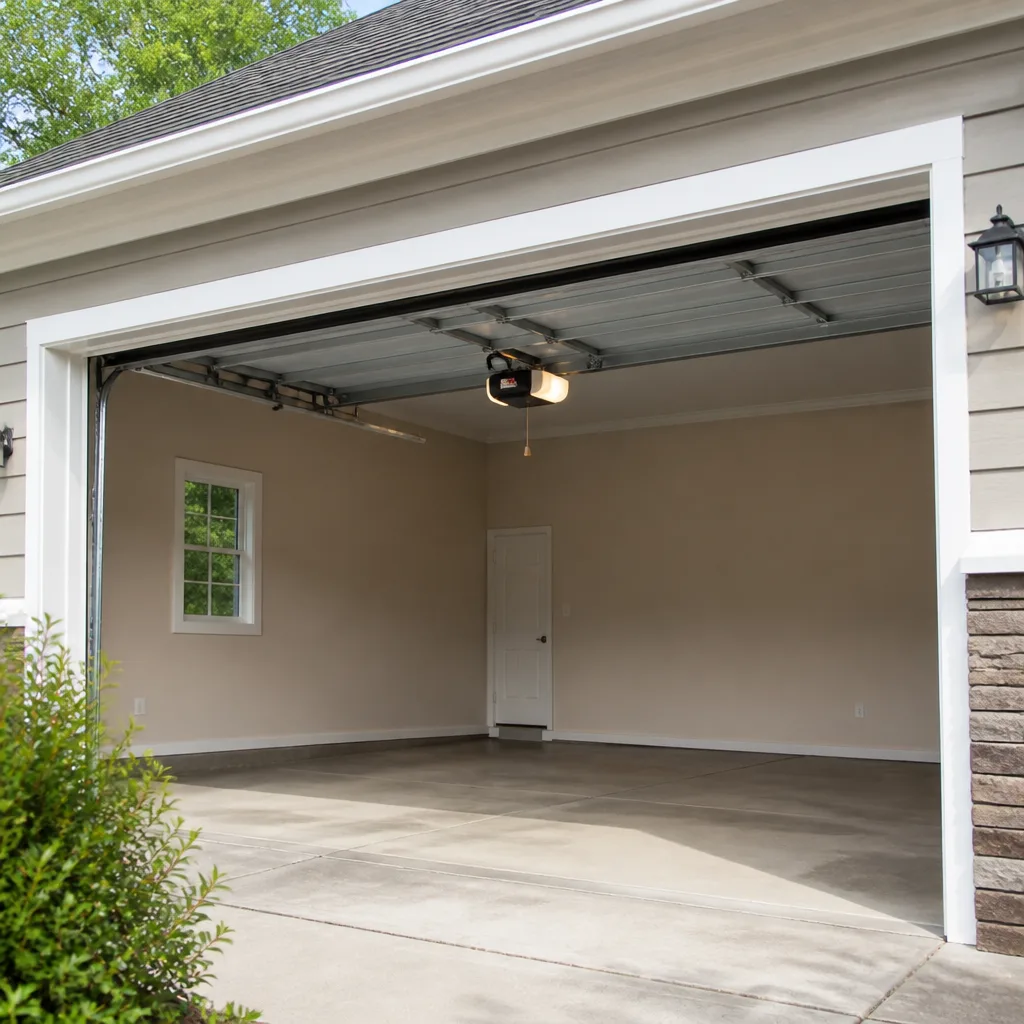 Chamberlain openers
Full 25-point door and opener safety check with every visit - springs, cables, rollers, tracks, and your LiftMaster or Chamberlain opener included
You get a price before we start. It does not change when the pro arrives.
Get your free estimateGarage Door Emergency Preparedness Guide for Boulder City Homes
Imagine this: your car is parked inside a closed garage, and the power goes out. For most homeowners in Boulder City, that’s the moment they realize they don’t know where the manual release cord is, or whether the emergency key lock on the outside panel actually works. Boulder City’s geography makes this more than a hypothetical. With one main road in and out of town and desert storms that knock out power across entire neighborhoods, a garage door that won’t open becomes a real access problem. A spring snaps, a door jumps the track in a windstorm, or the opener loses power at the worst possible time. This guide covers what to check before an emergency, how to release and secure your door safely, and when to call for help.
Quick Answer
Emergency garage door preparedness in Boulder City comes down to three things: knowing how to use the manual release cord (and why it sometimes fails), testing your exterior emergency key cylinder so you can get in when the opener is dead, and keeping a trusted technician’s number on hand for the problems you shouldn’t fix yourself. Most of this takes one afternoon to verify and costs nothing. The rest is knowing what to do in the first ten minutes of a power outage or windstorm.
Styles & brands we work with
- Raised-panel steel
- Carriage house
- Modern flush
- Full-view glass
- LiftMaster openers
- Chamberlain openers
Table of Contents
- Why an Isolated Desert Town Needs a Garage Door Plan
- How the Manual Release Works (and Why It Sometimes Fails)
- Securing Your Door From the Outside: The Emergency Key Cylinder
- What to Do When a Desert Windstorm Leaves the Door Off-Track
- The Pre-Emergency Checklist: What to Verify This Week
- Reconnecting the Opener After a Power Outage
- What You Can Check and What You Should Never Touch
- When to Call a Professional
Why an Isolated Desert Town Needs a Garage Door Plan
Boulder City sits apart from the rest of the Las Vegas Valley, and that’s part of its appeal. It’s also the reason a garage door that won’t open carries more weight here than it might in a bigger city. When the power goes down after a summer monsoon or a wind event sweeps through the Eldorado Valley, the nearest backup isn’t next door. It’s a drive. And if your car is trapped behind a dead door, that drive is impossible until you deal with the door.
We’ve answered calls from homes near Boulder City Historic District where a door had been stuck shut since the previous evening. We’ve also helped near Bootleg Canyon after storm gusts had shifted a panel off its rollers. The pattern is consistent: the homeowners who fare best are the ones who knew where the release cord hung and whether their outside lock turned before anything went wrong.
There’s a second factor unique to desert living. A garage in Boulder City isn’t just parking. It’s often storage, a second refrigerator, holiday boxes, tools. When a door stays closed for days because it won’t open, that space becomes a locked room. A few minutes of preparation now prevents that.
And there’s the security side. Boulder City has a low crime rate, and residents value that. An open garage door overnight, with no way to close it, is a standing invitation you didn’t give. Keep all of this in mind as you read the rest of this Mainspring Garage Door Co. Boulder City home guide. The aim is simple: you should never be stuck.
How the Manual Release Works (and Why It Sometimes Fails)
Every opener has a manual release, and nearly every model works the same way: a cord with a handle that disconnects the door from the opener’s carriage. Pull it down sharply, and the door should slide freely on its tracks so you can lift it by hand. The trick is that the cord isn’t a do-it-yourself fix. It’s a piece of emergency knowledge. If it doesn’t work, that’s a repair, not a wrestling match.
The common failure point we see is this: you pull the cord, you hear a click, but the carriage doesn’t disengage. The door stays locked to the opener, and no amount of pulling helps. This happens for a few reasons:
- The cord was pulled at an angle instead of straight down.
- The carriage release lever is seized from lack of use or desert dust creeping into the mechanism.
- An older opener’s release arm has bent or worn, so the latch never fully opens.
- The door’s own weight is binding on the tracks, so even disengaged, it won’t budge.
Here’s what to do in sequence, if and only if you can safely reach the cord (a door spring is under extreme tension; never go near the springs or cables to force anything):
- Stand on a sturdy step to reach the cord. Don’t stretch or stand on a chair.
- Pull the cord straight down, sharply, once.
- Listen for a click at the carriage. Then try lifting the door by its bottom section, using the handle if there is one.
- If the door lifts, prop it open and address the opener issue when power returns or a technician arrives.
- If the door won’t lift or the carriage stays latched, stop. Don’t force it. That’s a call.
We test release cords on every tune-up. It’s a 10-second check that saves a serious headache. If an opener is a LiftMaster, Chamberlain, or Genie model and the release has never been tried, this week is the time.
Securing Your Door From the Outside: The Emergency Key Cylinder
Now consider the reverse problem. Your car is outside. The garage is closed. The power is out, and the only way in is through the garage door itself. That’s when the emergency key cylinder matters. It’s the small keyed lock on the outside of the door frame that lets you disengage the opener from the outside, then lift the door by hand.
Here’s the part most people miss: an emergency key cylinder can fail quietly. It works fine in year one, gets turned maybe twice in a decade, and the tumblers stiffen. When you actually need it, the key won’t turn.
What to check this week:
- Insert the key and turn it. It should move smoothly without force. If it hesitates, it needs lubrication or replacement.
- Confirm the key you have actually matches the cylinder. Test every household key on the ring against it.
- Test the full sequence: turn the key, pull the cord inside (or the exterior release if your model has one), and lift the door.
- Check that the cylinder isn’t painted over or blocked by weatherstripping that has swelled with heat.
If you don’t have an emergency key cylinder, adding one is worthwhile for a door that faces the street. Some new doors, including several Clopay and Amarr models, can be fitted with one after the fact. A cylinder that won’t turn when you’re locked out is the same as not having one at all.
What to Do When a Desert Windstorm Leaves the Door Off-Track
Boulder City wind events are not gentle. When the gusts come through, garage doors take a beating. The most common storm damage we see is a door knocked off its track, with the bottom section bowing outward or a panel popping its rollers. It happens most on older single-car doors with light-gauge panels.
If a windstorm leaves your door off-track, the priority isn’t fixing it. It’s securing the opening so a bad situation doesn’t get worse overnight. Here’s the sequence:
- Step away from the door. An off-track door carries stored tension. It can fall.
- Don’t try to lift or force it back onto the track. This is the leading cause of serious injury.
- Secure the opening. If the door is hanging open and the street faces your garage, use a heavy-duty ratchet strap or a bar across the track to keep the door from dropping while you wait. On some doors, a pair of locking pliers clamped on the track below the bottom roller will hold it.
- Check the weather. If another wind event is coming, close the door as far as it will go without force and secure it from inside.
- Call for service. An off-track door is a repair, not a maintenance task. Most can be corrected in one visit if the tracks are still straight.
One local note: in Boulder City, where a door faces open desert, we occasionally find a door pushed off-track by debris, not just wind. A rolled trash can or a loose fence board can do it. Walk the property after a storm.
The Pre-Emergency Checklist: What to Verify This Week
This is the part you can do now. None of it is dangerous. All of it is worth an afternoon. If you do nothing else from this guide, run through this list:
- Battery backup status. If your opener has a battery backup, check the indicator light. Most have a test button. Press it and confirm the door runs on battery power. Replace batteries every couple of years, or per the opener’s manual.
- Manual release cord. Locate it, confirm it hangs within reach (about 6 feet above the floor on most doors), and test it once.
- Emergency key cylinder. Insert the key, turn it, and confirm it moves freely.
- Door balance. Disconnect the opener (using the release), then lift the door halfway by hand. A balanced door should stay put. One that slams shut or feels heavy needs a professional. Don’t adjust springs yourself.
- Safety sensors. Press the wall button and pass something in front of the sensor eyes. The door should reverse. If it doesn’t, that’s a call.
- Emergency contact. Save the number for a trusted garage door technician, along with the model number of your opener. We keep ours live 24/7.
- Written estimate on file. If a technician has quoted a spring or cable replacement, keep it. You’ll want to know what it costs before a spring snaps at 9 p.m.
For a spring or cable that’s near the end of its life, or for a door that was last serviced a decade ago, an inspection can catch a problem before it becomes an emergency. Seasonal tune-ups are also a good idea. Our seasonal tune-up is a standing $89 offer, and it covers most of the checklist above, minus the door balance test if the door isn’t safe to free-lift.
Reconnecting the Opener After a Power Outage
Once power returns, you need to re-engage the opener with the door. Do it correctly and the drive system lasts. Do it wrong and you can damage the carriage, the belt, or the logic board.
Here’s the correct sequence:
- Lower the door fully by hand so the bottom rests on the floor.
- Check the tracks. Make sure no rollers have escaped and the door is sitting squarely in both tracks.
- Push the door up slightly and watch for the carriage. On most openers, the carriage slides to the door’s arm and clicks into place automatically. On some models, you’ll need to press the release lever back to the locked position.
- Reconnect the arm to the carriage and confirm the locking pin is seated.
- Press the wall button to test. The door should run up and back down evenly, stopping at the right limits.
- Recheck the safety sensors. If the door runs but reverses for no clear reason, the sensor alignment moved.
If the carriage won’t re-engage, or if the door lurches when you press the button, stop and call. For a reliable opener reset, our opener service covers most major models, including LiftMaster, Chamberlain, and Genie. We also handle installation of new battery-backup openers if yours doesn’t have one. If you’re considering a new door to replace a storm-battered unit, installation options in Boulder City include impact-rated doors from Clopay and Amarr.
What You Can Check and What You Should Never Touch
The line is simple: you can check anything that doesn’t put your hands under tension. A torsion spring carries the entire weight of the door, and a cable under load can slice through a hand. Neither is a do-it-yourself component.
Safe to check:
- Battery backup indicator (per the manual)
- Manual release cord operation
- Emergency key cylinder function
- Safety sensor alignment and function
- Condition of rollers, hinges, and weatherstripping by sight
Call a technician for:
- Broken springs of any kind (torsion or extension)
- Cables that are frayed, slack, or off their drums
- A door that is off-track, bent, or jammed
- Any adjustment to door weight or balance
- A door that won’t stay open or closes on its own
We say this because we’ve seen the alternative. A homeowner in Boulder City who tried to adjust a torsion spring ended up with a broken thumb and a door that fell. The spring replacement would have been a standard repair. The injury was avoidable. For more detail on what’s worth fixing and what’s worth replacing, our repair services overview is the right place to start.
Common Mistakes to Avoid
- Never testing the manual release. The most common mistake we see, and the one that causes the most stuck-in-garage calls. Test it once, this month.
- Forgetting to test the outside key cylinder. A cylinder that worked when the house was new may not turn 15 years later, especially with desert dust and heat cycling.
- Pulling the release cord while the door is under load. The release should be pulled when the door is fully closed or fully open, never mid-travel. Pulling mid-travel can send the door slamming shut.
- Trying to force the carriage to re-engage. If it won’t click, the door and opener aren’t aligned. Forcing the arm can damage the logic board or bend the carriage.
- Running the door repeatedly on battery backup. Battery backup is for getting in and out once or twice. It’s not meant for daily operation.
- Ignoring a door that reverses on its own. A door that reverses or opens the door partially after a storm is often off its sensors or its tracks. Boulder City wind events leave this pattern often.
- Assuming an off-track door is a “next week” problem. An off-track door can drop in the night. Secure the opening before you go to bed.
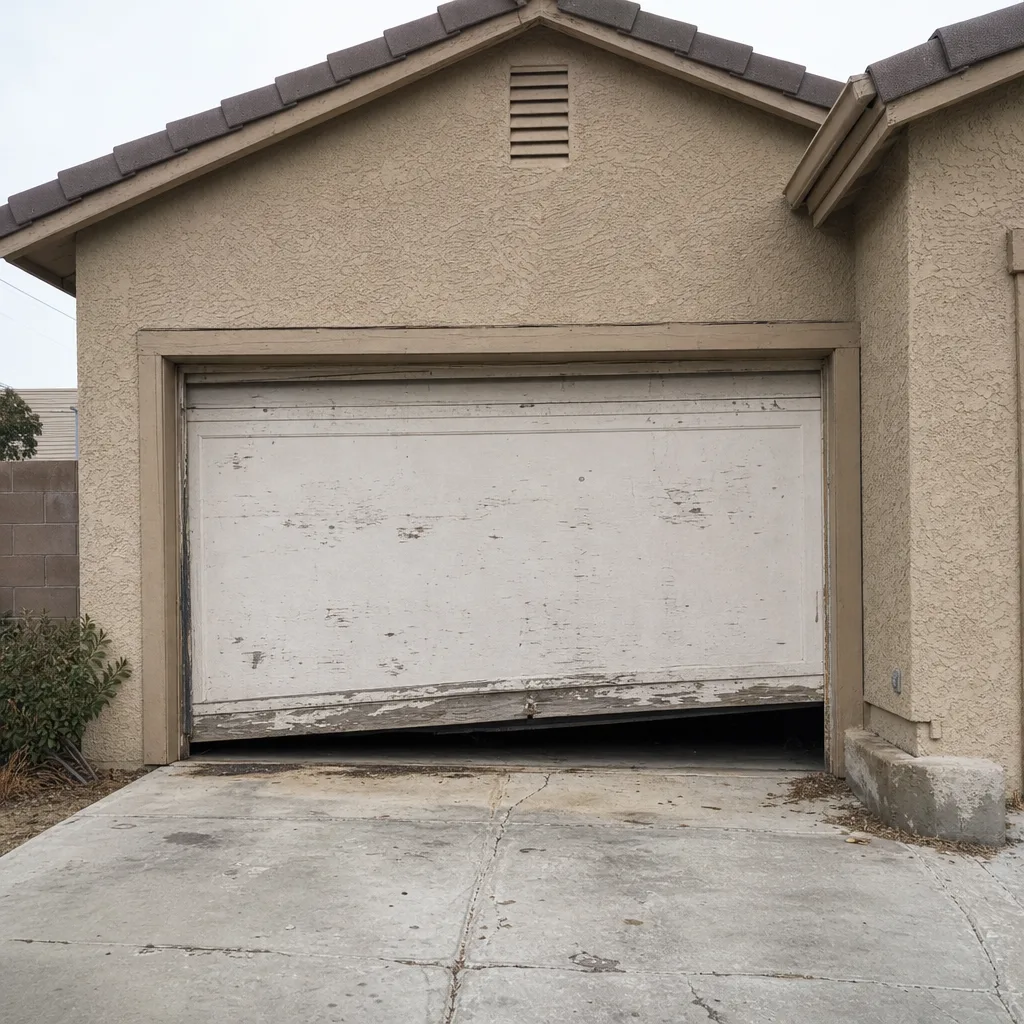
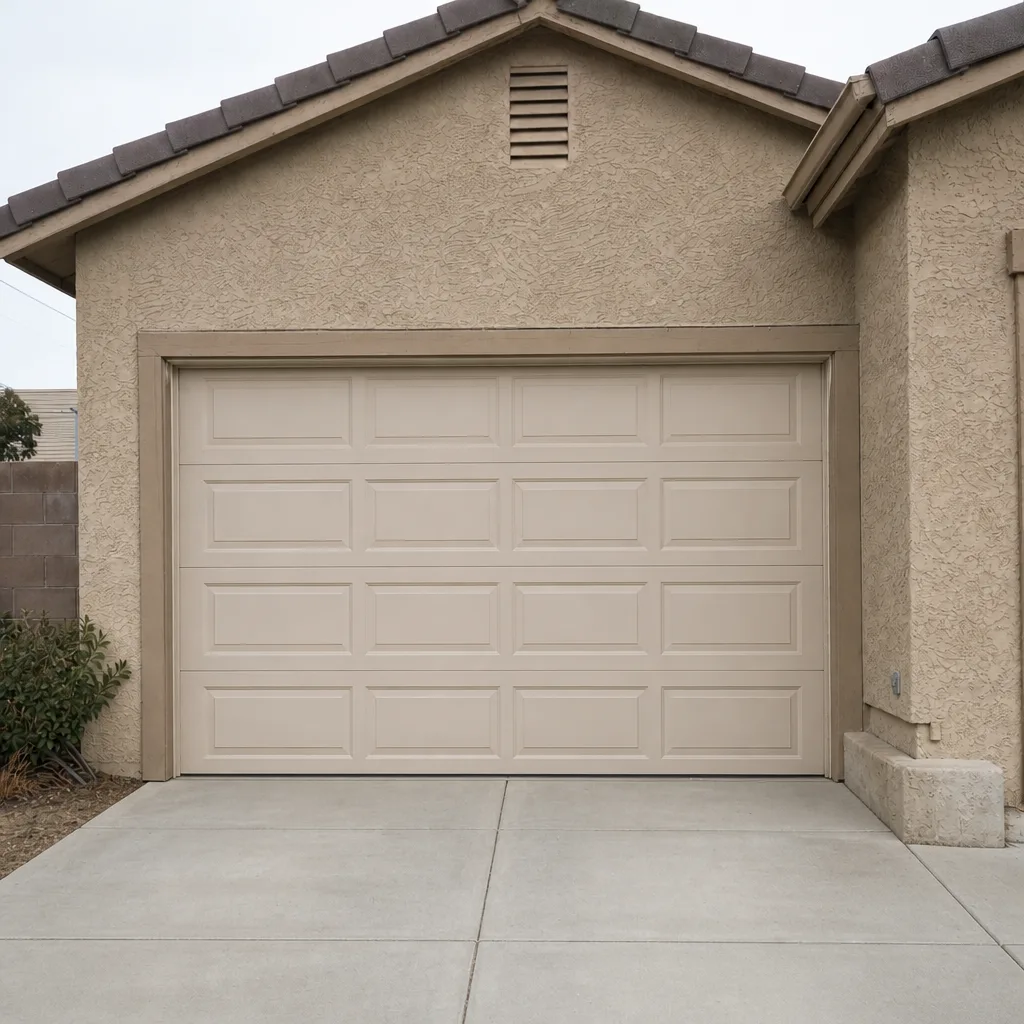
See the difference
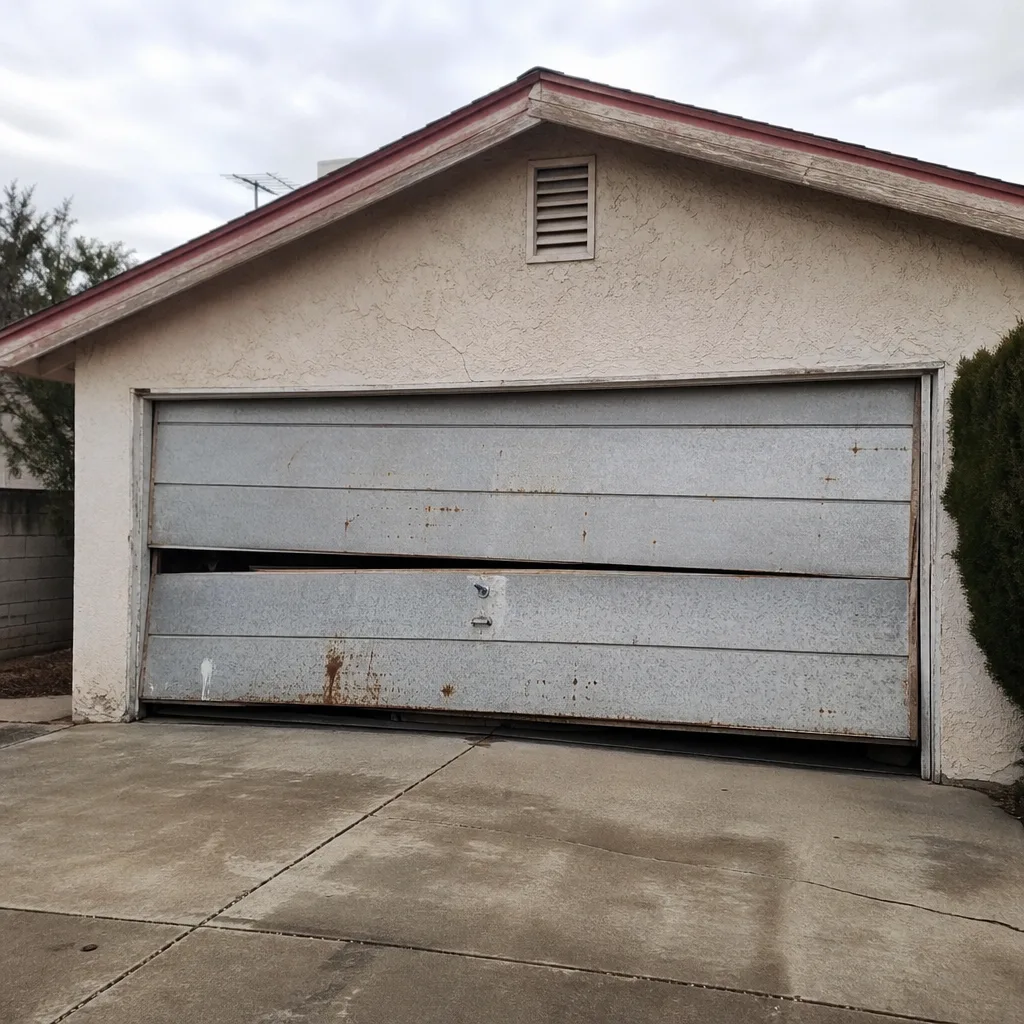 Before
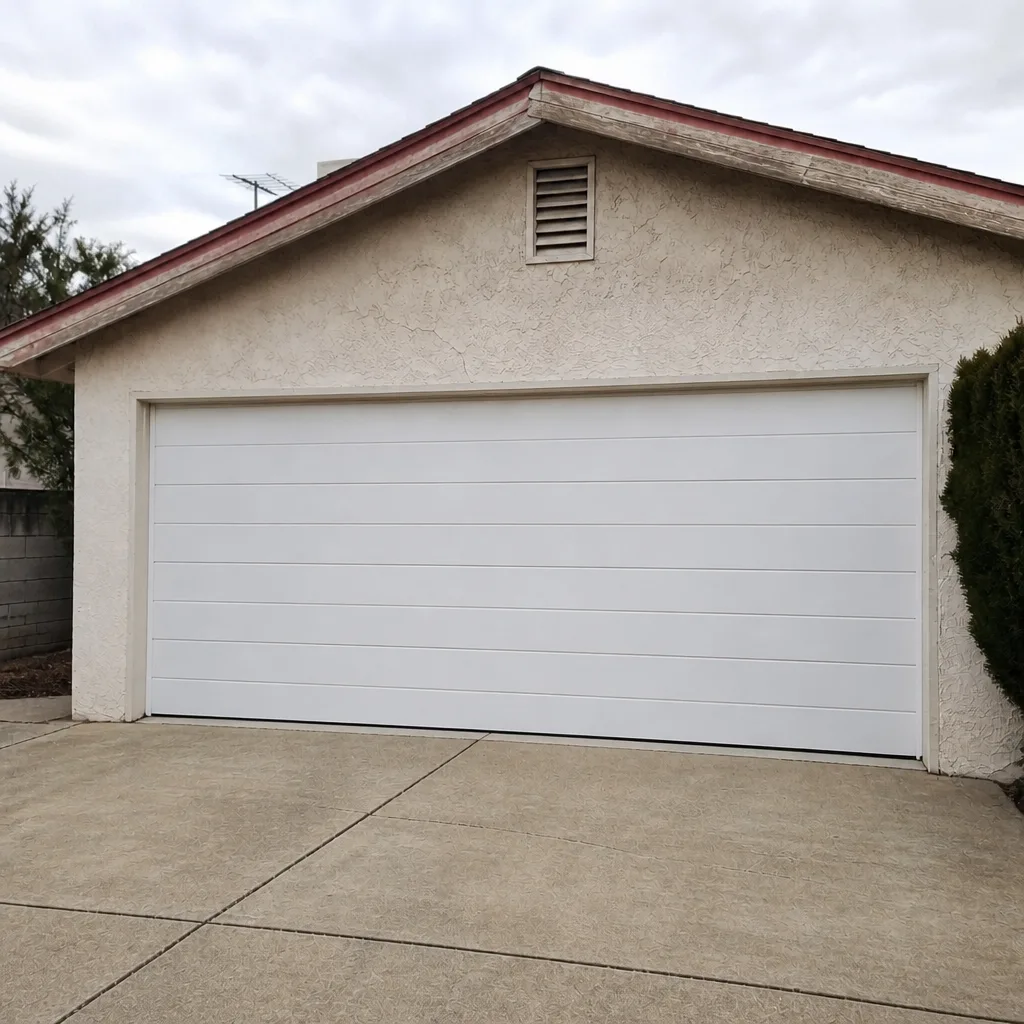 After
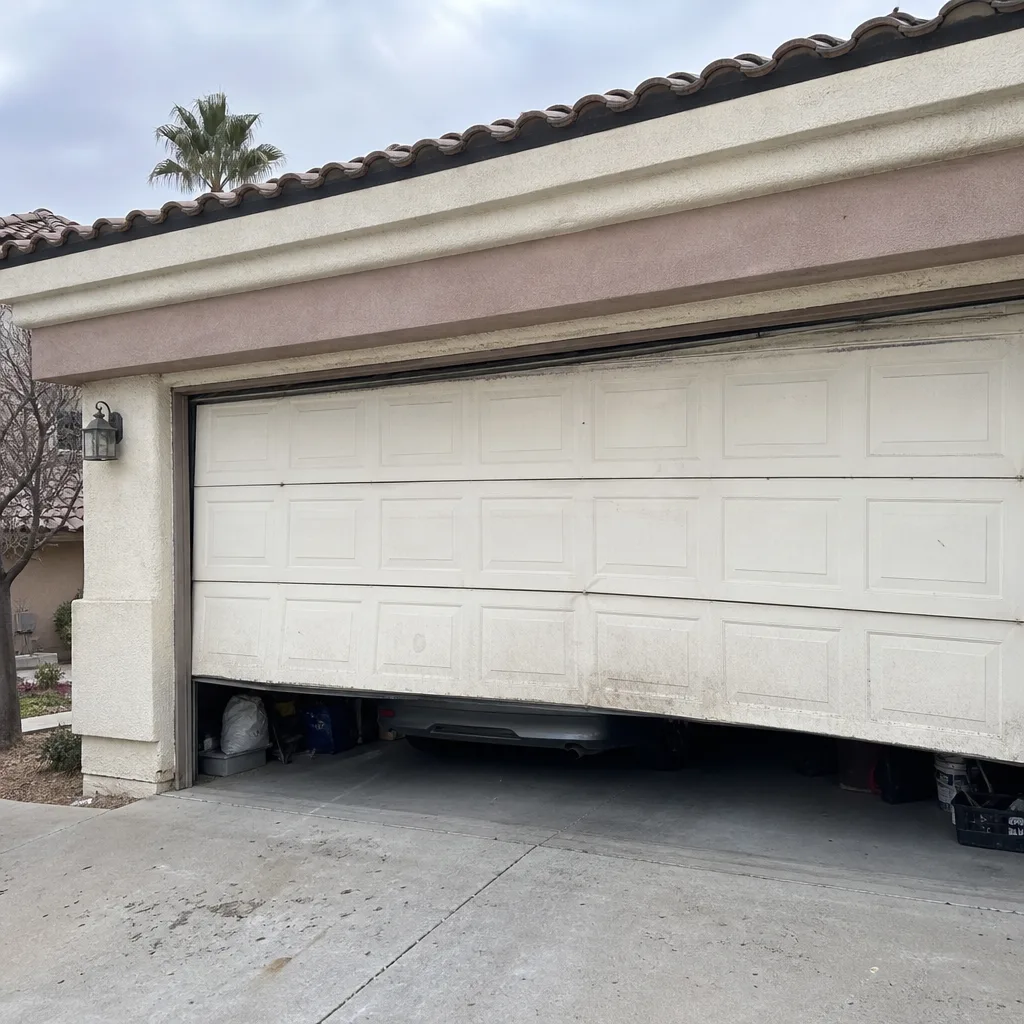 Before
 After
 Before
 After
When to Call a Professional
Call a professional for any spring, cable, or track repair, for a door that won’t stay open, and for any door that has come off its track. Those are the four situations where working on it yourself risks injury. Also call if your opener won’t re-engage after an outage, if your door reverses on its own, or if your emergency key cylinder won’t turn and you need to get in now. Mainspring Garage Door Co. Boulder City offers free estimates and answers every call with a live person, 24/7. Every job is quoted up front, and completed work is backed by our 90-Day Done Right Promise. If a repair is needed, call (833) 605-8582 today.
Frequently Asked Questions
Pull the manual release cord straight down to disengage the opener from the carriage, then lift the door by hand. If the door won’t lift or the carriage stays latched, don’t force it. Call a technician. The release cord is only for after the door is at rest, not mid-travel.
The release cord often fails because the carriage’s release lever is seized or the cord was pulled at an angle instead of straight down. Other causes include a bent release arm on older openers, or the door binding on its tracks. If a straight, firm pull doesn’t disengage the carriage, the opener needs service.
Stay away from the door, don’t try to force it back onto the track, and secure the opening with a ratchet strap or locking pliers on the track below the bottom roller. Then call a garage door technician. An off-track door can fall, and most cases are corrected in a single visit if the tracks aren’t badly bent.
Yes, if the door is fully closed and sitting squarely in both tracks. Push the door up slightly to let the carriage slide to the arm and click into place, or press the release lever back. If it won’t engage, don’t force it. Call a technician rather than damage the drive system.
An emergency service call in Boulder City typically runs $150 to $350 for the visit, plus parts. A standard torsion spring replacement is usually $180 to $340 installed, and a cable replacement is often $130 to $220. Mainspring states the price before any work begins, and estimates are free.
Yes. A battery backup keeps the opener running during a power outage, but it only lasts a limited number of cycles, and it does nothing if the door itself is jammed or off-track. An exterior key cylinder remains the way in if the opener fails or you’re locked out. Test it this month.
The Bottom Line
Boulder City homeowners are well-served by a short checklist and one key phone number. Test your manual release. Test the outside key cylinder. Check the battery backup. Know which door repairs belong to a technician and which belong to you. If a windstorm leaves the door off-track, secure the opening and call rather than force it. And keep a trusted technician’s number on file, because the day you need it is not the day to find it. Mainspring Garage Door Co. Boulder City has done this work in Boulder City for a long time, and we’re here when you need us.
Contact Us
Call Mainspring Garage Door Co. Boulder City at (833) 605-8582 for a free estimate. We answer every call with a live person, 24/7, including nights, weekends, and holidays. Our technicians are background-checked and uniformed, they arrive with the parts already on the truck, and they state the flat price before any work begins. Every completed job is backed by our 90-Day Done Right Promise, in writing. If it isn’t done right, we make it right. We also offer a standing $50 off any repair over $250, a free second opinion on any written estimate, an $89 seasonal tune-up, and a permanent 5% discount for seniors and veterans. For more on what we do and where we serve, visit our Mainspring Garage Door Co. Boulder City home page.
Written by the team at Mainspring Garage Door Co. Boulder City.