
Last updated November 18, 2026
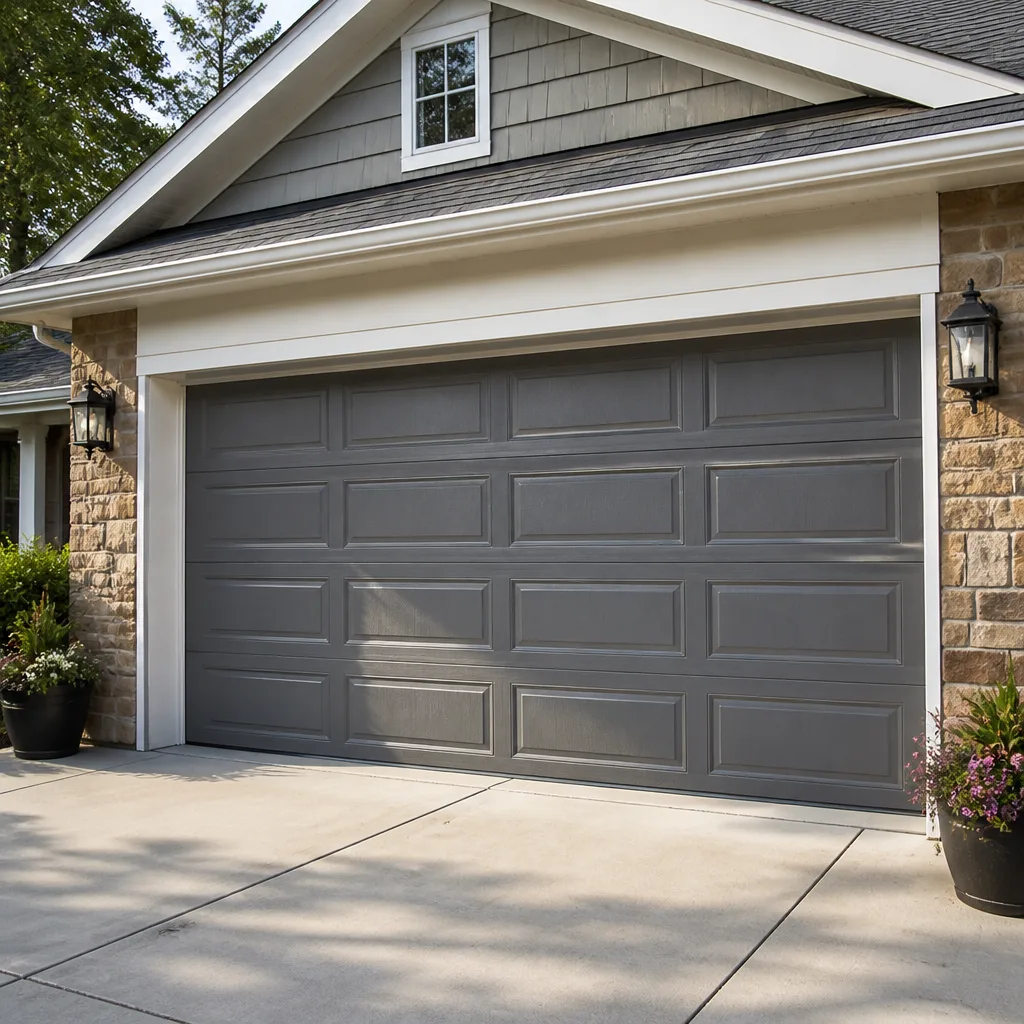 Raised-panel steel
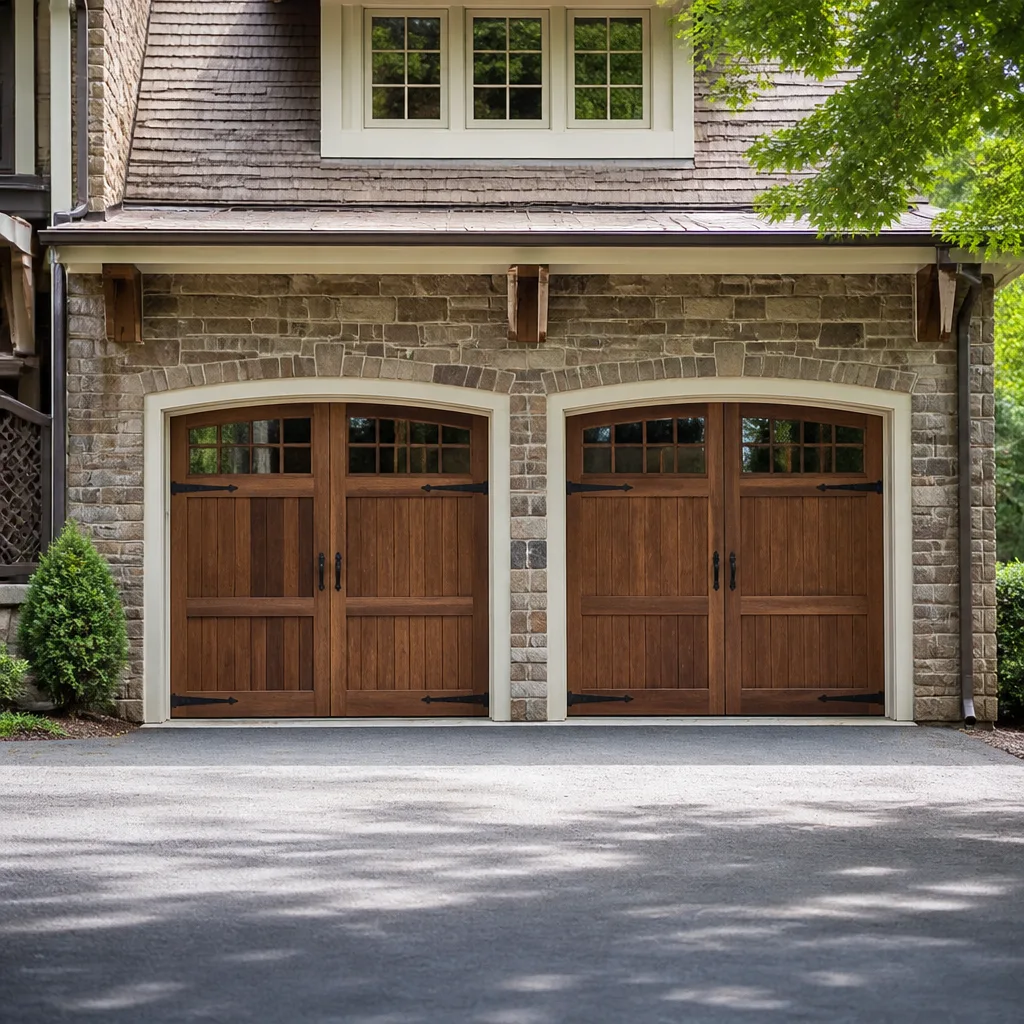 Carriage house
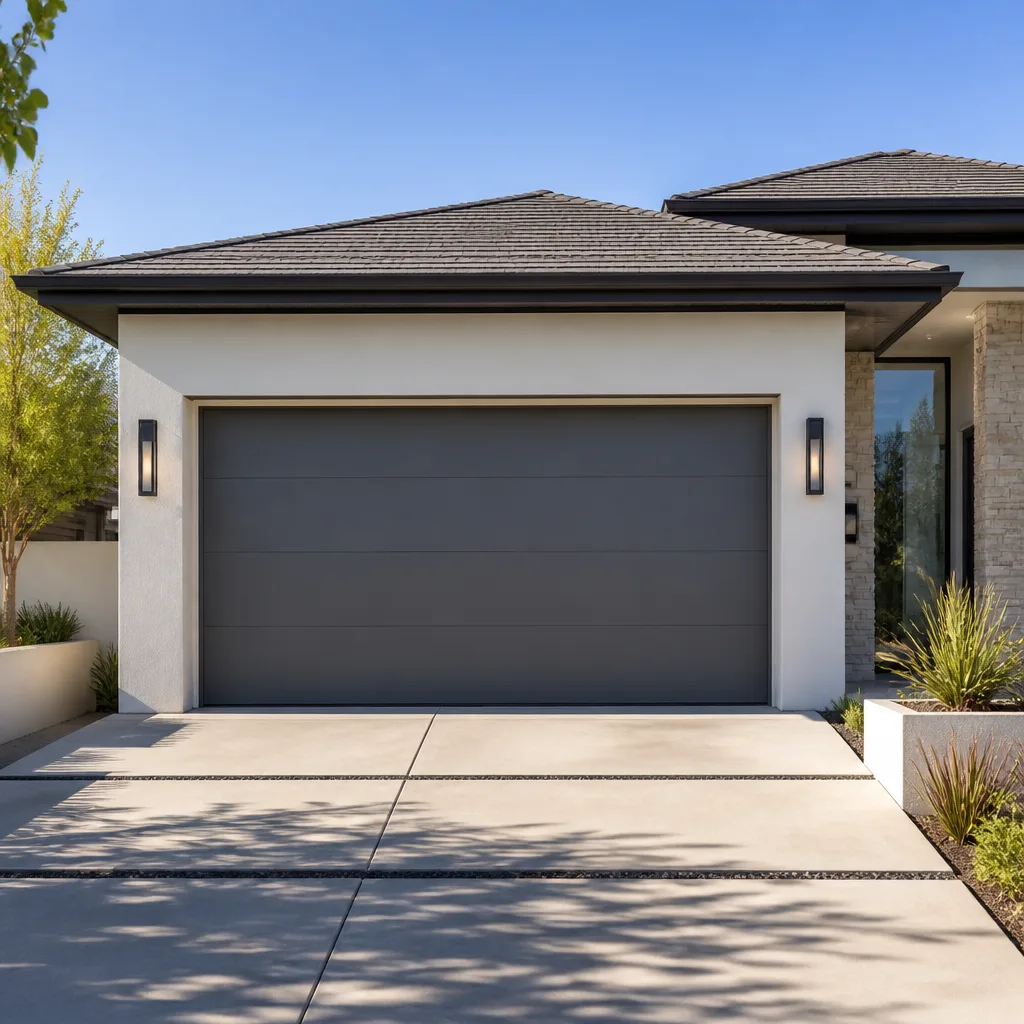 Modern flush
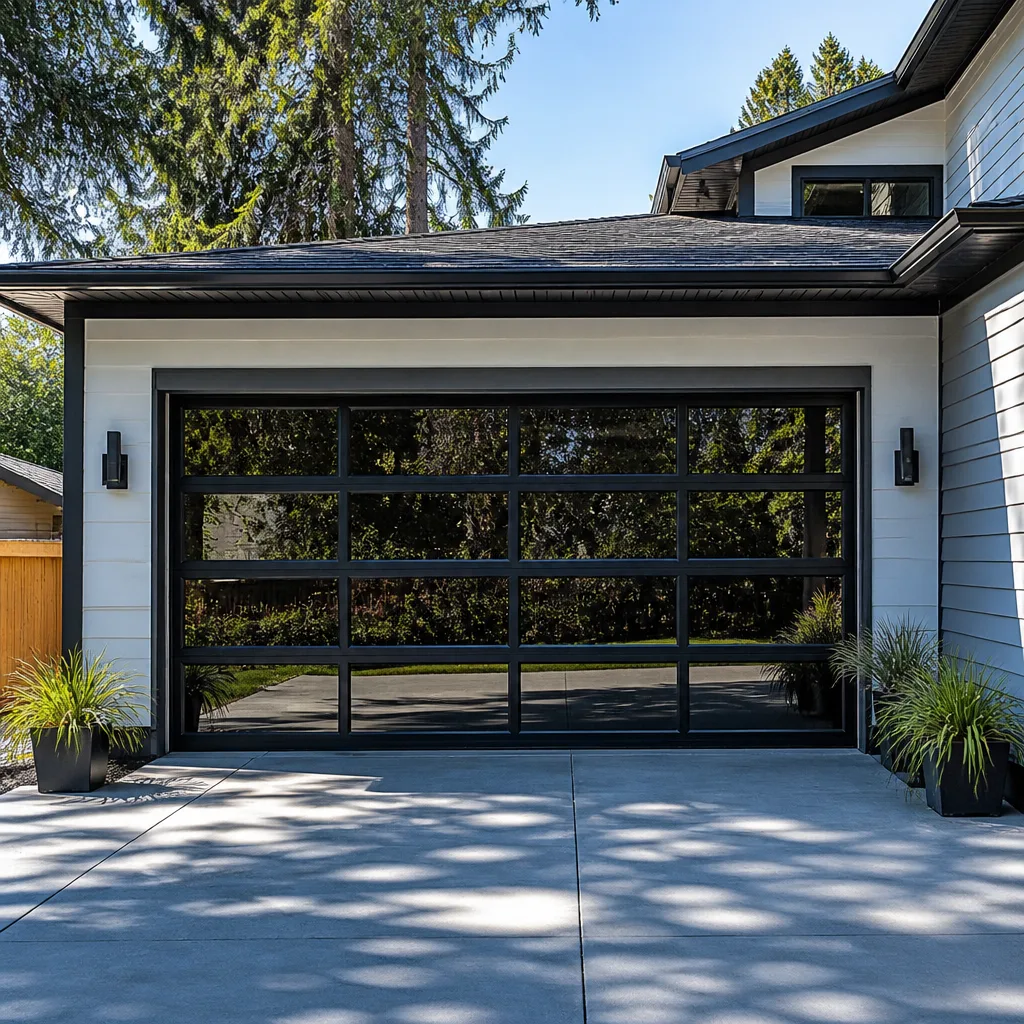 Full-view glass
 LiftMaster openers
 Chamberlain openers
Full 25-point door and opener safety check with every visit - springs, cables, rollers, tracks, and your LiftMaster or Chamberlain opener included
You get a price before we start. It does not change when the pro arrives.
Get your free estimateThe Complete Garage Door Parts Guide for Boulder City Homeowners
Most homeowners know their garage door has springs, but they don’t know there are two entirely different spring systems – torsion and extension – that operate on different physics, fail differently, and require different replacement approaches. One stores energy along the header above the opening. The other runs along the sides of the tracks and stretches as the door closes. Understanding which system you have changes how you read a repair quote, and it changes what you should expect to pay. In this guide, we’ll walk through every major part of a garage door assembly, how long each one lasts under Boulder City conditions, which parts wear out together, and which ones you should never touch yourself.
Quick Answer
A garage door is an assembly of roughly a dozen component systems – springs, cables, drums, rollers, hinges, tracks, weather seal, and panels – and each one has its own lifespan and failure mode. In Boulder City, UV exposure, desert heat cycling, and dry air cause the bottom seal, springs, and rollers to wear faster than national averages. Knowing each part by name and function lets you recognize when a repair recommendation is proportionate and when it’s not.
Styles & brands we work with
- Raised-panel steel
- Carriage house
- Modern flush
- Full-view glass
- LiftMaster openers
- Chamberlain openers
Table of Contents
- Torsion Springs vs. Extension Springs: Two Systems, Two Sets of Physics
- Cables and Drums: The Parts That Carry the Load
- Rollers and Hinges: The Parts That Move Every Day
- Tracks and Panels: Structure and Alignment
- Weather Seal and Bottom Seal: The Desert Wears These Out First
- How Long Each Part Lasts Under Boulder City Conditions
- What Can Be Replaced Alone vs. What Requires Retensioning
- Parts You Should Never Handle Yourself
Torsion Springs vs. Extension Springs: Two Systems, Two Sets of Physics
Walk into any Boulder City garage and you’ll find one of two spring systems. Torsion springs mount horizontally on a shaft above the door opening and twist as the door closes, storing energy to lift it again. Extension springs run along the horizontal tracks on either side and stretch as the door closes, pulling it back up on the way out. Both do the same job – counterbalancing a door that weighs anywhere from 100 to 350 pounds – but they do it differently, fail differently, and are serviced differently.
Torsion spring systems are the more common choice on newer doors and on heavier double-car doors. They’re quieter, they’re more compact, and a single torsion spring pair can carry a heavier door than extension springs of similar size. The tradeoff is that torsion springs require retensioning during service, which makes them a slightly more technical job.
Extension springs are simpler and cheaper to replace, but they fail more dramatically. When an extension spring breaks, it snaps outward along the track. That’s why extension systems include safety cables running through the center of each spring – the cable catches the broken spring before it can damage a car or a person. If your extension springs don’t have safety cables, that’s a genuine safety gap worth addressing.
In Boulder City, we see both systems regularly, and we’ve noticed that extension springs on older doors – many of the homes built in the 1970s and 1980s still have their original hardware – are often running past their rated cycle life without any obvious sign. The door still goes up and down, so nobody thinks about it. That’s when we recommend a close inspection.
Cables and Drums: The Parts That Carry the Load
Cables are the steel lift lines that connect the bottom corners of the door to the spring system. On a torsion setup, they wind around cable drums mounted on the spring shaft; on an extension setup, they loop through pulleys and anchor to the spring. Either way, the cable is the part that actually transfers the spring’s lifting force to the door.
Cables fail from fatigue and from rust. In Boulder City’s dry air, rust is less of an issue than it is in coastal cities, but fatigue is real. Every time your door cycles, the cable flexes at the drum or pulley. After several thousand cycles, individual strands can break inside the braid. A cable with even one broken strand is compromised and should be replaced – a snapped cable under tension can whip, and it drops the door unceremoniously.
Cable drums are the spooled wheels that guide the cable as the door opens and closes. They wear out more slowly than cables, but they can develop grooves, cracks, or worn cable seats. When a drum goes bad, the cable can jump the groove, and the door lifts unevenly or binds.
Here’s the part most homeowners don’t realize: cables and drums are part of the spring system, not separate from it. When you replace one, the entire assembly has to be retensioned. That’s why a cable replacement is rarely a “just swap the cable” job – the technician has to release the spring tension, replace the cable, reset the drums, and retension to the correct amount for your door’s weight. It’s not complicated work, but it’s not homeowner work, and the price reflects the skill involved.
Rollers and Hinges: The Parts That Move Every Day
Rollers are the small wheels that ride inside the tracks and let the door slide up and down smoothly. Your door has between 10 and 12 of them, depending on the number of panels. Standard steel rollers are the cheapest and the most common, but they’re also the noisiest and the shortest-lived. Nylon rollers are quieter and last longer, and on a door in Boulder City where the garage faces the afternoon sun, the difference is noticeable.
Hinges connect the panels to each other and hold the rollers in place. The hinges in the middle of the door are called center hinges; the hinges at the edges are end hinges, and the ones at the top and bottom corners are top and bottom brackets. Each one has a specific role, and they wear at different rates. The hinges at the top and bottom of the door bear the most load, so they wear out first.
Rollers and hinges are the parts most frequently sold as a set. That’s often appropriate – if your rollers are worn and your hinges are 15 years old, replacing both at once saves a second visit later. But it’s also the pair that gets oversold most often. If your hinges are sound and only the rollers are worn and noisy, replacing just the rollers is a legitimate repair. Ask the technician which parts are actually worn and which are being replaced as preventive maintenance. A straight answer tells you a lot.
When rollers and hinges do need replacement, the job is usually quick – an hour or less for a standard two-car door – and it’s the single best way to make an older door run quiet again.
Tracks and Panels: Structure and Alignment
Tracks are the vertical and horizontal rails the door rides in. They’re made of galvanized steel and they hold the door’s alignment. A bent or misaligned track is the most common cause of a door that binds, scrapes, or comes off its rollers. Tracks can be straightened if the bend is minor; more serious bends mean replacement, and if a track has been bent badly enough to affect the door’s travel, it’s worth checking whether the panels have been stressed too.
Panels are the sections of the door itself. On a steel door, panels can dent from a car bumper or a stray basketball. On a wood door, panels can warp, crack, or rot. In Boulder City, wood doors face a specific challenge: the low humidity and intense sun cause wood to dry and split faster than it would in a more temperate climate. We’ve seen wood panels on west-facing doors develop surface cracks within a few years if they aren’t sealed and maintained.
Panel replacement is possible on most doors, but it’s not always economical. If the panel style is still in production – Clopay, Amarr, and Wayne Dalton all keep common styles available for years – a single panel replacement is a reasonable repair. If the panel style is discontinued, replacing one panel can mean a mismatched door, and at that point a new door is often the better call.
Tracks and panels rarely need replacing at the same time as springs or cables, unless the door has taken a hard impact. If a technician recommends both, ask why. There’s usually a clear reason – a bent track from an impact that also stressed the springs, for example – but it’s fair to ask.
Weather Seal and Bottom Seal: The Desert Wears These Out First
The bottom seal is the rubber or vinyl strip that runs along the bottom edge of the door and presses against the garage floor when the door closes. It keeps out dust, insects, water, and hot air, and it’s the part that wears out fastest in Boulder City. The combination of intense UV exposure and the daily press-and-release cycle causes the seal to harden, crack, and eventually break away from the retainer.
A worn bottom seal is easy to spot: you’ll see daylight under the door when it’s closed, or you’ll feel hot air coming in around the edges. In summer, that’s not just a comfort issue – it’s an energy issue, because your garage is the hottest room in the house and a bad seal lets that heat into the walls.
The perimeter seal – the weatherstripping around the sides and top of the door opening – wears out more slowly, but it’s worth checking at the same time. If the bottom seal is shot after seven or eight years in the sun, the perimeter seal is probably close behind.
Bottom seal replacement is one of the few garage door jobs that a careful homeowner can do. It’s a matter of pulling the old seal out of the retainer and sliding in a new one. If you’d rather not climb a ladder and wrestle with a stiff retainer, we handle it as a small job – and it’s worth doing before summer, when the heat is hardest on the seal.
How Long Each Part Lasts Under Boulder City Conditions
National averages are a starting point, but they don’t account for Boulder City’s climate. Here’s what we see in our experience, adjusted for local conditions:
- Torsion springs: Rated for 10,000 cycles in standard grade, but in Boulder City’s heat cycling, we see them failing closer to 8,000 cycles. That’s roughly 7 to 10 years of daily use.
- Extension springs: Rated for 10,000 cycles; we see them lasting 6 to 9 years here, often failing without warning.
- Cables: 8 to 12 years, sooner if the door cycles more than four times a day.
- Rollers: Steel rollers, 5 to 7 years; nylon rollers, 10 to 12 years.
- Hinges: 10 to 15 years, with the top and bottom hinges wearing first.
- Bottom seal: 5 to 7 years in Boulder City sun, versus 8 to 10 years in milder climates.
- Tracks and panels: 15 to 20 years for tracks; panels last the life of the door unless damaged.
One thing to note: the cycle count on a spring is a rating, not a guarantee. A door that cycles four times a day will wear its springs faster than one that cycles twice a day, and a door that’s been poorly lubricated will wear faster still. That’s why we recommend a seasonal tune-up – the $89 seasonal tune-up includes lubrication and inspection, and it’s the cheapest way to extend the life of every part on this list.
What Can Be Replaced Alone vs. What Requires Retensioning
This is the question that drives most of the difference in repair quotes, and it’s worth understanding clearly.
Parts that can be replaced independently:
- Rollers (with the door in the down position)
- Hinges (with the door in the down position)
- Bottom seal and perimeter seal
- Photo-eye sensors and opener remotes
- Light bulbs and battery backups
Parts whose replacement requires retensioning or recalibration of the spring system:
- Torsion springs
- Extension springs
- Cables
- Cable drums
- Center bearings and bearing plates
The reason is straightforward: the spring system is balanced to your door’s exact weight. When you change any part of it, the balance changes. Replacing a spring without retensioning the other means the door lifts unevenly, the opener works harder, and both the spring and the opener wear out faster. A technician who replaces a spring without checking the balance is cutting a corner.
If you’re comparing quotes and one is much lower than another, ask what it covers. A quote that replaces only the broken spring without checking cables and balance is a lower quote for a reason.
Parts You Should Never Handle Yourself
Two parts on your door store enough energy to injure you seriously: the torsion spring assembly and the cable drums. A wound torsion spring holds the entire weight of the door in tension, and releasing that tension incorrectly can cause the winding bars to spin free with enough force to break a wrist or worse. Cable drums under tension carry the same risk. Extension springs are similarly dangerous when they break, which is why safety cables matter.
We’ve seen homeowners try to replace their own torsion springs after watching a video, and we’ve seen the results. It’s not a job worth attempting. The springs are inexpensive compared to a hospital visit, and a trained technician can complete the job in about an hour. The same goes for cable drums, center bearings, and anything that requires releasing or resetting the spring tension. For those parts, call a professional.
Bottom seals, rollers, and hinges are different – a careful homeowner with a ladder and some patience can handle those. Even so, if the door is 15 years old or older and hasn’t been serviced in a while, it’s worth having a technician look at the whole system once before you start replacing parts piecemeal. You’ll save money in the long run by fixing the right thing the first time.
Common Mistakes to Avoid
- Replacing one torsion spring when the pair is worn. Torsion springs are installed in pairs and wear at the same rate. Replacing one leaves you with a mismatched pair that will fail again soon.
- Assuming a noisy door needs new rollers. Noise can come from worn rollers, dry hinges, a loose track, or a failing bearing. Diagnose before you replace.
- Oiling the tracks. Tracks should stay clean and dry. Lubricant on the tracks attracts dust and grit, which wears the rollers faster. Lubricate the springs and hinges, not the tracks.
- Ignoring the bottom seal until it fails completely. In Boulder City, a cracked seal lets in hot air and dust all summer. Replacing it early is cheap; waiting until it’s torn is a bigger job.
- Buying a replacement opener before checking the door’s balance. A door that’s out of balance will wear out a new opener quickly. Fix the door first.
- Choosing the lowest bid without asking what’s covered. A low bid that replaces only one spring or skips the balance check costs more in the long run.
- Handling a torsion spring or cable drum yourself. The stored energy in a wound spring is enough to cause serious injury. This is not a do-it-yourself repair.
See the difference
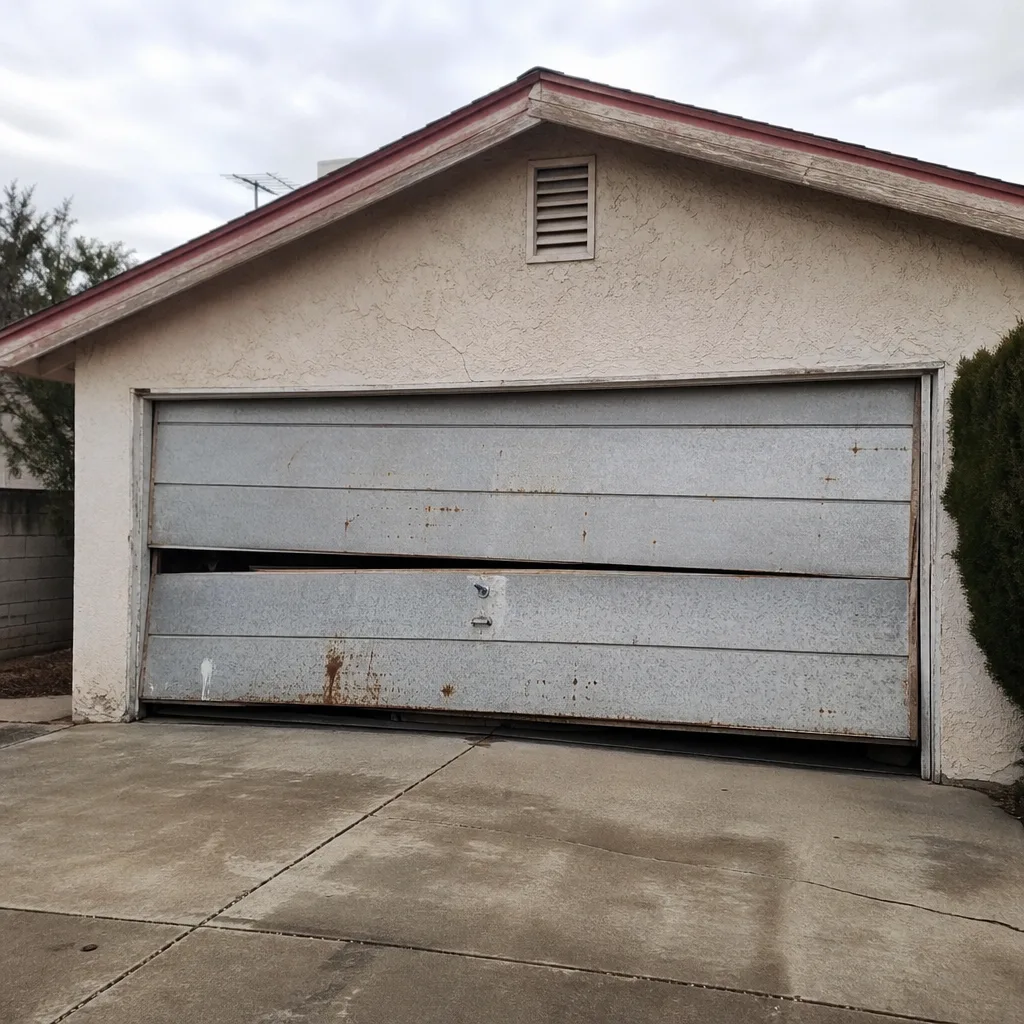 Before
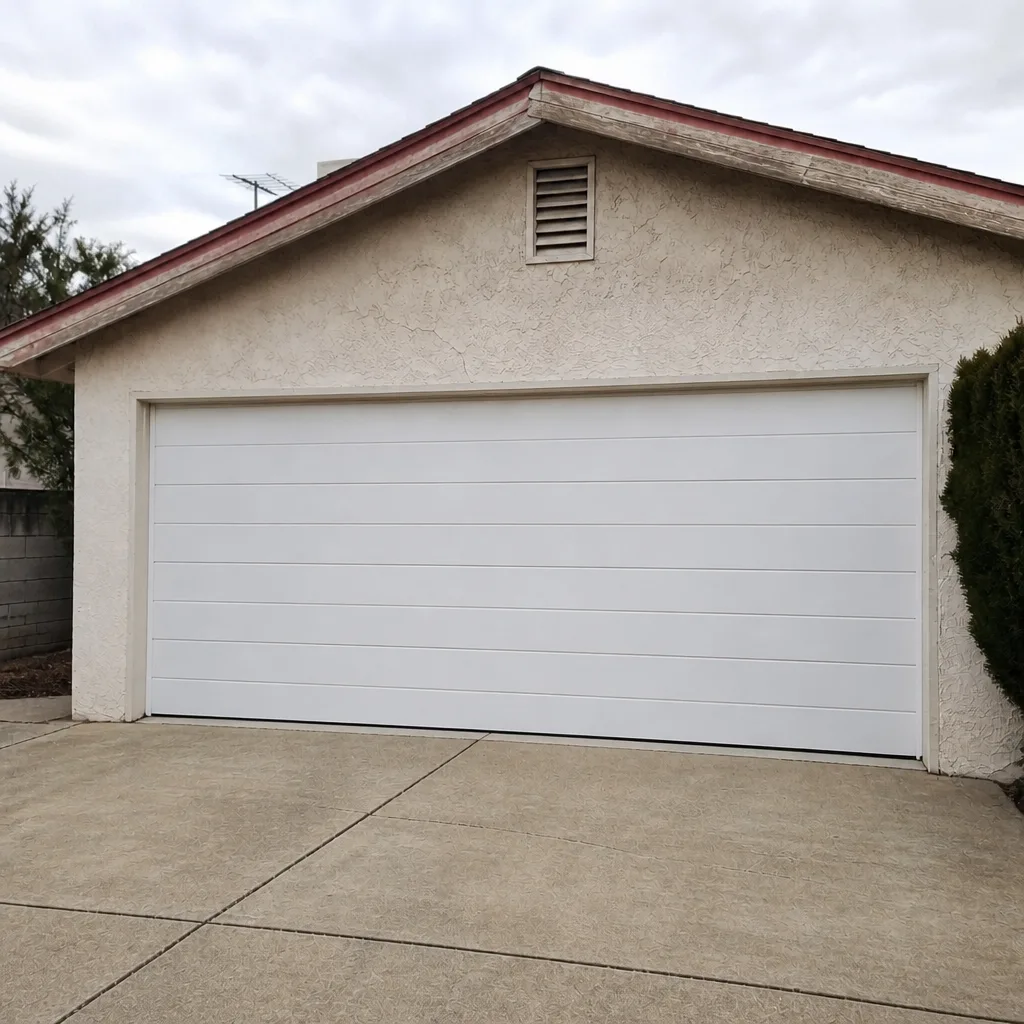 After
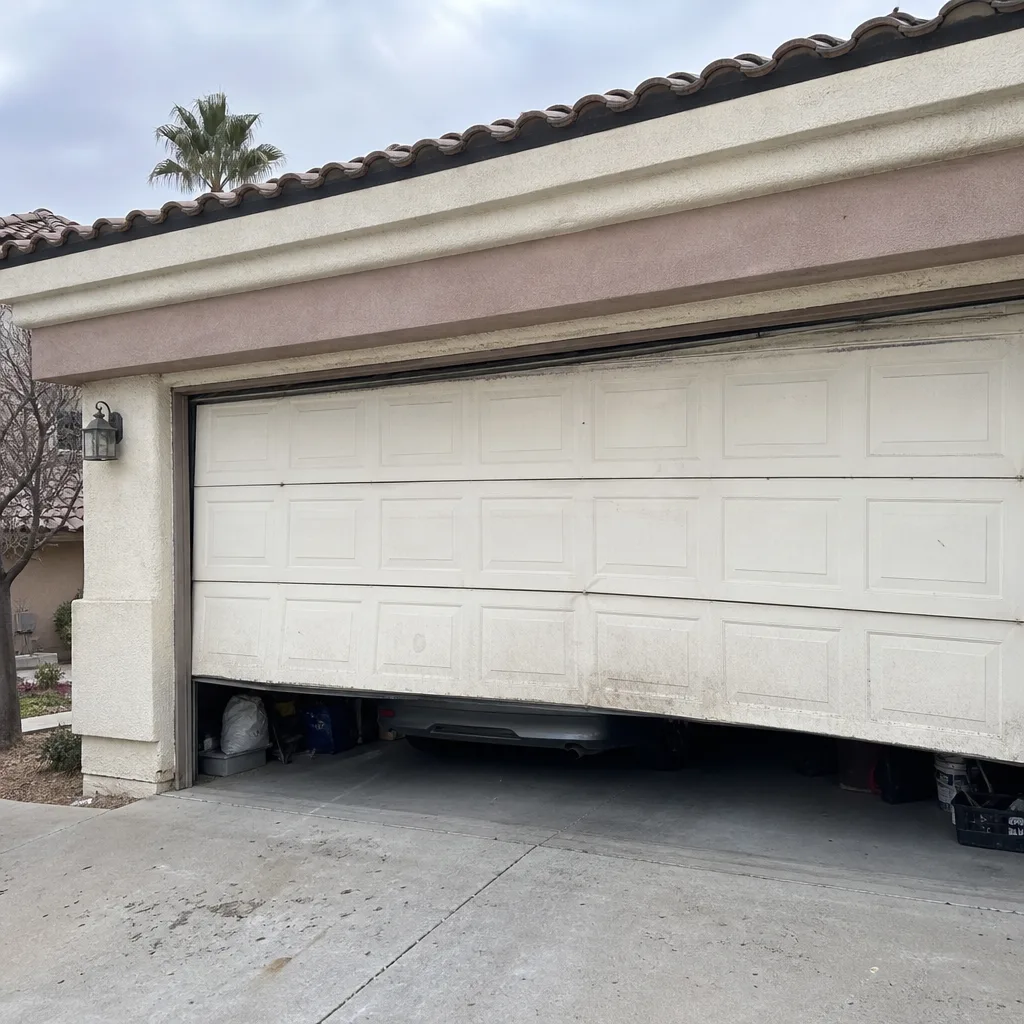 Before
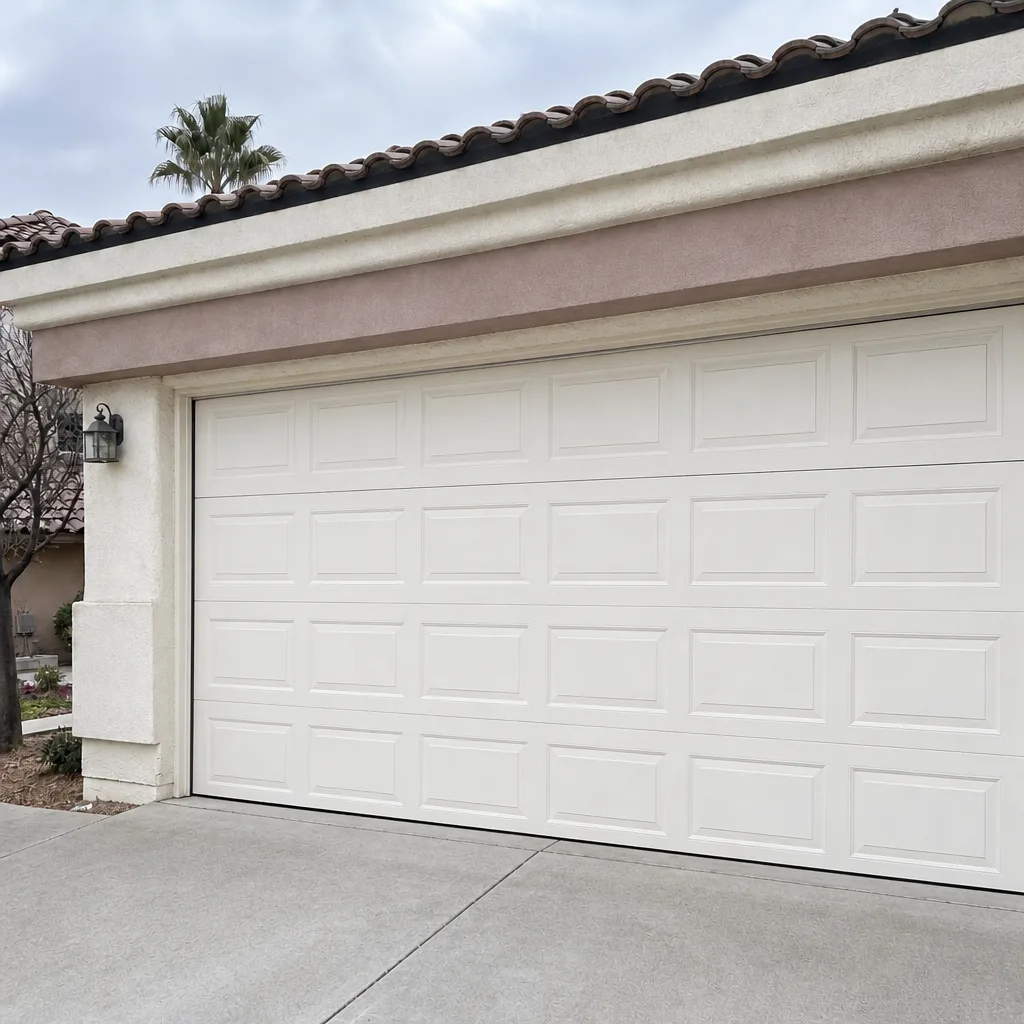 After
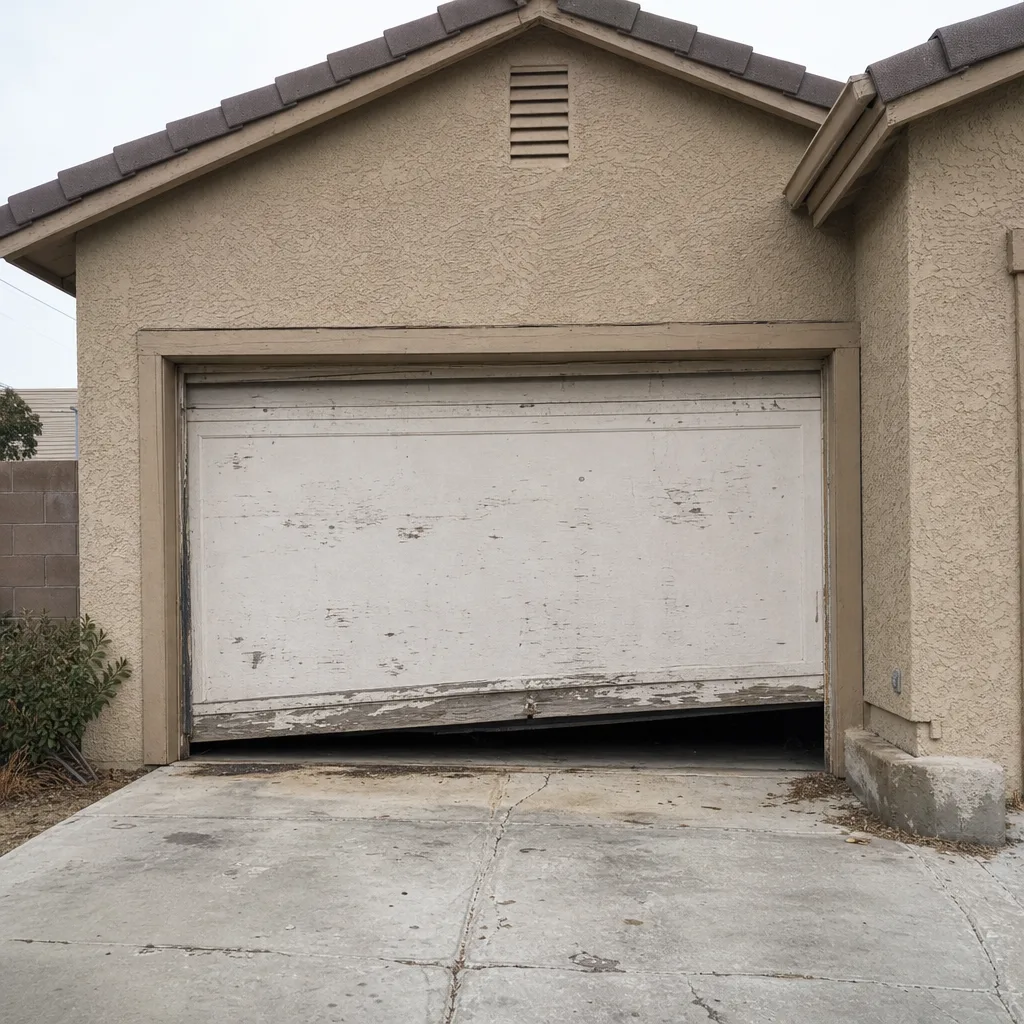 Before
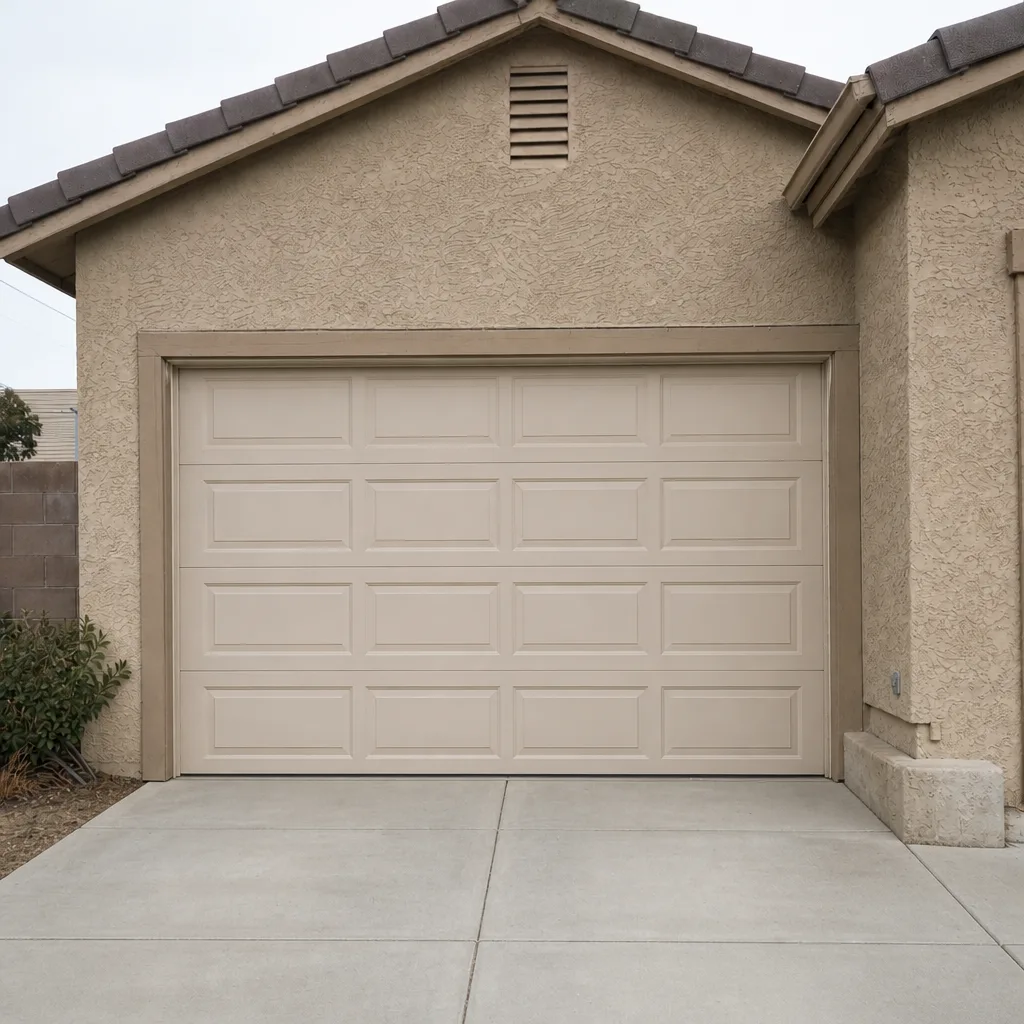 After
When to Call a Professional
Some garage door jobs are fine for a careful homeowner: replacing a bottom seal, swapping a remote battery, or cleaning the tracks. Others are not. Call a professional when the door is out of balance, when a spring has broken, when a cable is frayed or snapped, when the door comes off its tracks, when the opener runs but the door doesn’t move, or when the door reverses before it closes. In Boulder City, we also recommend a professional inspection any time a door is more than 10 years old and hasn’t been serviced – the parts that fail without warning are the ones that fail silently. Mainspring Garage Door Co. Boulder City offers free estimates in Boulder City – call (833) 605-8582.
Frequently Asked Questions
Spring replacement in Boulder City typically runs $180 to $340 for a standard torsion spring pair, depending on the door’s size and weight. Extension spring replacement is usually a bit less. The price is quoted and agreed before any work begins, and it includes retensioning and a balance check. Call (833) 605-8582 for an exact quote – estimates are free.
Look above the door opening. If you see a horizontal metal shaft with coiled springs mounted on it, you have torsion springs. If you see springs running along the horizontal tracks on either side of the door, you have extension springs. The distinction matters because the two systems fail differently and require different repair approaches.
In Boulder City’s climate, plan on a bottom seal every 5 to 7 years, rollers every 5 to 10 years depending on material, and springs every 7 to 10 years with daily use. A yearly tune-up extends the life of every part and catches wear before it becomes a failure. Our $89 seasonal tune-up covers lubrication, balance, and a full inspection.
Yes, with care. With the door fully down and the spring tension released, rollers can be replaced one at a time. Never remove a roller from a hinge with the door in the up position, and never work on a door with a broken spring. If you’re not sure, have a technician handle it – the job takes under an hour.
The spring system is balanced to your door’s exact weight, and replacing any part of the spring, cable, or drum assembly changes that balance. Retensioning restores the correct lift and keeps the opener from overworking. A door that isn’t retensioned after a spring replacement will wear out its opener and its new springs faster.
Our seasonal tune-up is $89 and includes lubrication, balance check, and a full inspection of springs, cables, rollers, hinges, and seals. It’s the cheapest way to extend the life of your door. We also offer a permanent 5% discount for seniors and veterans, and $50 off any repair over $250. Call (833) 605-8582 to schedule.
The Bottom Line
Your garage door has about a dozen parts, and each one has its own job, its own lifespan, and its own failure mode. Springs and cables store and release the door’s weight; rollers and hinges keep it moving; tracks and panels hold it in line; the seal keeps the desert out. In Boulder City’s heat and sun, the seal, rollers, and springs wear faster than national averages, so a yearly inspection is worth more here than in most places. Knowing the parts by name lets you ask better questions and recognize a proportionate repair when you see one. When a spring, cable, or drum is involved, call a professional – the stored energy in those parts is not something to handle yourself.
Contact
If you’re in Boulder City and something on your door is worn, noisy, or not moving the way it should, call (833) 605-8582 for a free estimate. We’ll tell you what’s actually worn, quote the flat price before any work begins, and finish most jobs in a single visit. Every job is backed by our 90-Day Done Right Promise – if it’s not right, we come back, in writing, no arguing. Our technicians have up to 10 years of experience and arrive background-checked and uniformed. Learn more on the Mainspring Garage Door Co. Boulder City home page, or explore our Garage Door Repair in Boulder City, Garage Door Installation in Boulder City, and Garage Door Opener in Boulder City services.
Written by the team at Mainspring Garage Door Co. Boulder City.