
Last updated November 18, 2026
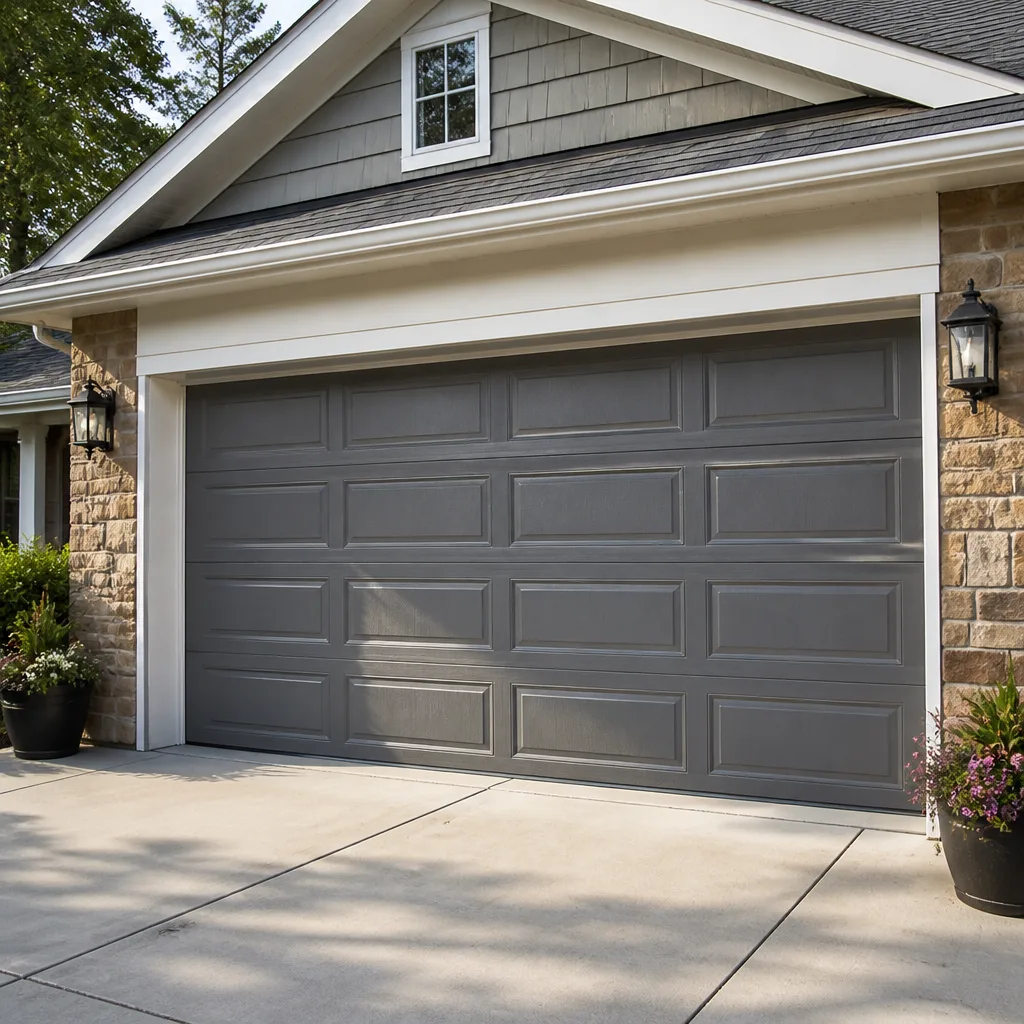 Raised-panel steel
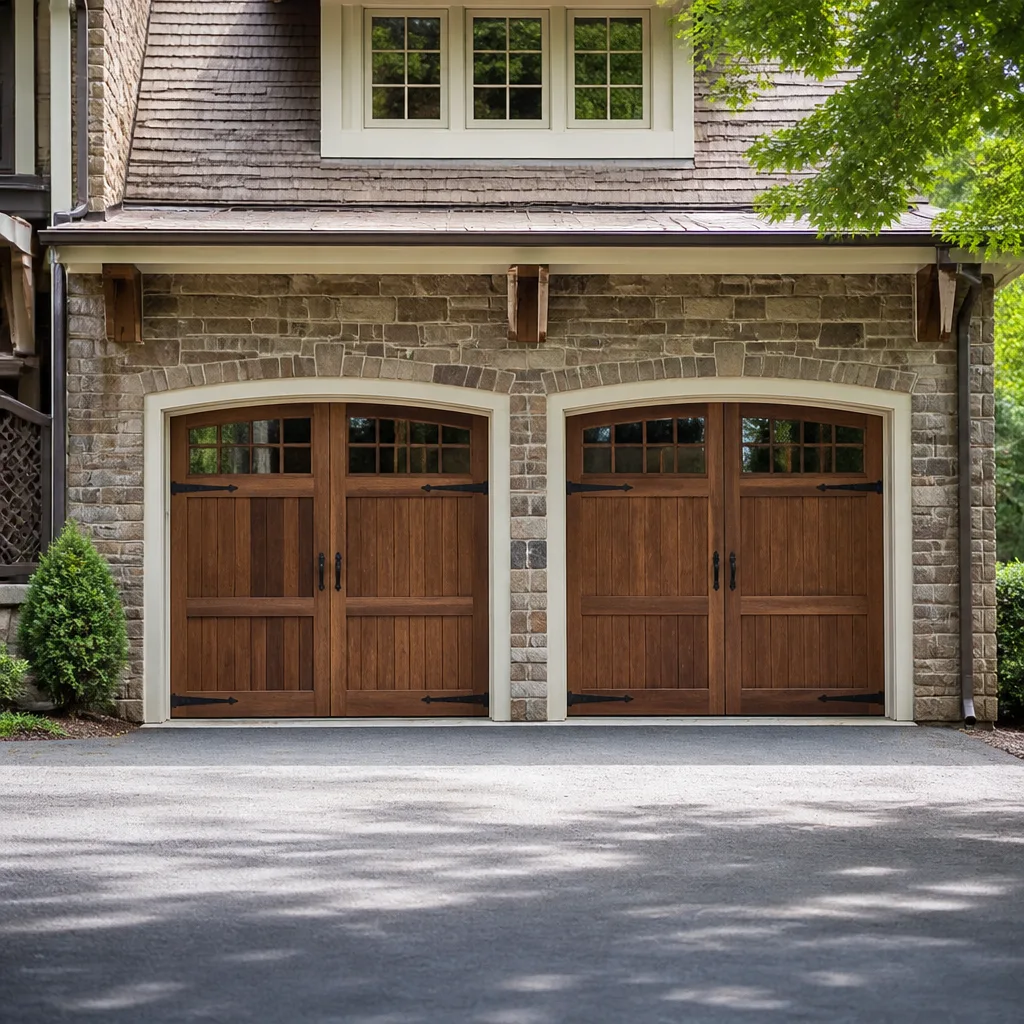 Carriage house
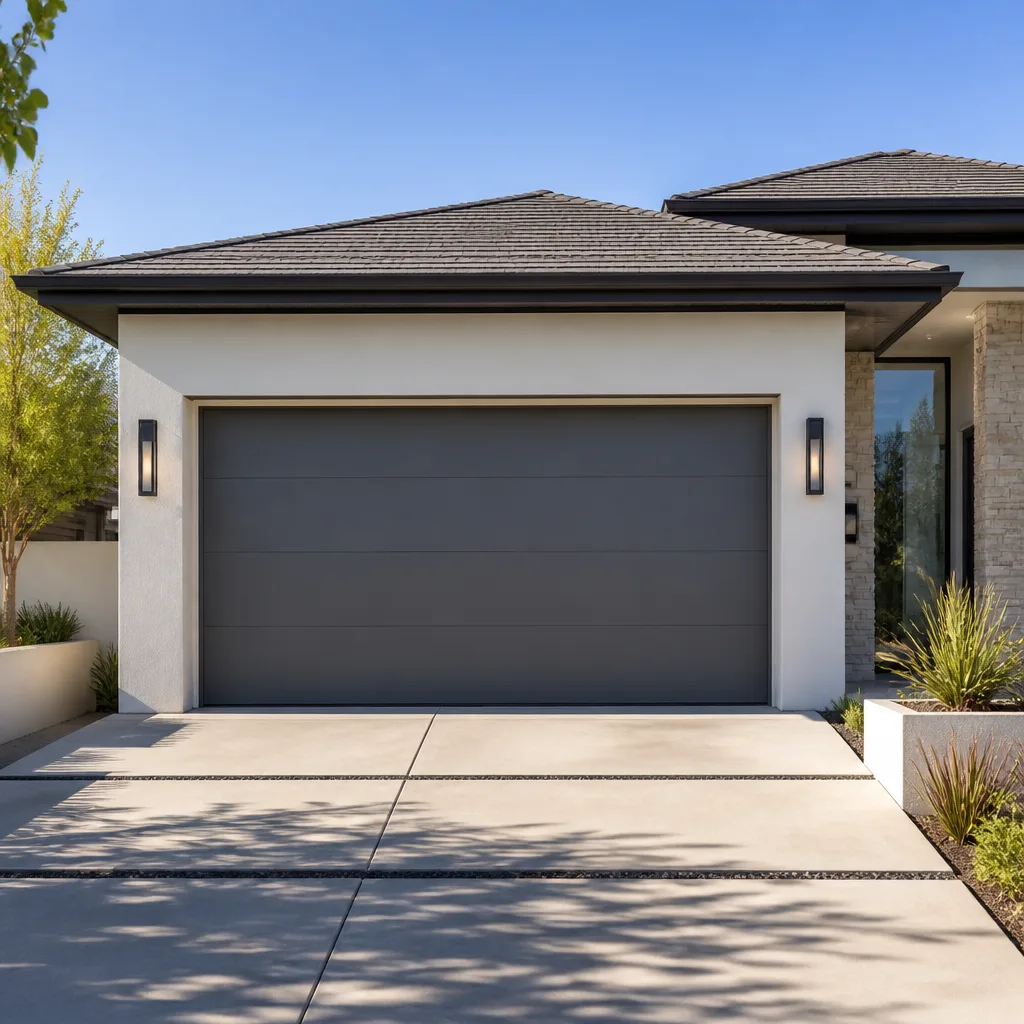 Modern flush
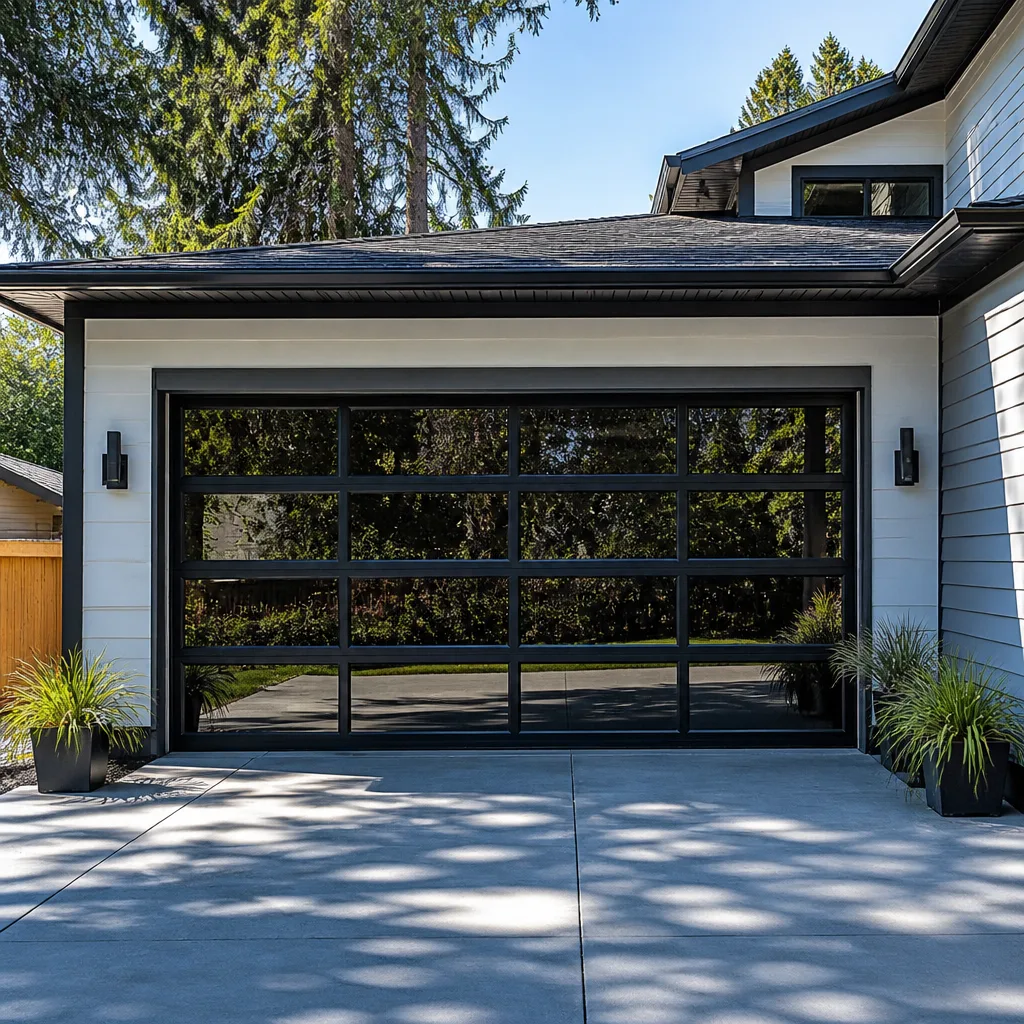 Full-view glass
 LiftMaster openers
 Chamberlain openers
Full 25-point door and opener safety check with every visit - springs, cables, rollers, tracks, and your LiftMaster or Chamberlain opener included
You get a price before we start. It does not change when the pro arrives.
Get your free estimateGarage Door Repair Troubleshooting: Common Problems and How to Fix Them
A garage door that opens six inches and stops isn’t broken in one place. It’s showing you a chain of three or four connected problems, and fixing only the obvious one guarantees a callback within 90 days. We’ve watched this play out across Boulder City for years: a homeowner replaces the sensor bracket to stop the door reversing, and two months later the opener’s control board is fried because the real trouble was a pinched wire the whole time. This guide teaches you how to read the sequence of failure. You’ll learn to tell mechanical breakdowns from electrical ones, interpret grinding versus squealing versus thumping as location-specific clues, and use a decision tree that leads you to the right component before you pick up the phone. That saves you diagnostic time and, more often than not, money on the final bill.
Quick Answer
Garage door problems are diagnosed by separating mechanical failures (springs, cables, rollers, tracks) from electrical or sensor failures (photo-eyes, wiring, opener logic board) using a manual release test with the opener disconnected. A door that won’t open at all points to power, sensor, or opener trouble, while a door that opens but won’t stay open points to spring or balance problems. Matching the symptom to the right system first is what turns a $300 repair into a one-visit fix instead of a callback.
Styles & brands we work with
- Raised-panel steel
- Carriage house
- Modern flush
- Full-view glass
- LiftMaster openers
- Chamberlain openers
Table of Contents
- The Two-Step Manual Test That Tells You Mechanical vs. Electrical
- “Won’t Open” vs. “Won’t Stay Open”: Two Completely Different Diagnostics
- What Grinding, Squealing, and Thumping Sounds Tell You
- A Decision Tree to Find the Right Component Before You Call
- DIY Fixes That Mask a Larger Failure
- Why Boulder City Doors Fail the Way They Do
- The Components You Should Never Touch
The Two-Step Manual Test That Tells You Mechanical vs. Electrical
Before you spend a dime or make a call, you need to know which half of the system is failing. The fastest way to find out is the manual release test. It takes about three minutes and requires no tools beyond your hands.
- Pull the red emergency release handle hanging from the opener’s rail. This disconnects the door from the motor so it moves on its own.
- Lift the door slowly to about waist height, then let go. A properly balanced door holds its position or drifts down gently. A door that slams shut or that you can barely lift has a mechanical problem with springs or cables.
If the door balances well and moves smoothly by hand, but the opener won’t move it, the problem is electrical or in the opener’s logic. That covers photo-eyes, wiring, the circuit board, and the wall control. If the door moves heavily or not at all by hand, you’re looking at springs, cables, rollers, or track, which is mechanical.
That single test eliminates half the possibilities. In our experience across Boulder City, roughly six out of ten “the opener is dead” calls turn out to be a mechanical problem the homeowner never suspected because the motor was making all the noise. The motor was straining against a door it couldn’t lift. Getting the split right first is the whole game.
“Won’t Open” vs. “Won’t Stay Open”: Two Completely Different Diagnostics
These two symptoms sound similar and share almost no diagnostic overlap. Homeowners often lump them together as “the door doesn’t work,” and that misfiling is where money gets wasted.
Won’t open at all
This is almost always electrical, sensor, or opener-side. Start here:
- Check that the photo-eye lenses on both sides of the track are clean and pointed at each other. Spider webs and dust are the usual culprits in dry desert air.
- Look for a solid versus blinking light on the opener housing. A blinking indicator usually signals a safety-reverse fault.
- Test the wall control and a remote separately. If one works and the other doesn’t, you have a remote or control issue, not an opener failure.
Won’t stay open
This is almost always mechanical or balance-related. A door that rises partway or fully and then drops back down, or that reverses immediately, is a spring or sensor problem sharing symptoms. If the door moves easily by hand, suspect the safety sensors or the opener’s travel limits. If it moves heavily, suspect the springs.
The distinction matters because the fixes are unrelated. You can spend an afternoon chasing sensors on a door with a broken spring and never touch the actual problem. We see this most often on older homes where a garage door repair in Boulder City call started with a sensor swap and ended with spring replacement. The sensor was fine; the door was simply too heavy for the opener to lift and hold.
One clue that cuts across both: listen for the opener motor. If it hums but the door doesn’t move, the machine is trying and failing, which usually means mechanical. If it clicks and nothing happens, that’s electrical or logic.
What Grinding, Squealing, and Thumping Sounds Tell You
Sounds are location-specific if you learn to read them. The same noise coming from the top of the door means something different than the same noise at the bottom.
Grinding at the top of the door
Grinding near the opener’s rail or the torsion assembly points to worn bearings on the torsion bar or a failing opener gear. If the grinding is metallic and rhythmic, suspect a stripped opener gear, common in older Craftsman and Genie units after years of strain from a slightly heavy door.
Squealing at mid-track
A high-pitched squeal that rises and falls as the door moves usually comes from dry or worn rollers. Steel rollers in a desert climate dry out faster and start squealing before they fail. A quick lubrication sometimes quiets it, but if the rollers are more than a few years old, replacement is the real answer.
Thumping at the bottom
A single thump when the door hits the floor is a travel-limit or bottom-bracket issue. A repeated thump during travel points to a bent or misaligned track panel. Thumping combined with the door seeming to skip is often a track that’s been knocked out of plumb, sometimes by a car bumper or a bicycle.
Rattling that appears only on the way down
This one comes up often with garage door installation in Boulder City jobs on older homes: the hardware has loosened after years of thermal expansion. Retorquing bolts is a ten-minute fix, but if you hear it every day and ignore it, the vibration works the hinges loose further.
When we take a service call, the first thing we ask is where the noise is coming from and when it happens. That one question maps straight to the component in most cases, and it’s why a technician with the parts already on the truck can often finish the job in a single visit.
A Decision Tree to Find the Right Component Before You Call
Use this sequence. Answer each question and follow the branch. It gets you to the right subsystem in about five minutes.
- Does the opener respond to the wall button with at least a click or hum? If no, check the breaker, the outlet, and the photo-eyes. If yes, continue.
- Does the door move by hand when you pull the emergency release? If no, or only with heavy effort, go to mechanical: springs, cables, rollers, track. If yes, continue.
- Does the door balance in a half-open position when released by hand? If it falls, you have a spring problem. If it holds, continue.
- Does the door run freely by hand but the opener still won’t move it? That’s opener-side: travel limits, logic board, or wiring.
- Does the door reverse within six inches on its own? Test the photo-eyes: wave an object between them. If the light on the sensor goes out when you don’t block it, you have a sensor or alignment problem.
By the end of that list, you know whether you’re facing a spring, a sensor, a track, or an opener. That knowledge is worth real money because it tells you what a fair estimate looks like. If you already know the problem is a broken torsion spring, an estimate that focuses on sensors is a red flag. This is why we always offer a free second opinion on any written estimate: if the first diagnosis doesn’t match the symptom, it’s worth a fresh set of eyes.
Once you know the subsystem, the opener itself is worth checking next. If the door’s mechanicals are fine and the opener is the suspect, a garage door opener in Boulder City technician can test the logic board, wall control, and remote in one visit.
DIY Fixes That Mask a Larger Failure
Some homeowner fixes are genuinely fine. But a few common ones hide a larger problem that surfaces 60 to 90 days later, usually right after the warranty period on the fix expires.
- Replacing a photo-eye sensor without checking why it failed. A sensor that fails once is usually weather or debris. A sensor that fails repeatedly is often pointing to a wiring problem behind the wall, or to a control board that’s sending inconsistent voltage.
- Bumping the door’s travel limits to get it to close. Adjusting travel limits when a door won’t close is a symptom fix. The real problem is usually a misaligned track or a sagging spring. Adjusting the limits just gets the opener to force a door it shouldn’t be forcing, and that wears out the opener’s gear and stresses the springs.
- Over-lubricating the rollers. Many homeowners spray everything on the track. Too much oil on steel rollers attracts grit and packs into the bearings, and in another three months you have grinding rollers instead of squealing ones.
- Straightening a bent track by hand. Small dings can be nudged back into place. If the bend is more than a slight curve at the edge, hand-straightening usually introduces a subtle kink that makes the rollers hop at speed. That hop wears the rollers, which wears the spring over months.
- Patching a cable or spring with tape or a clamp. This is the one we’ll flag hardest. A clamped or taped spring is a loaded spring that can suddenly let go, and it will let go at the worst possible moment.
None of these are unsafe to do the wrong version of. All of them are unsafe when the underlying failure is a tensioned spring or cable. That’s why we recommend hobby-grade fixes only on the electrical and sensor side. Anything that involves the torsion assembly or the lifting cables belongs to a trained tech.
Why Boulder City Doors Fail the Way They Do
Boulder City has a specific climate profile that shapes how garage doors fail here compared to the rest of Nevada. The desert heat swings thirty degrees or more between day and night for much of the year, and the dry air is hard on rubber, steel, and plastic alike.
The practical consequences:
- Spring life cycles run shorter. Torsion springs on Boulder City doors typically cycle out faster than in cooler, more humid climates, because heat and constant thermal expansion put more stress on the steel. If your springs are more than a few years old and the door has started feeling heavy, that’s the first place to look.
- Sensors need regular cleaning. Dry air carries dust and fine grit, and photo-eyes in Boulder City pick up a film faster than you’d expect. Wiping them every few months prevents false reversals.
- Rollers dry out. Steel and nylon rollers both dry out in desert air and squeal before they seize. Inspecting roller condition is one of the most overlooked parts of any seasonal tune-up.
- Seals and weatherstripping crack. The bottom seal on a door facing west or south takes the full afternoon sun. When the seal cracks, water and grit get in, and the rollers and bottom brackets suffer.
We mention this because a troubleshooting guide written for a temperate climate doesn’t prepare you for what you’ll actually find here. When we get calls from homeowners in neighborhoods along the old downtown core and the newer stretches near the lake, the symptoms track back to the same set of climate pressures. That’s also why the services we offer lean toward fast, one-visit fixes: garage door installation in Boulder City jobs on new construction get sealed and boxed against this climate from day one, and older homes benefit from the same upgrades.
The Components You Should Never Touch
A garage door’s torsion spring holds hundreds of pounds of tension. It isn’t a hobby-scale component. We’re going to be direct about this because a homeowner injury from a released spring is one of the most common garage door accidents we hear about.
Do not attempt to:
- Replace a torsion spring or unbolt a torsion tube.
- Remove, cut, or attempt to re-route a lifting cable.
- Loosen the winding cones on either end of the torsion bar.
- Adjust the bottom brackets or the winding assembly.
- Attempt to remove or install a low-headroom or high-lift track system by hand.
Those jobs require winding bars, proper procedure, and a technician who’s done the work hundreds of times. What you can safely do yourself: clean sensors, replace batteries in remotes, tighten hinges and bolts, apply the correct lubricant to rollers and springs, replace the bottom weather seal, and reset the travel limits if the manual says the door is properly balanced. Anything past that, call in a pro.
Symptoms that should stop you cold and trigger a call immediately: the door feels suddenly heavier, a cable looks unstrung or kinked, the door hangs visibly crooked on one side, or you hear a loud snap followed by the door refusing to lift. Those are tension-failure signals, and the door can fall without warning.
Common Mistakes to Avoid
- Diagnosing from the outside. A door that “won’t close” might have a sensor problem, a track misalignment, or a spring that has lost tension. Comparing the symptom to other problems before the manual test almost always leads to the wrong component.
- Calling the cheapest number in the phone book on a Sunday night. Boulder City emergency response pricing is often quoted on-site and can vary by hundreds of dollars. Ask for the flat price before dispatch, in writing if possible.
- Assuming the opener is the problem. Most “dead opener” calls turn out to be mechanical. If a door has become heavy enough that the opener strains to lift it, the opener is being blamed for a spring problem.
- Ignoring a small squeal. Squealing that gets louder over a few weeks is a roller heading toward seizure. Seizure means grinding the track, which means a larger bill than a roller swap.
- Adjusting the photo-eyes without testing them. A sensor that’s aimed correctly isn’t necessarily working. Wave an object between the sensors and confirm the indicator light responds on both.
- Letting a door with a snapped cable sit. A door with one snapped cable is now lifting on one side only. Every cycle strains the remaining cable and warps the tracks.
- Waiting for the spring to break. A seasonal tune-up catches tired springs, worn rollers, and loosened hardware before they fail. The $89 Seasonal Tune-Up is a maintenance call, not a repair call, and it’s the cheapest way to avoid the emergency version of any of these problems.
See the difference
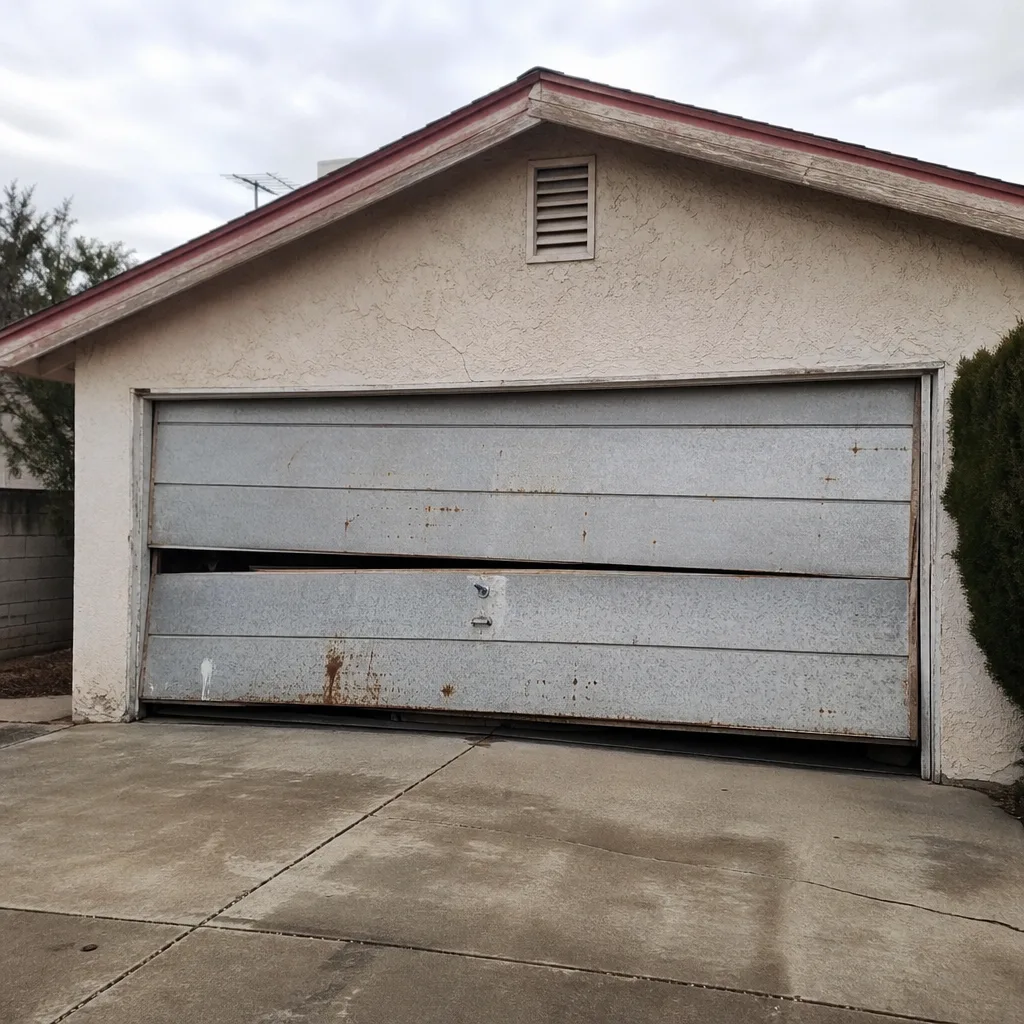 Before
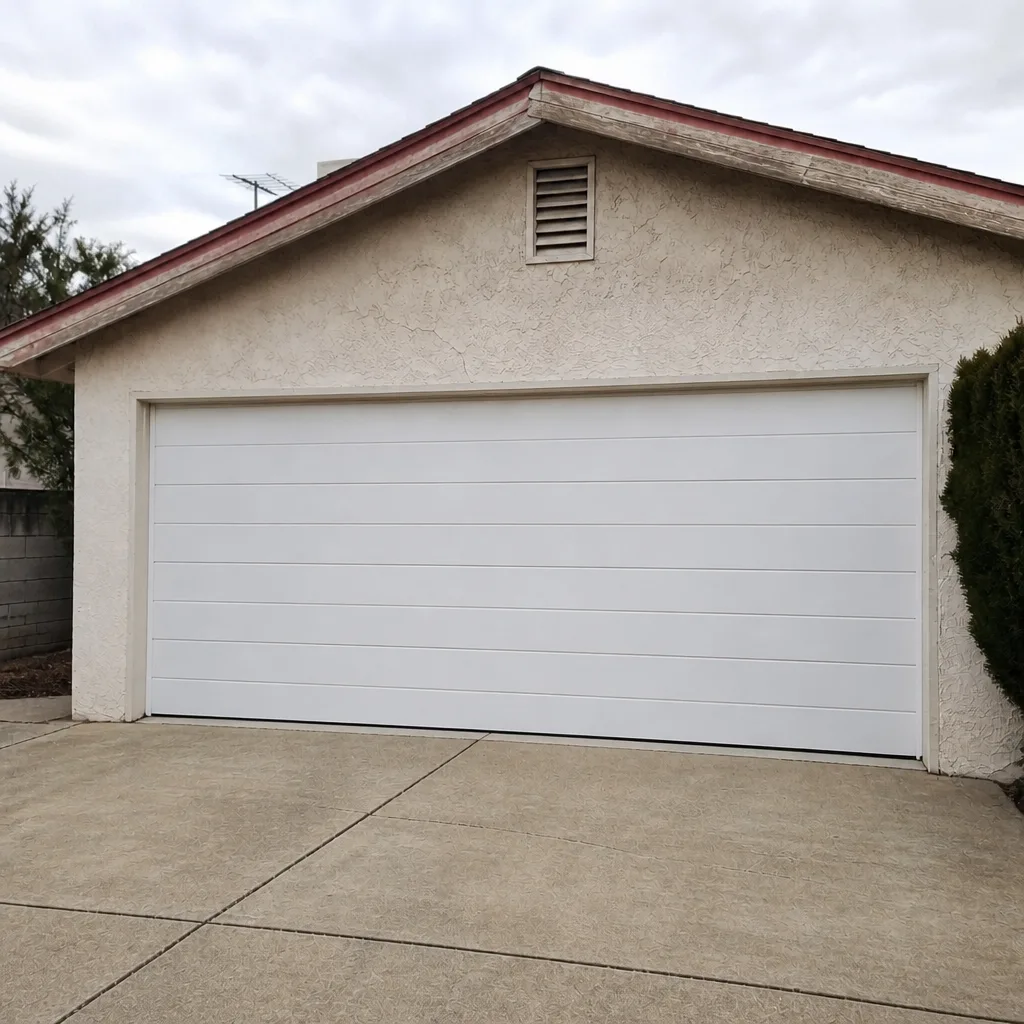 After
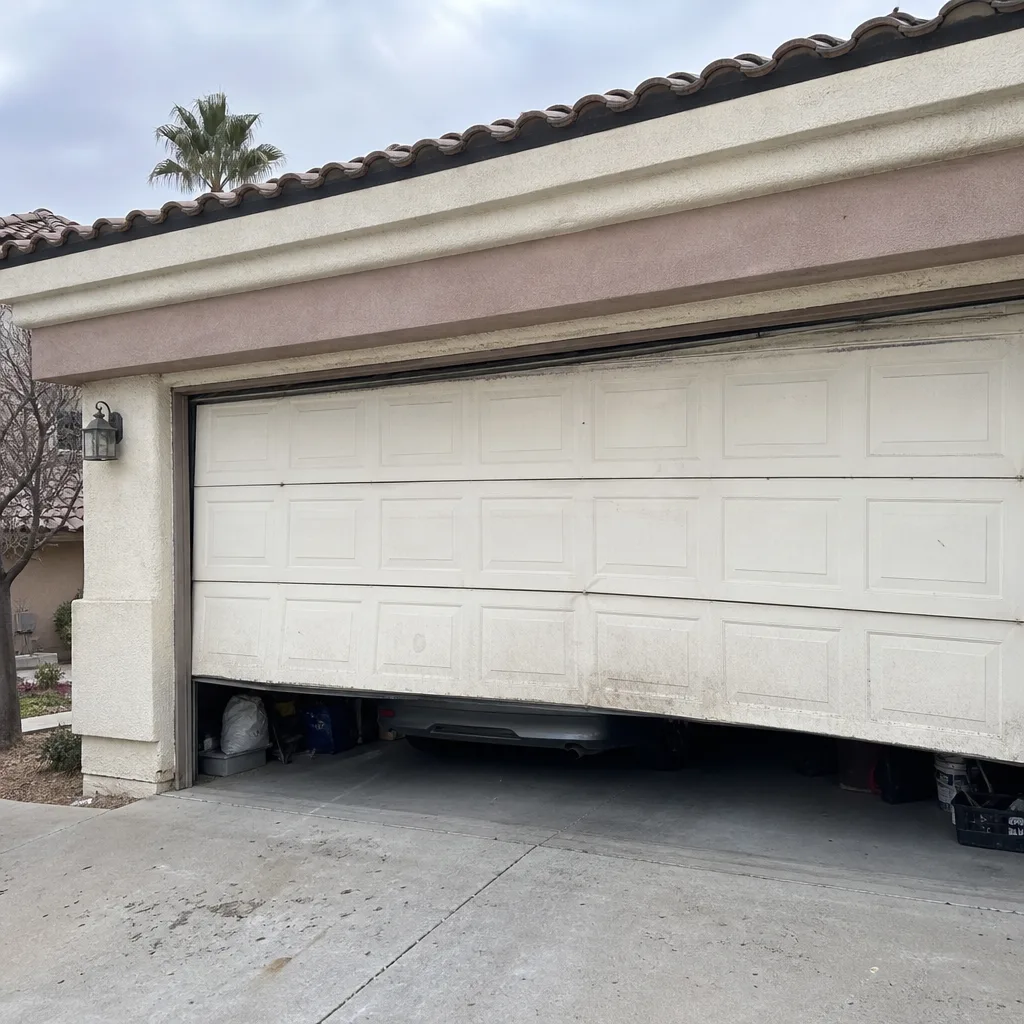 Before
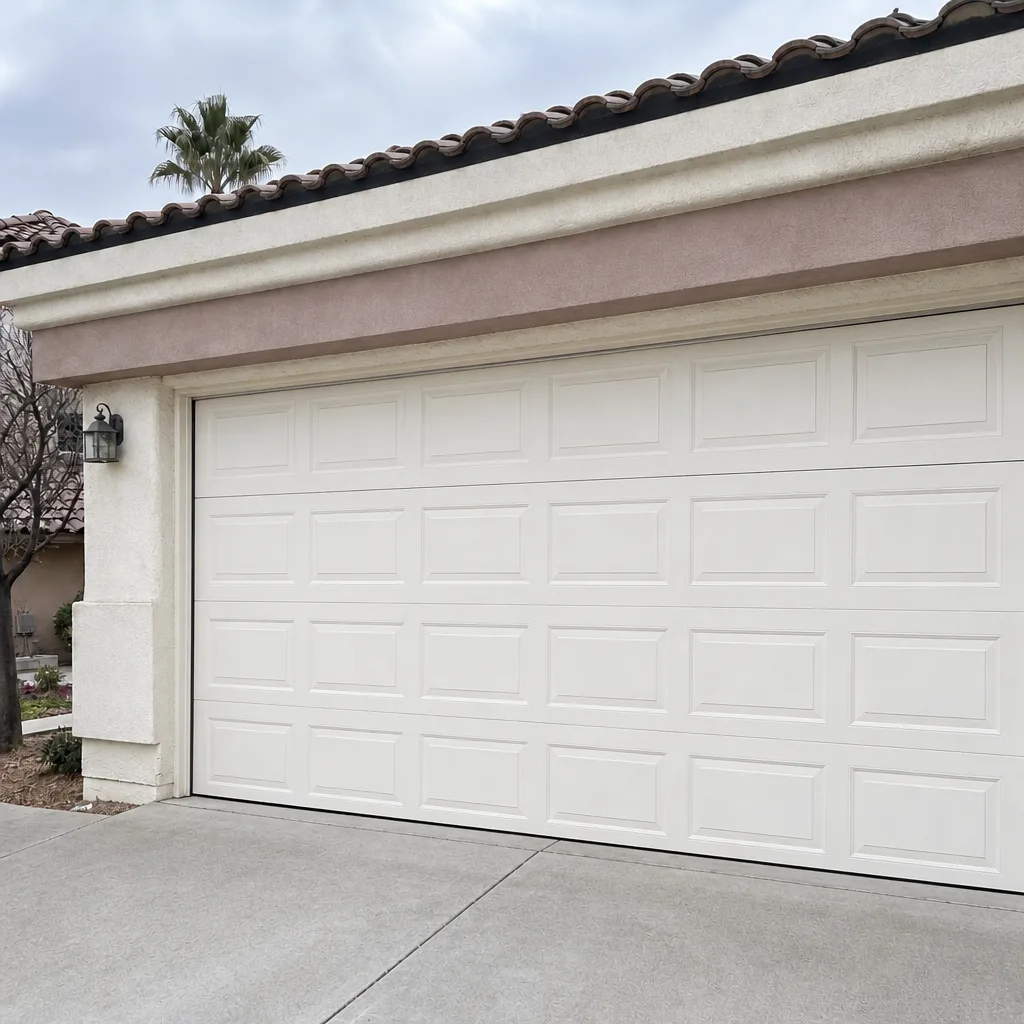 After
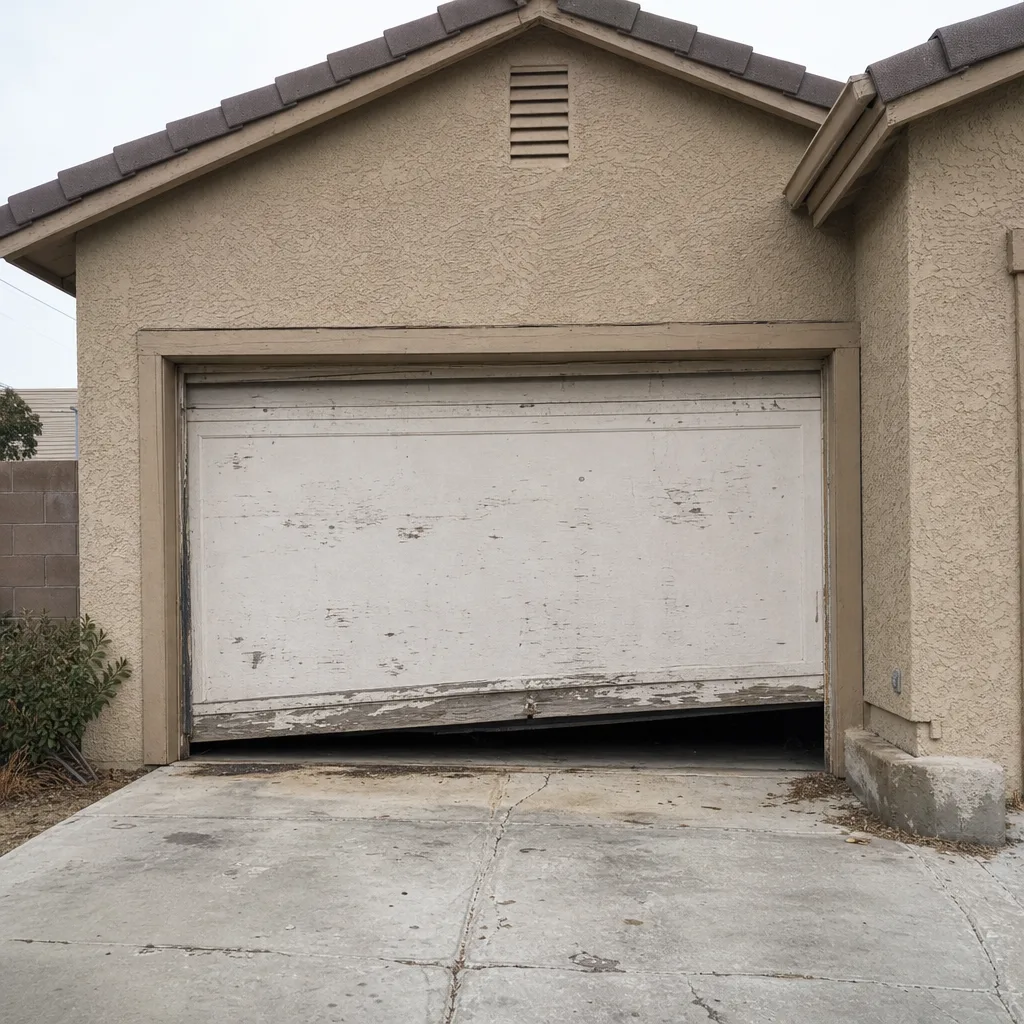 Before
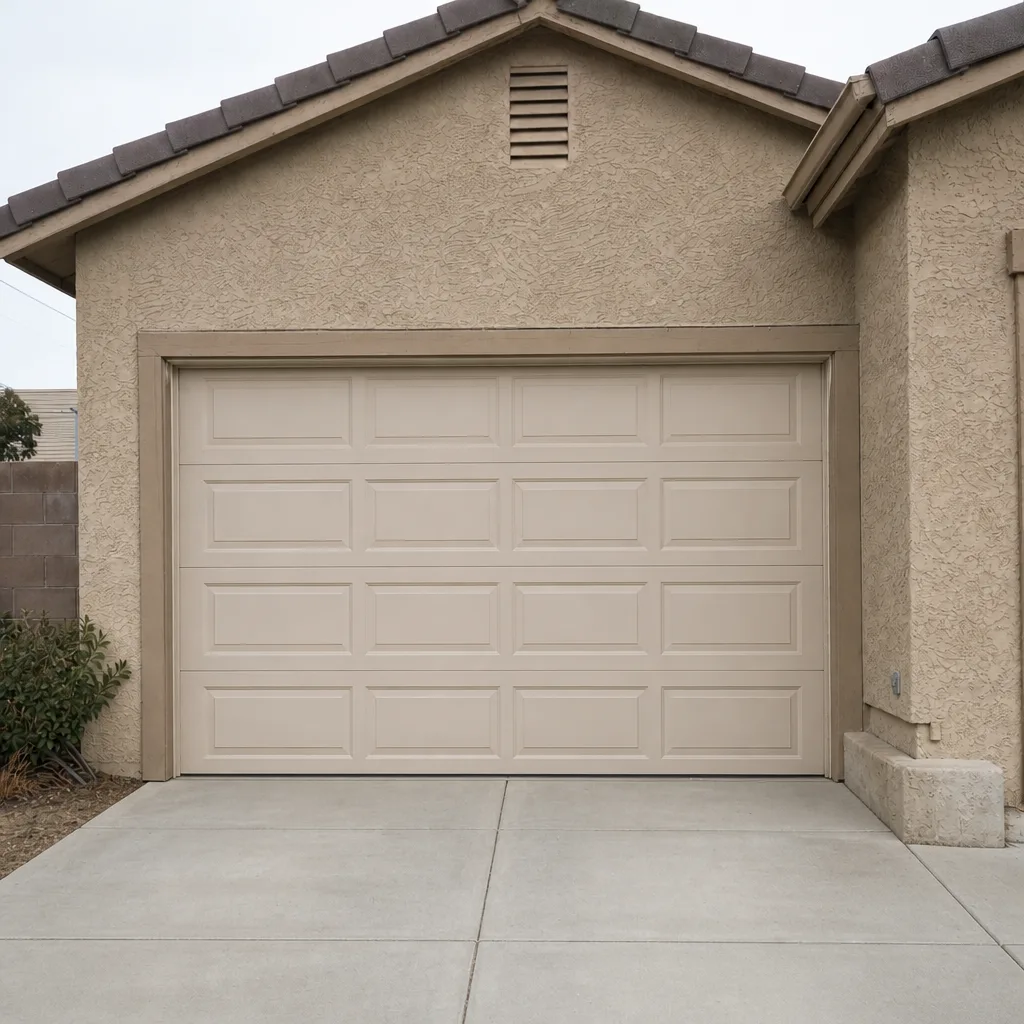 After
When to Call a Professional
Call for help when any of the following is true: the manual release test shows the door won’t hold its position, you’ve heard a loud snap, a cable looks detached or kinked, the door hangs unevenly, the opener hums without moving the door after you’ve confirmed the door moves freely by hand, or the sensors have failed twice in a short time. In those cases, the risk of a longer, more expensive failure climbs fast. Mainspring Garage Door Co. Boulder City offers free estimates in Boulder City. We answer the phone with a live person 24/7, and we quote before we touch anything. Call (833) 605-8582.
Frequently Asked Questions
Diagnostic and repair calls in Boulder City typically run in the $150-$400 range depending on the component, with spring replacements at the higher end and sensor or roller work toward the lower end. We quote the flat price before any work begins, so you’ll know the number before the tools come out. Call (833) 605-8582 for an exact quote based on your symptoms, and estimates are free.
For emergency calls (broken springs, snapped cables, doors stuck open or closed), yes, same-day response is possible because we keep springs, cables, and openers on the truck. For sensor and minor adjustments, a same-week appointment is more typical. Call (833) 605-8582 and we’ll tell you what’s possible for your situation.
No. We quote the flat price after diagnosis, we confirm it with you, and that’s the price on the bill. If the diagnosis reveals a different problem than expected, we’ll tell you before we proceed and give you the revised flat price. Call (833) 605-8582 for a free second opinion on any written estimate if you’ve already received one.
You’re connected with local, state-licensed and insured garage door professionals, and technicians arrive background-checked and in uniform. Every job is covered by a 90-Day Done Right Promise in writing: if it’s not done right, we come back at no charge. Call (833) 605-8582 to schedule.
Won’t open usually means an opener, power, or sensor problem, while won’t stay open usually means a balance or spring problem. The manual release test tells you which in under five minutes. If your door is heavy by hand, don’t keep cycling the opener, because doing so damages the opener gear. Call (833) 605-8582 for guidance before you try more cyccles.
We service all major brands, including LiftMaster, Chamberlain, Genie, Clopay, Amarr, Wayne Dalton, Craftsman, and Raynor. Being factory-familiar with each brand means the diagnostic follows each manufacturer’s known failure patterns instead of a general checklist. Call (833) 605-8582 for a free estimate.
The Bottom Line
Most garage door troubleshooting fails for one reason: guessing at the symptom instead of reading the sequence. The door that opens six inches and stops is not a single failure. It’s a chain, and diagnosing the chain is cheaper than fixing each link at emergency rates. Use the manual release test to separate mechanical from electrical. Use the “won’t open” versus “won’t stay open” distinction to separate opener from spring. Read the sounds by location. Then follow the decision tree to the right component before you call. The result is fewer callbacks, fewer visits, and a bill that matches the diagnosis. If you’d rather skip the guesswork, Mainspring Garage Door Co. Boulder City is one call away at (833) 605-8582. Free estimates, flat pricing in writing, and a live person on the line around the clock.
Written by the team at Mainspring Garage Door Co. Boulder City.