
Last updated November 18, 2026
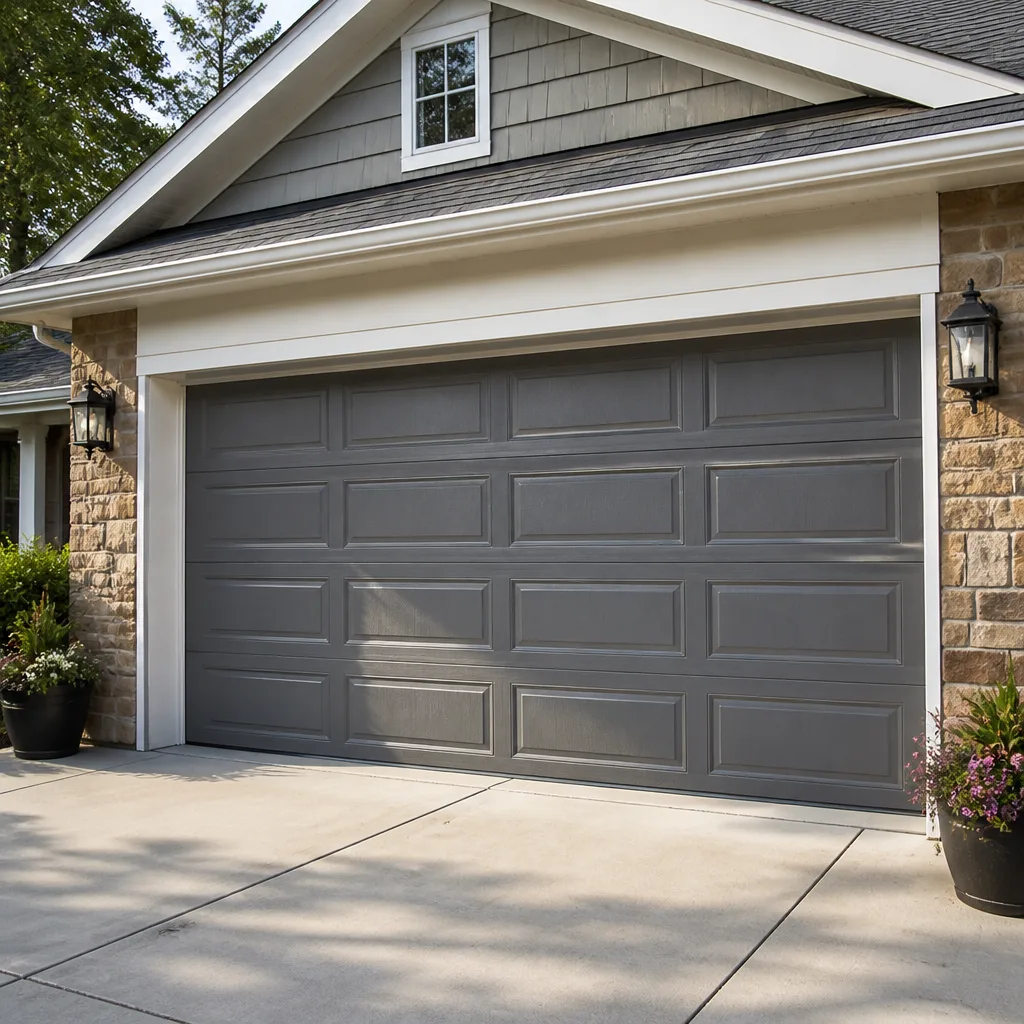 Raised-panel steel
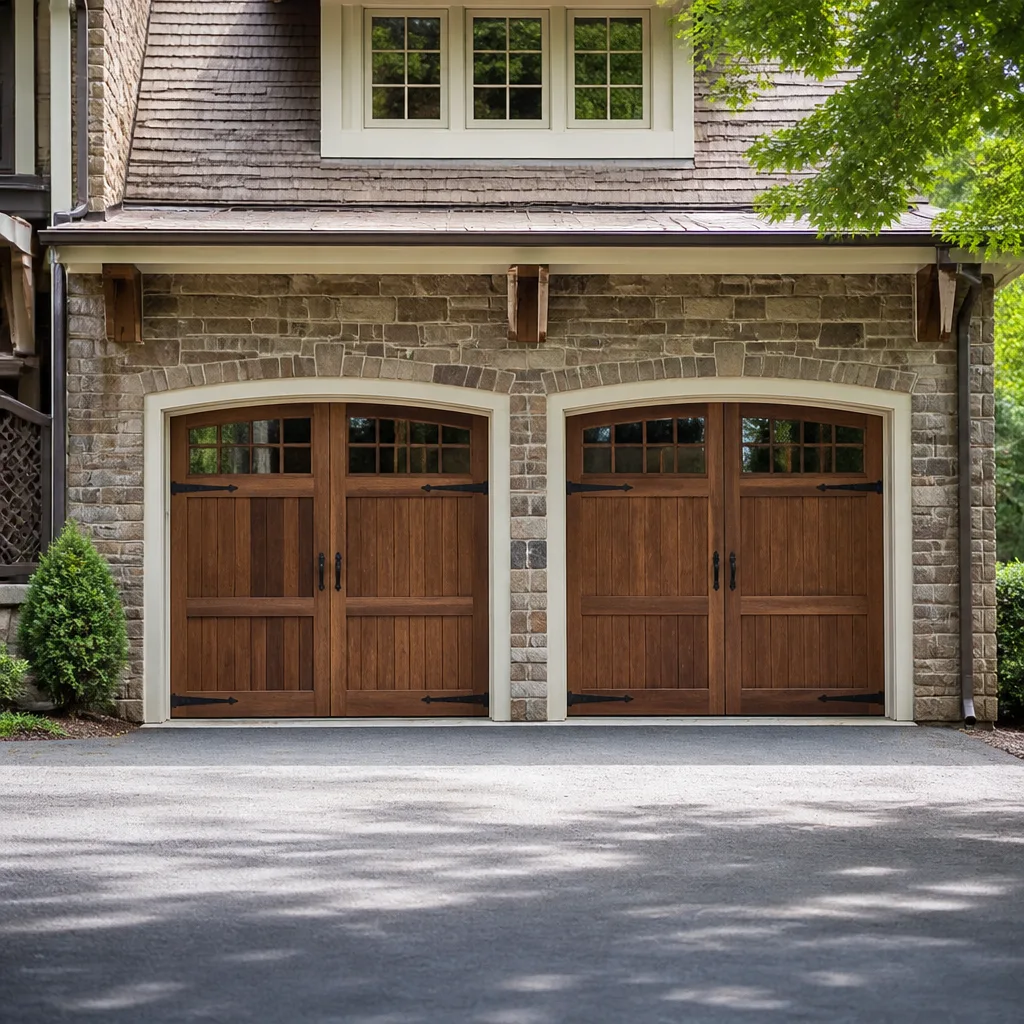 Carriage house
 Modern flush
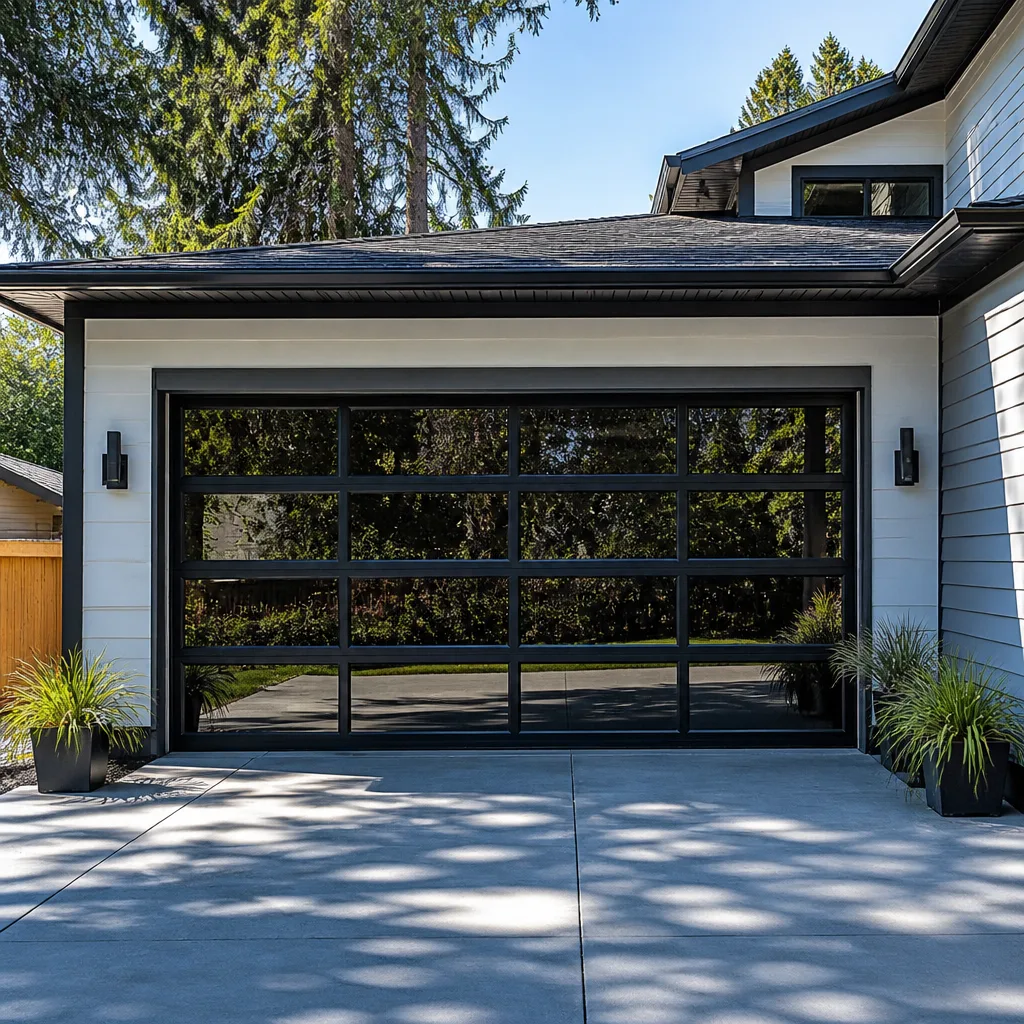 Full-view glass
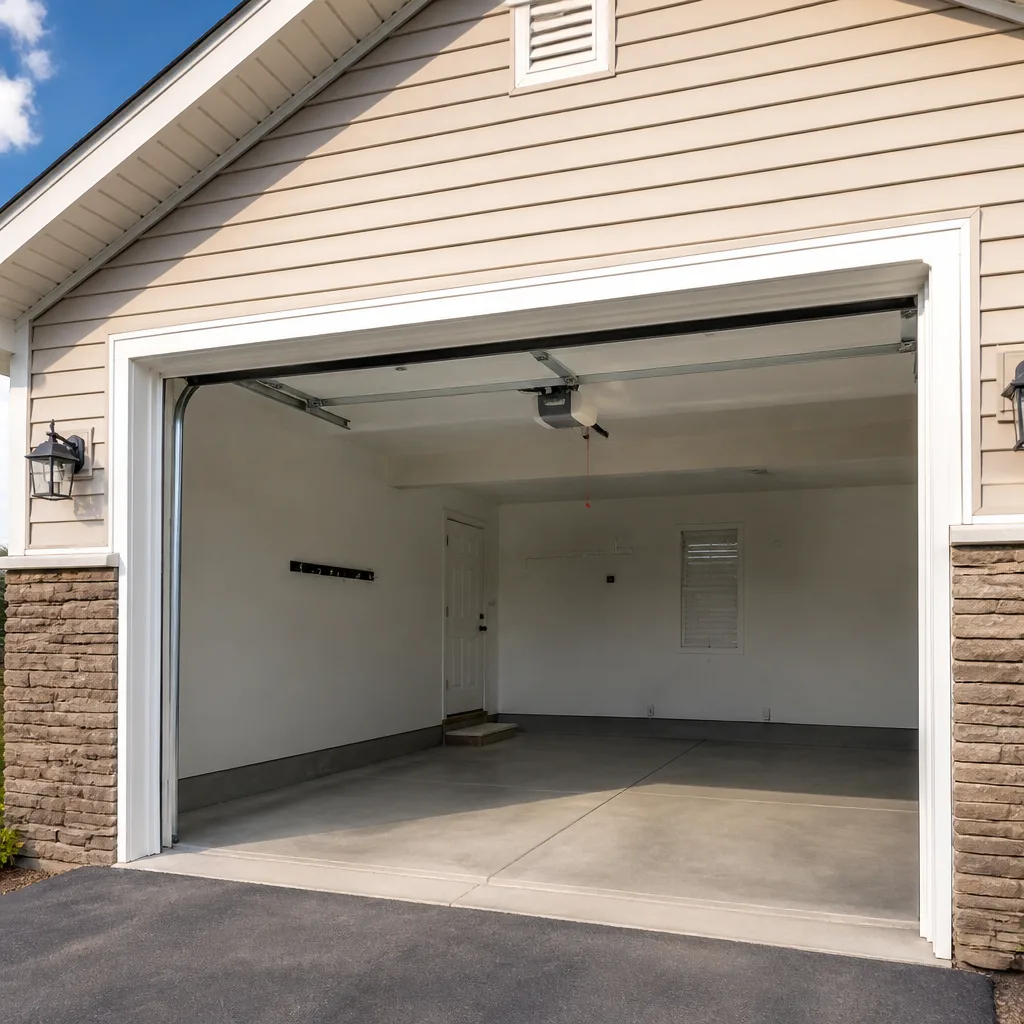 LiftMaster openers
 Chamberlain openers
Full 25-point door and opener safety check with every visit - springs, cables, rollers, tracks, and your LiftMaster or Chamberlain opener included
You get a price before we start. It does not change when the pro arrives.
Get your free estimateGarage Door Installation Maintenance Schedule: What to Do and When
Most installers hand over a generic annual maintenance sheet once the job is done. That sheet was written for a door that has already settled. A brand-new door hasn’t. In the first year, new hardware beds in, cable tension equalizes across the drums, and the springs lose a little of their initial set. Skip the checks that catch those changes and a $1,200 installation can turn into a $400 repair by month two. We’ve watched it happen more than once here in Boulder City, where the desert swing between cold nights and hot afternoons works hardware harder than most homeowners expect. This guide gives you the first-year timeline no generic schedule includes, plus the annual rhythm that follows it.
Quick Answer
A new garage door needs a 30-day check, a 90-day check, a 6-month check, and then annual service after the first year. The 30-day visit matters most: it’s when you confirm the door is balanced, the springs have taken their set, and nothing has worked loose since installation. After year one, one professional tune-up a year plus a monthly visual check keeps the door on schedule. For Boulder City homeowners, the dry climate and big temperature swings make the 30-day and annual checks especially worth keeping.
Styles & brands we work with
- Raised-panel steel
- Carriage house
- Modern flush
- Full-view glass
- LiftMaster openers
- Chamberlain openers
Table of Contents
- Why the First Year Is Different
- The First-Year Maintenance Timeline
- Understanding Spring Set in the First 500 Cycles
- Lubrication Sequencing for New Hardware
- Building a Maintenance Log From Day One
- The Annual Inspection Checklist by Component Life
- Common Mistakes to Avoid
- When to Call a Professional
Why the First Year Is Different
A garage door is a system under constant load. The springs carry the door’s entire weight, and the moment the door goes up for the first time, that system starts to change. Metal stretches. Fasteners settle into their holes. Cables find their true tension. None of this is a defect. It’s normal break-in, and it’s exactly why the first year needs its own schedule.
An older door that’s been hanging for a decade has already done its settling. It needs lubrication, balance checks, and a look at wear items. A new door needs all of that plus verification that the installation is holding where it should. In our experience across Boulder City, the doors that develop problems early are almost always the ones that skipped the 30-day check.
The break-in period is also when spring set shows up. That’s the natural, gradual loss of tension as a new spring works through its first cycles. A small amount is expected. Too much throws the door out of balance, and an unbalanced door strains the opener, wears the rollers, and puts uneven load on the cables. Catching it in month one is cheap. Catching it in month six, after the opener has been fighting the imbalance, is not.
One more thing sets the first year apart: warranty. Most manufacturers tie coverage to proper maintenance. A documented schedule from day one protects you if a spring fails early or a hinge cracks before its time. We’ll cover how to build that record below.
The First-Year Maintenance Timeline
Here’s the schedule we recommend after any new installation. It splits the first year into three checkpoints, then settles into an annual rhythm.
30-Day Check
- Test the balance. With the door closed and the opener disconnected, lift the door halfway and let go. A balanced door holds its position. One that drifts down or springs up needs attention.
- Look at the spring set. Have a technician confirm the springs are still carrying the door correctly. This is not a job to attempt yourself; the springs are under extreme tension and can cause serious injury.
- Check all fasteners. Hinges, brackets, and track bolts settle in the first weeks. A quick torque check catches anything that’s worked loose.
- Run the safety reverse test. Place a piece of wood flat under the door’s path and close it. The door should reverse on contact. Test the photo-eye sensors the same way.
- Listen for new sounds. A new door should run quiet. Squeaks or grinding at 30 days point to something that needs a look.
90-Day Check
By 90 days, the door has worked through hundreds of cycles and the settling has mostly finished. This is the checkpoint for cable tension, roller wear, and a second balance test. It’s also when we recommend a light lubrication pass on the moving parts (more on sequencing below). If the door has an opener, check that the travel limits still match the door’s position; they can drift slightly as the hardware settles.
6-Month Check
The six-month check is a lighter version of the 30-day visit. Confirm balance, listen for change, look at the springs, and run the safety tests again. In Boulder City, the six-month mark often lands at the start of a hot stretch, so it’s a good time to look at how the door is handling the heat.
Annual Service After Year One
Once the first year is done, the door moves to a standard annual schedule. A professional tune-up covers lubrication, balance, spring inspection, roller and hinge wear, and a full safety test. From there, you replace parts on a predictable schedule instead of waiting for them to fail.
Understanding Spring Set in the First 500 Cycles
Spring set is the natural tension loss a new torsion or extension spring experiences as it works through its first cycles. A new spring is wound to carry a specific door weight. As it stretches, it carries slightly less. Most of the change happens in the first 500 cycles, which for a typical household is a few weeks of normal use. A little set is normal. A lot of set means the door is now out of balance.
You can spot the symptoms without touching the springs. An unbalanced door feels heavier when you lift it by hand. The opener may sound like it’s working harder, or the door may hesitate at one point in its travel. You might notice the door drifting open or closed on its own when left halfway. Any of these is a reason to have a technician look.
Correcting spring set is not a do-it-yourself task. Torsion springs store enough energy to cause serious injury in a fraction of a second, and adjusting them requires specific tools and training. What you can do is schedule the 30-day check so a technician can measure the set and re-tension or replace as needed. If you’re in Boulder City and notice the door getting heavy in the first month, that alone is worth a call.
Lubrication Sequencing for New Hardware
Not every part of a new door should be lubricated right away, and some should run dry through the break-in period. Getting this order wrong can attract grit or interfere with how the hardware beds in.
What to Lubricate Early
- Rollers: A light application on the roller stems helps them seat smoothly in the track. Use a garage-door-specific lubricant, not general-purpose oil.
- Hinges: A small amount at the pivot points quiets the break-in squeaks that show up in the first weeks.
- Torsion spring coils: A light coat reduces coil friction. This is applied by a technician, not the homeowner, since the spring is under load.
What Should Run Dry
- Track surfaces: Never grease the tracks. Lubricant attracts dust, and in Boulder City’s dry, dusty air that turns into a grinding paste that wears the rollers.
- Photo-eye lenses: Keep them clean and dry. Any film interferes with the safety sensors.
- The opener rail chain or belt: Most modern openers use a factory-lubricated chain or belt. Adding oil can void the warranty and attract grit.
The general rhythm after break-in is a light lubrication pass every six months on rollers and hinges. A tune-up professional will handle the spring coils and confirm nothing is over-lubricated. We’ve seen doors in Boulder City get gummy from too much oil on the tracks; a little less is almost always better here.
Building a Maintenance Log From Day One
A maintenance log sounds like paperwork for its own sake. It isn’t. It’s the record that proves the door was serviced on schedule, which is exactly what a manufacturer’s warranty department asks for when a spring or opener fails early. It’s also how you learn your door’s own rhythm, so you replace parts before they break instead of after.
Start the log the day the door is installed. Include the installation date, the door model, the opener model, and the names of the brands involved. If you installed Amarr or Wayne Dalton hardware, note the model numbers from the door label. Then record every check and service from that point.
A simple log needs five columns: date, what was checked, what was found, what was done, and parts replaced. Add a note on who performed the work. Keep a paper copy or a document on your phone; either works. What matters is that the record is complete and easy to show.
The log pays off in two ways. First, warranty claims go smoother with a documented history. Second, the log tells you when each part is nearing the end of its normal life. If your rollers were replaced in year three and your log says they typically last four to five years, you know when to start watching. That’s how you replace on schedule rather than on failure. A professional tune-up service will often add to the log for you. Ask them to, and keep the record going.
The Annual Inspection Checklist by Component Life
Once the door is past its first year, the smartest approach is to organize your checks by how long each part tends to last. That way you’re always working ahead of failure instead of reacting to it.
- Springs (7 – 12 years typical): Inspect twice a year for gaps, rust, or sagging. Spring set and wear are the most common failure on any door.
- Cables (10 – 15 years): Look for fraying, kinks, or rust. Cables are under tension and should be checked by a professional.
- Rollers (4 – 7 years for standard steel, longer for nylon): Replace in sets when they show flat spots or heavy wear.
- Hinges (5 – 10 years): Check for loose screws and wear at the pivot points.
- Weather seal (2 – 4 years in a hot, dry climate): Replace when it’s cracked, stiff, or letting daylight through.
- Opener (10 – 15 years): Confirm it’s still lifting without strain. A straining opener is often a sign the door needs balance work, not a new motor.
The annual service covers the whole list: balance test, safety reverse test, photo-eye check, lubrication, and a look at every component above. A steady annual rhythm is what keeps a door out of the emergency-repair category. For Boulder City homeowners, the hot summers and dry winters make the weather seal a more frequent item than it would be in a mild climate. Plan on replacing it more often than you’d expect.
When the time comes to replace a component rather than repair it, or to move on to a new door, it helps to work with a shop that stocks the parts and stands behind the work. That’s the kind of thing that makes a maintenance schedule worth keeping. You can read more about our garage door installation in Boulder City if a replacement is on the horizon.
Common Mistakes to Avoid
- Skipping the 30-day check. It’s the single most important visit in the first year, and the one most often missed. Without it, spring set and settling go uncaught until something breaks.
- Greasing the tracks. Lubricant plus desert dust equals grit. In Boulder City, greased tracks wear rollers faster than dry ones.
- Adjusting springs yourself. Torsion springs store enough energy to cause serious injury. This is not a homeowner job, no matter how straightforward a video makes it look.
- Ignoring a heavy-feeling door. A door that gets harder to lift by hand is telling you the balance is off. Waiting for the opener to fail is the expensive way to learn that.
- Treating the first-year schedule like the annual one. A new door has settling and break-in to check. Applying an annual checklist to a two-month-old door misses all of it.
- Skipping the log. Without a written history, warranty claims get harder and part-replacement timing becomes guesswork.
- Choosing the lowest bid. A cheap install that skips the 30-day follow-up often costs more in the first year than a square-deal install from a shop that will still be there when it matters.
When to Call a Professional
Some checks are safe to do yourself: the safety reverse test, a visual look at the springs, a listen for new sounds, and keeping the photo-eyes clean. Others are not. Call a professional if the door feels heavier than it should, if it drifts on its own, if you see a broken spring or a frayed cable, or if the opener runs but the door doesn’t move. Any of those points to a component under load that needs trained hands.
If you’re in Boulder City and want the first-year schedule handled properly – the 30-day, 90-day, and six-month checks, plus the annual tune-up after that – we’re glad to help. Mainspring Garage Door Co. Boulder City offers a $89 seasonal tune-up, a free second opinion on any written estimate, and a 90-Day Done Right Promise in writing. Call (833) 605-8582 and a live person will answer, day or night.
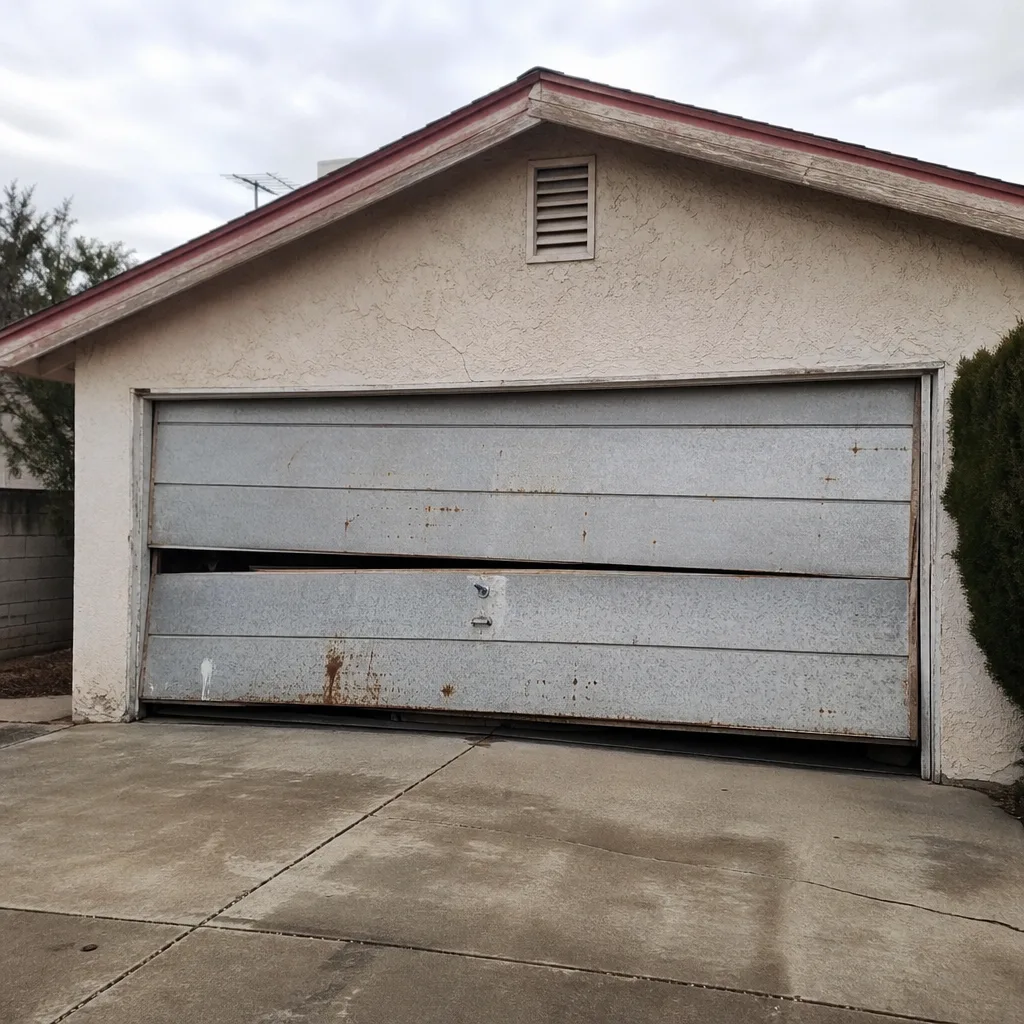
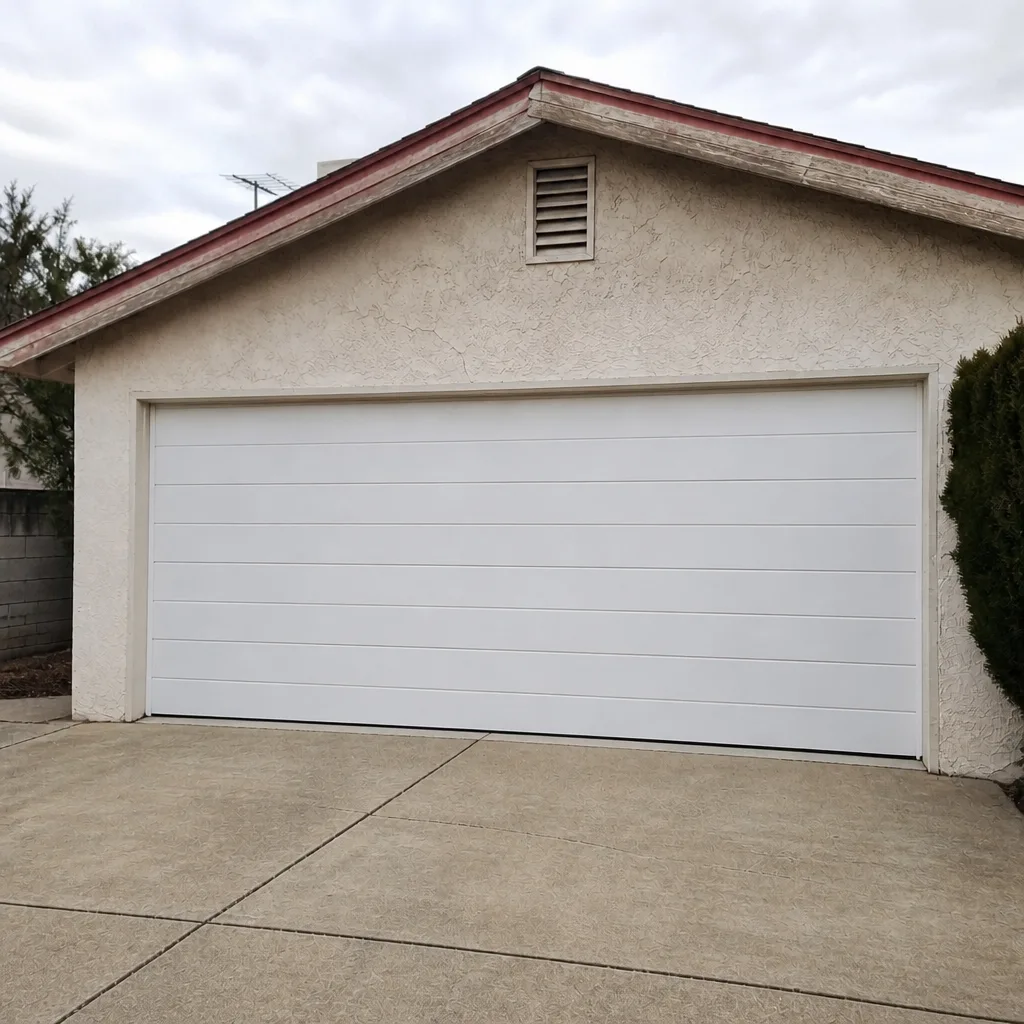
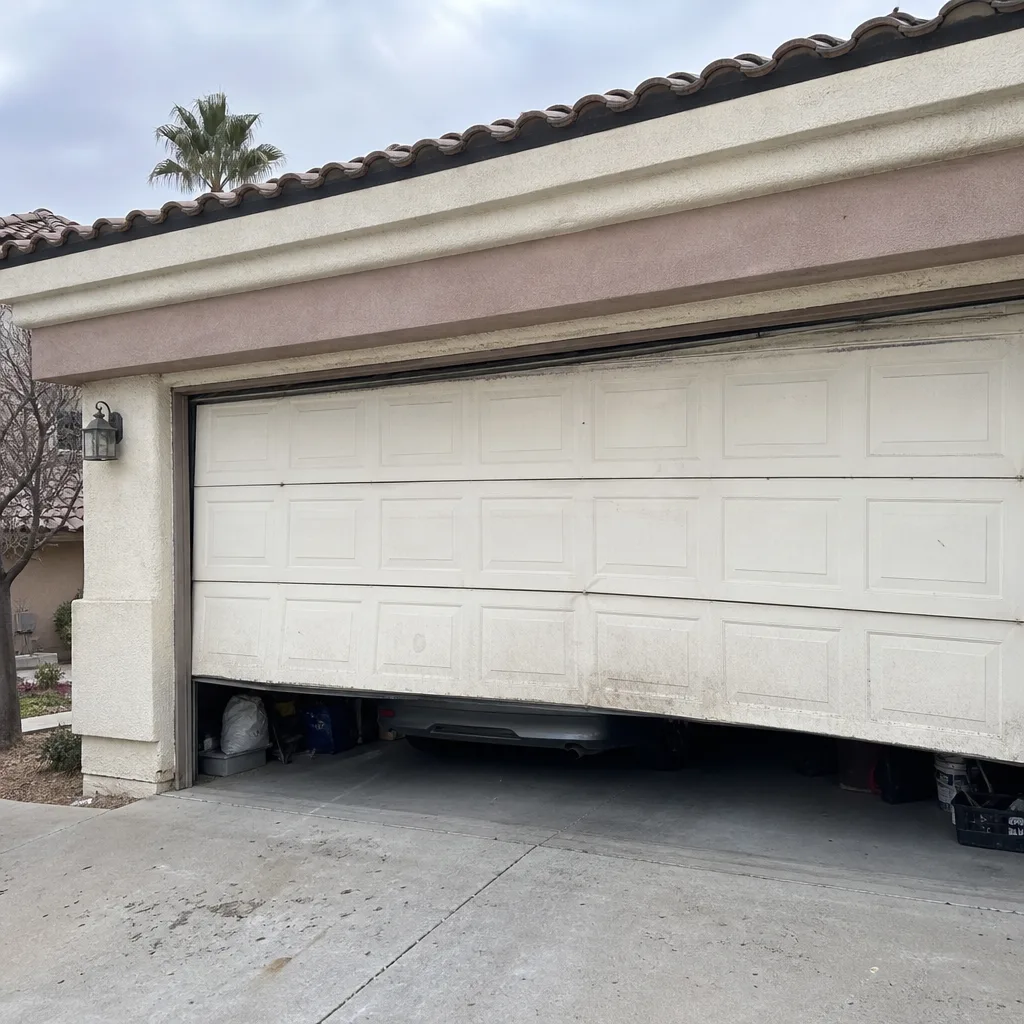
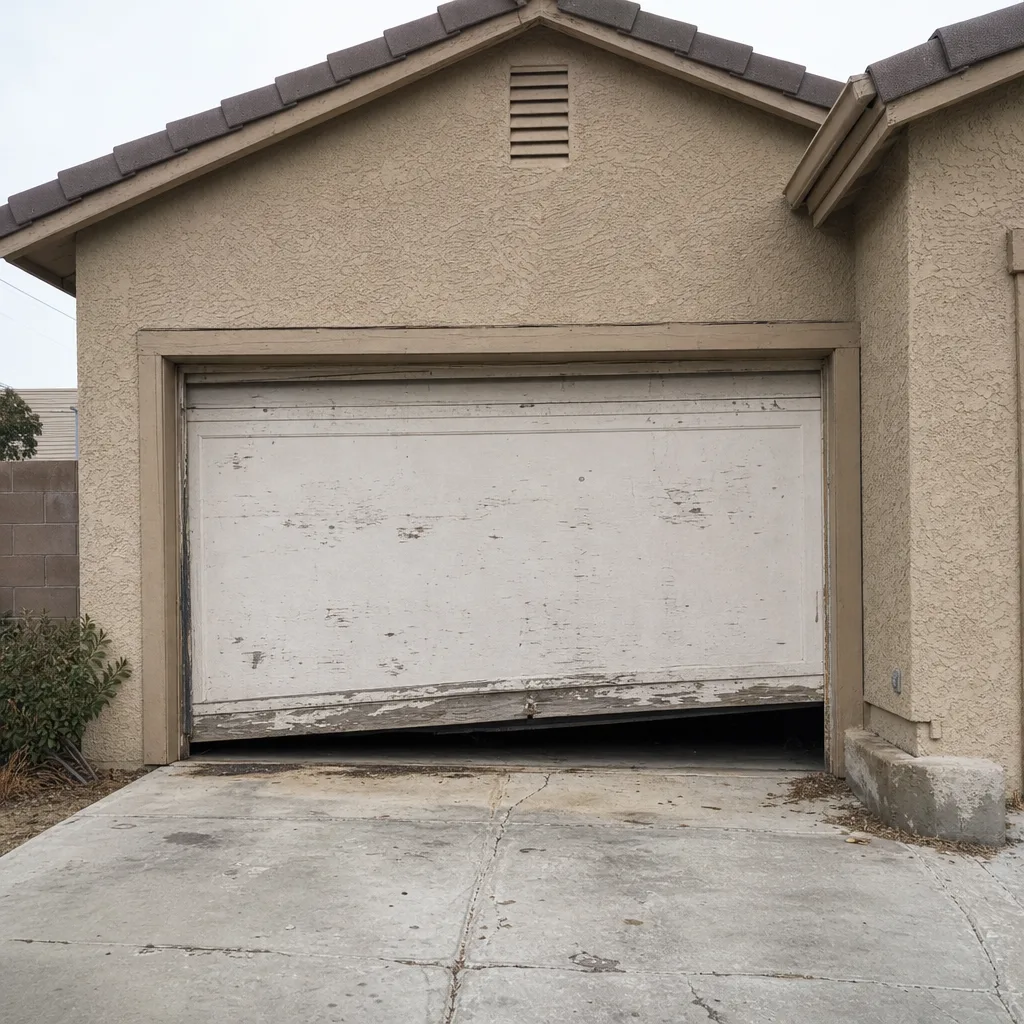
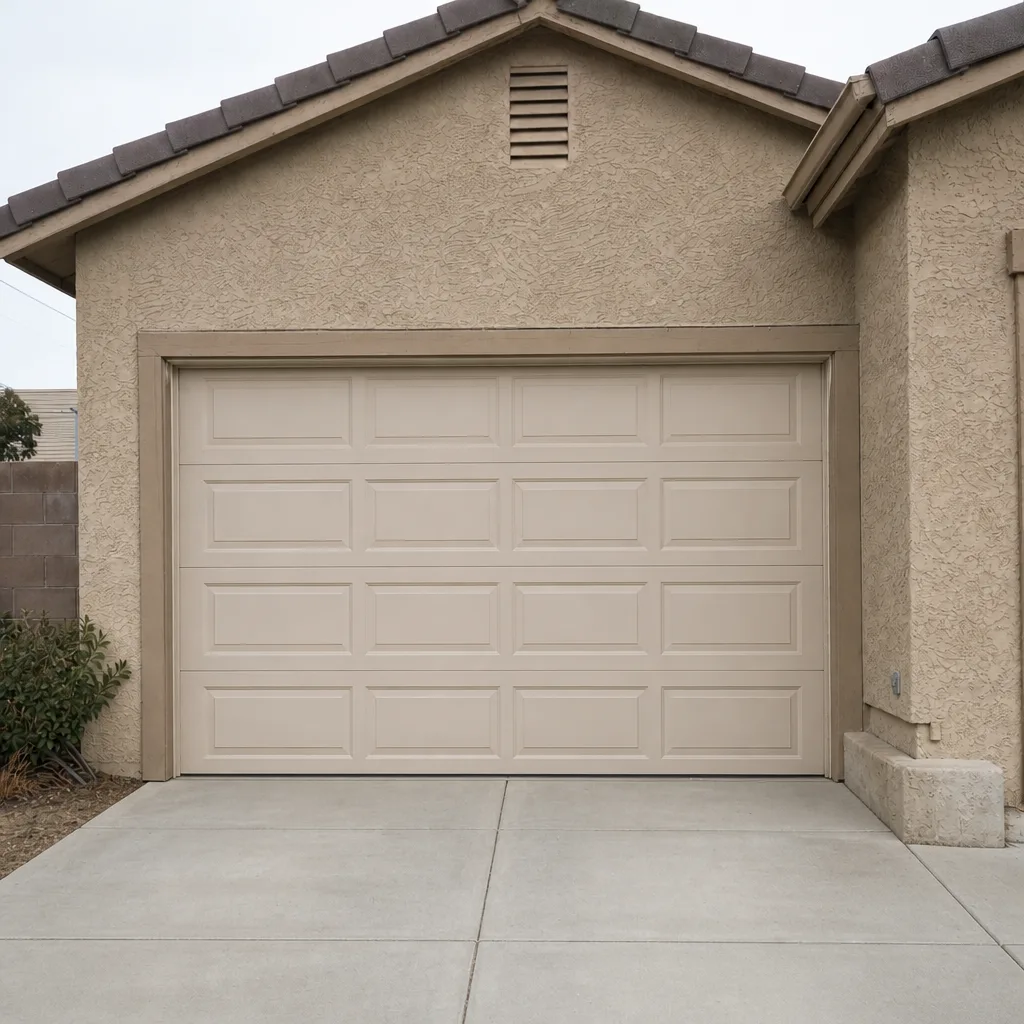
See the difference
 Before
 After
 Before
 After
 Before
 After
Frequently Asked Questions
A new garage door should be checked at 30 days, 90 days, and 6 months after installation, then annually after the first year. The 30-day check is the most important because it catches spring set and settling while they’re cheap to correct. Call (833) 605-8582 for a free estimate on a first-year service visit.
Spring set is the natural tension loss a new spring experiences in its first 500 cycles, which usually works out to a few weeks of normal use. A small amount is expected. Too much leaves the door unbalanced, which strains the opener and cables. Have a technician check it at the 30-day mark. Call (833) 605-8582 to schedule it – the estimate is free.
You can lightly lubricate the rollers and hinges with a garage-door-specific product. Leave the torsion spring and the track surfaces to a professional, and never grease the tracks; in a dry climate like Boulder City’s, grease collects dust and wears the rollers. Call us if you’re unsure which parts to treat.
Yes. A maintenance log proves the door was serviced on schedule, which is what most manufacturers ask for when a spring or opener fails early. Start it the day the door is installed and add to it at every check. We’re happy to note each visit for you when we service a Boulder City door.
After the first-year checks, a new door moves to a standard annual tune-up. That covers lubrication, balance, spring inspection, roller and hinge wear, and the safety tests. Call (833) 605-8582 to schedule one, and a live person will find a time that works.
No. A door that feels heavy in the first month is a sign of spring set that needs correcting or a balance issue. Don’t wait for the opener to fail; have it checked. Call Mainspring Garage Door Co. Boulder City at (833) 605-8582 for a free estimate.
The Bottom Line
The first year after installation is its own kind of maintenance, and it’s the one most homeowners skip. A 30-day, 90-day, and six-month check catches spring set, settling, and lubrication problems while they’re cheap to fix. After year one, the schedule settles into an annual tune-up plus a monthly look at the safety reverse and photo-eyes. Keep a written log from day one, plan part replacements by service life, and you’ll rarely see an emergency repair bill. If you’d rather hand the schedule to a shop that will still be here when it matters, garage door repair in Boulder City and our garage door opener in Boulder City services cover the whole system. Call (833) 605-8582 for a free estimate – it’s a square deal, and we stand behind it.
Written by the team at Mainspring Garage Door Co. Boulder City.