
Last updated November 18, 2026
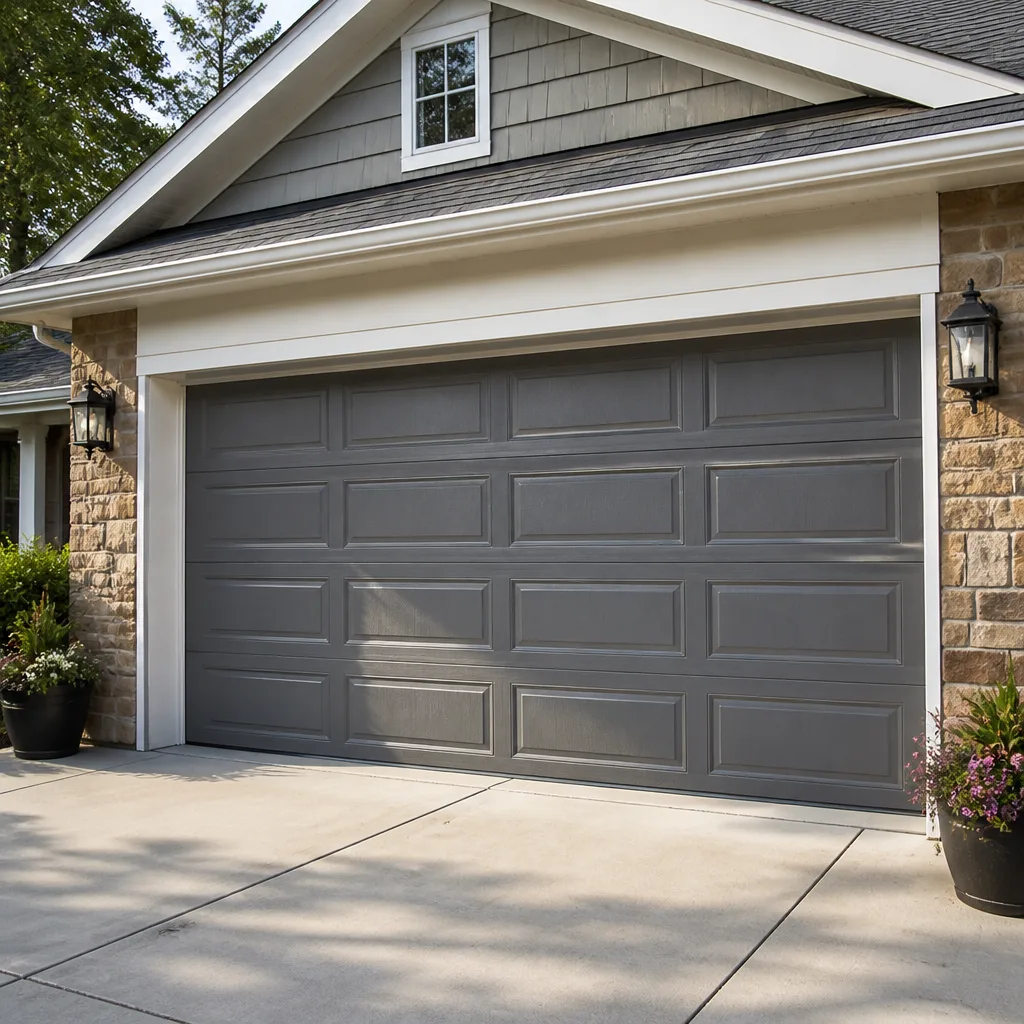 Raised-panel steel
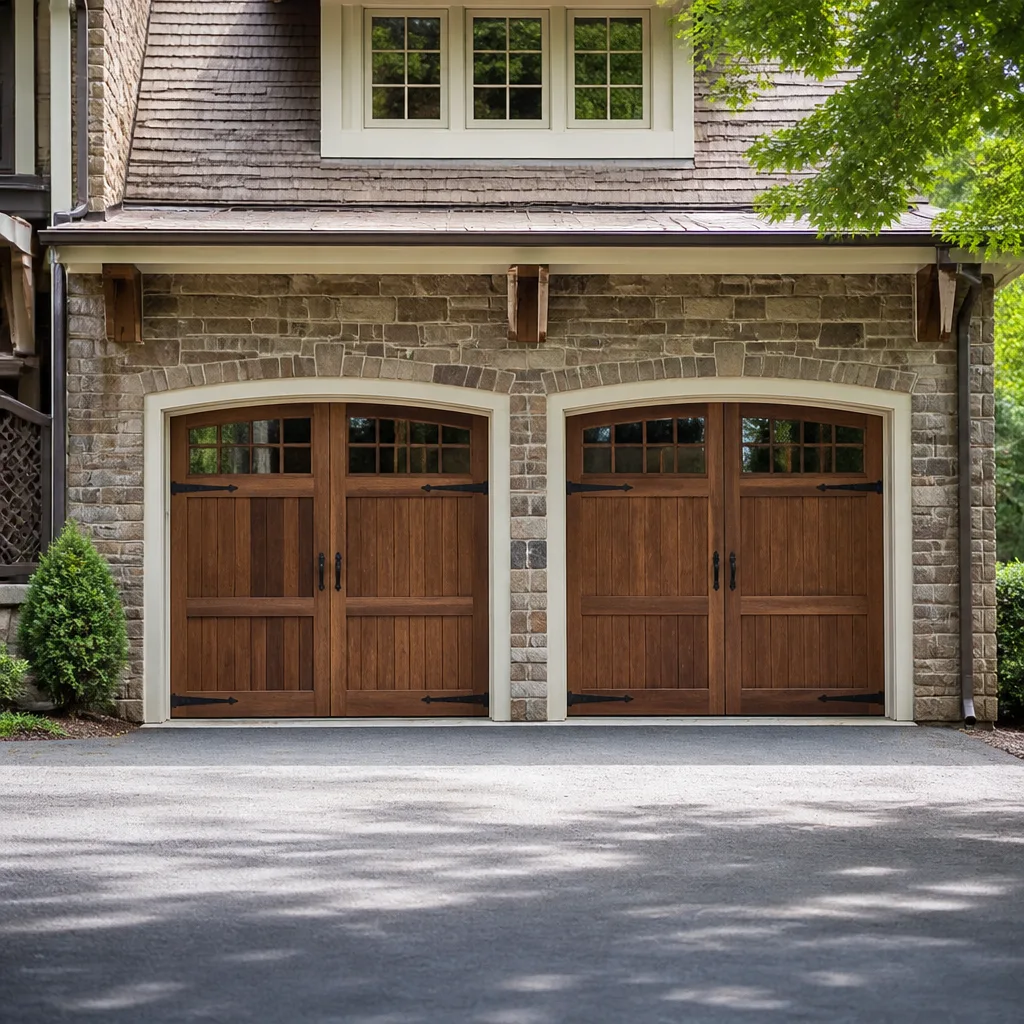 Carriage house
 Modern flush
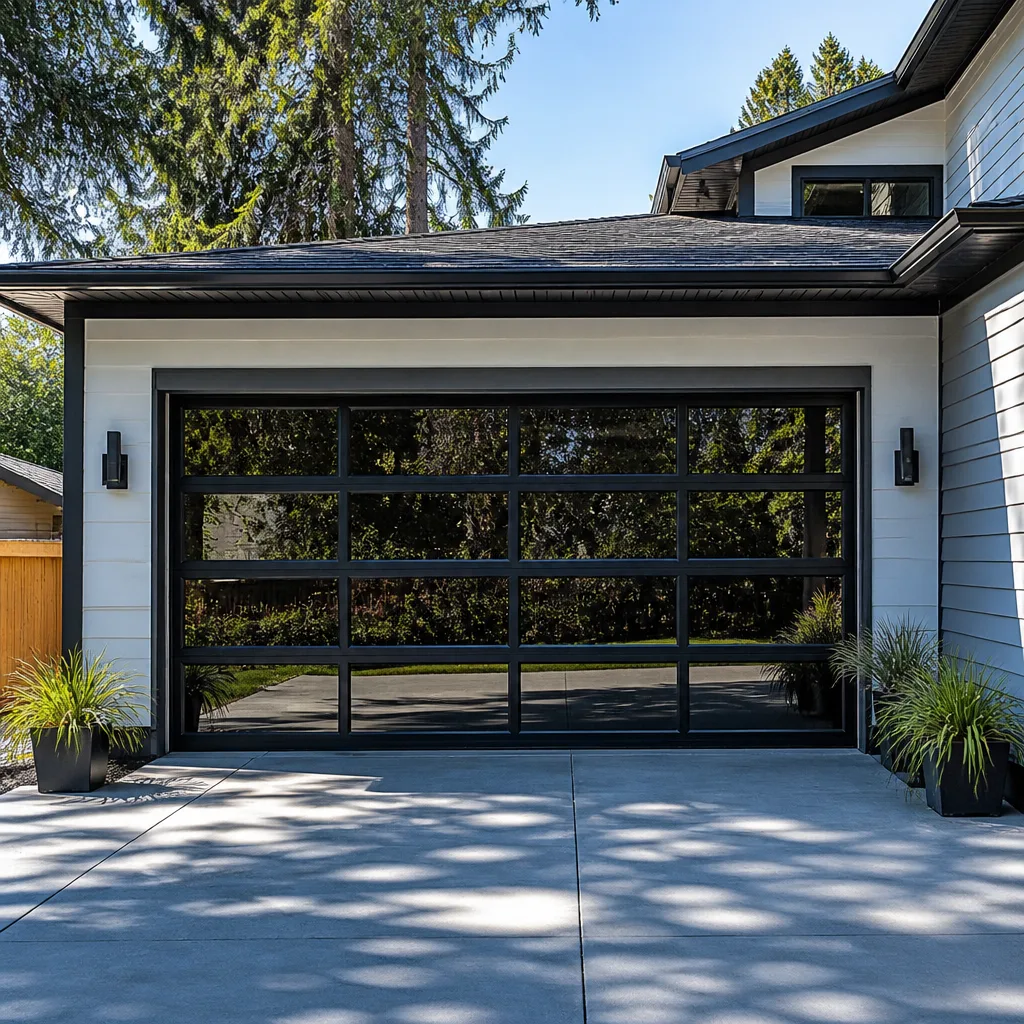 Full-view glass
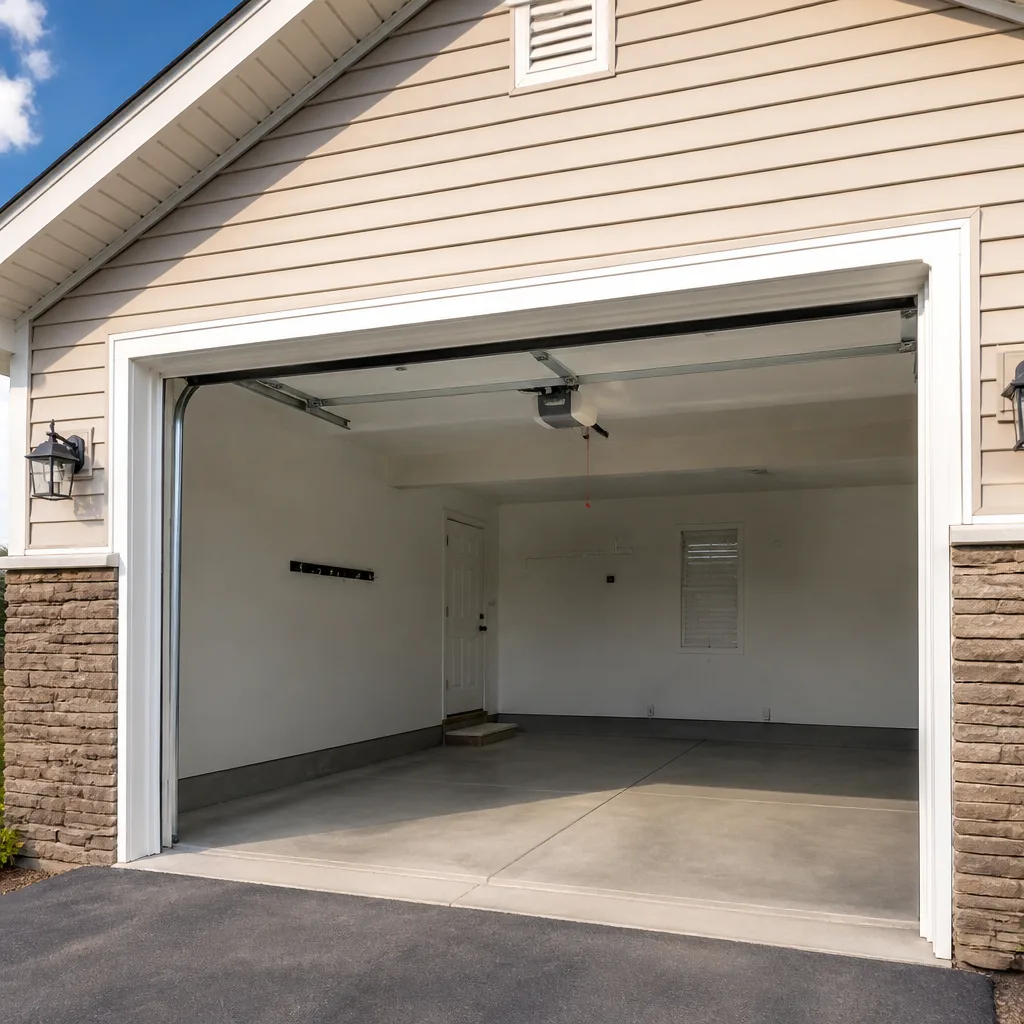 LiftMaster openers
 Chamberlain openers
Full 25-point door and opener safety check with every visit - springs, cables, rollers, tracks, and your LiftMaster or Chamberlain opener included
You get a price before we start. It does not change when the pro arrives.
Get your free estimateGarage Door Repair Maintenance Checklist for Boulder City Homeowners
A torsion spring in Boulder City can see a 70-degree temperature swing between a summer night and midday. That cycle repeats hundreds of times a year, and it shortens spring life faster than any usage number printed on the box. Most garage door checklists you’ll find online were written for mild climates. They skip the two tasks that matter most here in the Mojave: watching the seal break down under UV and catching spring metal fatigue before it snaps. This guide is built around what actually fails in Boulder City. It covers the lubricants that hold up past 100°F, a simple visual test for tired springs, and an honest schedule for what you check and what a trained professional should handle.
Quick Answer
A garage door in Boulder City needs monthly visual checks, a full lubrication and balance tune-up twice a year (spring and fall), and a professional inspection of springs, cables, and opener internals once a year. The heat is the reason the schedule is tighter than what you’ll read for other regions. Desert sun degrades seals and grease, and constant thermal cycling works metal harder than steady use does.
Styles & brands we work with
- Raised-panel steel
- Carriage house
- Modern flush
- Full-view glass
- LiftMaster openers
- Chamberlain openers
Table of Contents
- Why Boulder City Climate Changes Your Maintenance Schedule
- The Monthly Five-Minute Walk-Around
- Choosing Lubricants That Survive 100°F+ Heat
- Reading Torsion Springs for Thermal Fatigue
- Inspecting the Bottom Seal for Desert Dust Intrusion
- Opener Heat Stress: Signs the Motor Is Working Too Hard
- The Boulder City Frequency Schedule
- What You Should Never Attempt Yourself
Why Boulder City Climate Changes Your Maintenance Schedule
Boulder City sits high enough in the Mojave that summer days push past 100°F and clear nights drop into the 70s. That daily swing is the whole story. Metal expands and contracts with each cycle. The grease on your rollers and hinges thins out and migrates off the moving parts under sustained heat. The rubber bottom seal bakes in direct sun and hardens years before the same seal would fail in a coastal climate.
A garage door built for a mild climate might go a year between service visits without trouble. Around Boulder City, we’ve seen the same door start to run rough in half that time if nobody’s watching. The garage itself gets hotter than the outside air, especially on a west-facing wall, which adds a few more degrees to the metal on the door and the opener motor bolted to the ceiling.
Local neighborhoods feel this differently. Homes near the Historic District often have older wood or steel doors with heavy hardware, and those heavier panels put more load on the springs. Newer construction out toward the edge of town tends to have lighter steel panels, but that doesn’t make the springs bulletproof. The math on heat cycling applies to any door. If you ever want a second opinion on what a door needs, our Garage Door Repair in Boulder City page lays out the common failure points.
The Monthly Five-Minute Walk-Around
Once a month, before you pull the car out, run through this short list. It takes five minutes and catches most problems while they’re still cheap to fix. Do it in daylight so you can see what you’re looking at.
- Listen to the door open and close. Grinding, squealing, or a rough shudder means lubrication has dried up or a roller is failing.
- Watch the door travel. It should move smoothly, without jerking or pausing. A door that hesitates is fighting something.
- Look at the hinges and rollers. A monthly glance for rust, cracks, or a roller that’s worn flat on one side is enough.
- Check the bottom seal where it meets the floor. Gaps let desert dust blow in, and you’ll see the problem as a line of grit after a windy day.
- Test the safety reverse. Put a piece of wood flat on the floor under the closing door and confirm it reverses on contact. This one matters for safety and it’s fast.
- Look up at the springs. Just a visual glance. We cover what to look for in the spring section below.
None of this involves tools, and none of it puts you near a loaded spring. It’s just paying attention. For a homeowner who plans to stay in their house, that monthly habit saves real money over the years. If the door starts acting up between checks, call (833) 605-8582 and a live person will answer.
Choosing Lubricants That Survive 100°F+ Heat
The wrong lubricant is worse than none. In sustained Mojave heat, a thin spray grease evaporates out of the joints and leaves the surface dry. A heavy grease can gum up and attract grit, which turns rollers into grinding wheels. You want something that stays where you put it and doesn’t turn to paste on a July afternoon.
- White lithium grease: good for hinge pivots and the tracks on steel doors, but it can thicken in cold snaps and it grabs dust. Use it in thin coats, not globs.
- Silicone spray: works well on rollers, hinges, and the opener chain. It resists heat and doesn’t gum up, so it handles the temperature cycling better than heavier grease. This is the safer default for a desert door.
- Light machine oil: fine for the opener chain and pivot points, but it needs reapplying more often because it thins out in heat.
- White grease in a tub: too heavy for most home garage door use in this climate. Skip it on rollers and tracks.
A practical routine: use silicone spray on the rollers, hinge pins, and chain every six months, and put a thin film of white lithium on the bearing plates. Wipe off the excess. Never spray lubricant on the springs or the tracks themselves. Grease on the tracks collects dust and the door starts dragging. If your door is a heavier Wayne Dalton or a steel Clopay and you’re not sure what hardware it has, our Garage Door Opener in Boulder City page covers components and service.
Reading Torsion Springs for Thermal Fatigue
Torsion springs carry the full weight of the door. The spring that does this work is the one that gives the brand Mainspring its name. In Boulder City, the spring is also the part that lives through those 70-degree daily swings, and that’s what people mean when they talk about thermal fatigue. The coil flexes slightly with each cycle, and repeated flexing eventually works the metal toward a break.
You can do a visual inspection for thermal fatigue without touching anything. Here’s how a trained eye reads a spring:
- Look for a gap in the coil. If you see the spring has separated or a section is uncoiled, it’s already failed or is failing. Stop using the door.
- Check for fine hairline cracks near the ends or the middle of the coil. Rust streaks or a powdering of metal dust around a spring are warning signs that the metal is working.
- Note discoloration. A spring that’s gone dark or bluish has been through heat stress. That doesn’t mean it’s broken, but it tells you to have it checked.
- Watch for the door getting heavy. If you can barely lift the door by hand, or the opener strains to raise it, the spring has lost tension.
Here’s the part that matters for safety. Do not try to adjust, loosen, or replace a torsion spring yourself. These springs are under extreme tension, and the tools that handle them are specific and unforgiving. A slip can cause serious injury. A trained technician has the winding bars and the know-how to do the job safely. If your visual check turns up any of the signs above, treat it as a call-the-professional moment.
Inspecting the Bottom Seal for Desert Dust Intrusion
Most seal advice is about keeping weather and water out. In Boulder City, the bigger issue is dust coming in. Mojave wind carries fine grit that finds every gap, and a hardened or split bottom seal lets it in under the door. You’ll notice it as a film on the garage floor after a windy stretch, or as dust settling on whatever you store inside.
Check the seal by looking at the rubber where it presses to the floor. It should be pliable and, when the door closes, make even contact all the way across. Signs it’s due for replacement:
- Cracks or splits along the rubber, especially on the sun-facing side.
- A seal that’s hard and stiff instead of flexible.
- Visible daylight under the door after it’s fully closed.
- Dust lines on the floor or a draft you can feel with your hand.
Bottom seals are inexpensive and replacing one is a reasonable homeowner project on most doors, because you’re nowhere near the tension parts. If the door is an older model with a brittle retainer or the seal is integrated into the panel, that’s a job for someone who knows the hardware. It’s also a good thing to have checked during a seasonal tune-up, so the seal gets handled at the same time as the lubrication and balance.
Opener Heat Stress: Signs the Motor Is Working Too Hard
An opener motor bolted to a garage ceiling in Boulder City runs in a hostile environment. The garage can get hotter than the outside air, and a motor working harder than it should runs even hotter. That combination wears out capacitors and shortens motor life. A LiftMaster or Craftsman unit that’s older and starting to strain is telling you something.
Here’s what to watch for:
- The opener sounds louder or rougher than it used to, especially in the afternoon.
- The door slows down partway through its travel or reverses for no clear reason.
- The unit clicks but doesn’t move, a sign a start capacitor is giving out.
- The motor housing feels very hot after a few cycles. A little warmth is normal; too hot to hold your hand on is not.
A capacitor is an inexpensive part, but changing one safely means getting to the correct component with the power off and knowing what you’re looking at. If your opener shows these signs, have it looked at rather than pushing it until it quits. The fix is usually quick, and it costs less than replacing a motor that burned out. For doors and openers that have crossed into replacement territory, see our Garage Door Installation in Boulder City page. Brands like LiftMaster and Raynor are ones we’re familiar with on both the repair and install side.
The Boulder City Frequency Schedule
Here’s the honest schedule. It’s more frequent than what a temperate-climate checklist would tell you, and that’s deliberate. The heat and the daily thermal swing are the reason.
- Monthly: the five-minute walk-around above. Listen, watch the travel, check the seal and the springs, test the reverse.
- Twice a year (spring and fall): lubricate rollers, hinges, and chain with silicone spray; wipe down and relubricate bearing plates; inspect the seal for cracking; tighten any visibly loose hardware.
- Once a year: a professional inspection of springs, cables, and opener internals. This is where a trained eye catches fatigue and wear before it becomes an emergency.
- After any big temperature event: if you get an unusual heat wave or a hard freeze, do a quick walk-around. Extreme swings are when tired parts give out.
A seasonal tune-up fits neatly into the spring and fall slot. It’s the kind of thing that pays for itself by keeping small problems small. If you’d rather have eyes on the door than check it yourself, that’s what we’re here for. Our Mainspring Garage Door Co. Boulder City home page explains how we work and what we stand behind.
What You Should Never Attempt Yourself
Some maintenance is a homeowner task, and some of it can hurt you. The line is clear once you know where it is. Springs, cables, and the internal parts of a loaded door are on the professional side, and no checklist should talk you into touching them.
- Torsion and extension springs: under extreme tension. Leave them alone.
- Cables: they carry the door’s load and can snap with force. Don’t adjust them yourself.
- Anything above the door while it’s under tension: if the door isn’t resting safely, don’t put your hands near the moving parts or reach over the door.
- Replacing a spring you think looks fine: a spring that’s near the end of its life can fail without warning. Let a trained technician make that call.
Lubrication, the monthly walk-around, the safety reverse test, and basic seal replacement on standard doors are all reasonable DIY work. When in doubt, stop and call. A few minutes of caution beats a trip to the emergency room, and we’d rather answer a question than hear about an injury.
Common Mistakes to Avoid
- Following a mild-climate checklist here. A schedule written for a coastal climate misses the UV and heat-cycling problems that drive most failures in Boulder City. Use the tighter schedule above.
- Greasing the tracks. Lubricant on the tracks collects desert dust and makes the door drag. Keep grease on the moving joints, not the rails.
- Ignoring the bottom seal until dust pours in. A hardened seal on a sun-facing door fails quietly. Check it every month, not just in winter.
- Pushing a straining opener. A rough-running motor in July is heat stress talking. Waiting until it quits usually costs more than fixing it early.
- Trying to adjust a torsion spring. This is the mistake that causes the most serious injuries. Springs are a professional job, every time.
- Skipping the annual inspection because the door “seems fine.” Thermal fatigue cracks often show no symptoms until the spring breaks. A yearly look catches them first.
- Replacing the opener when the door is the problem. A heavy door or a failing spring makes a good opener struggle. Diagnose before you buy.
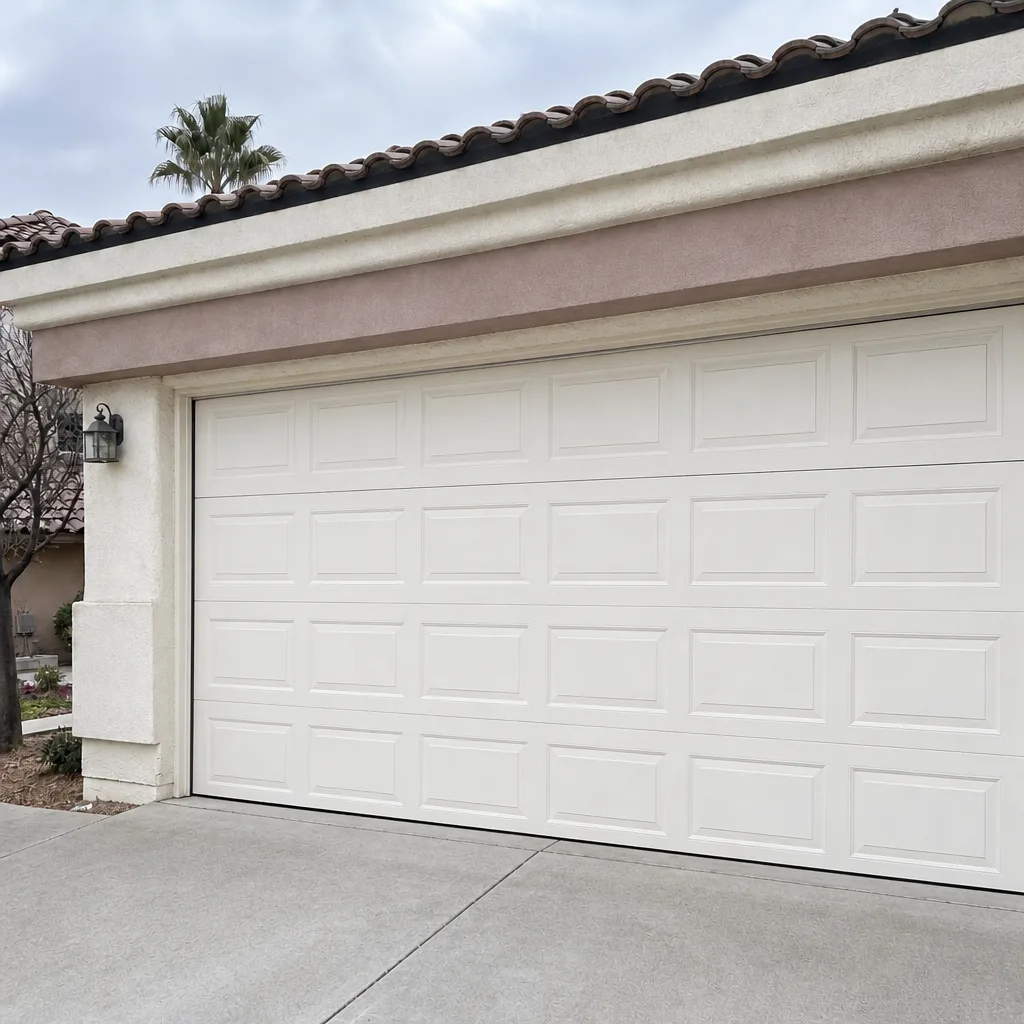
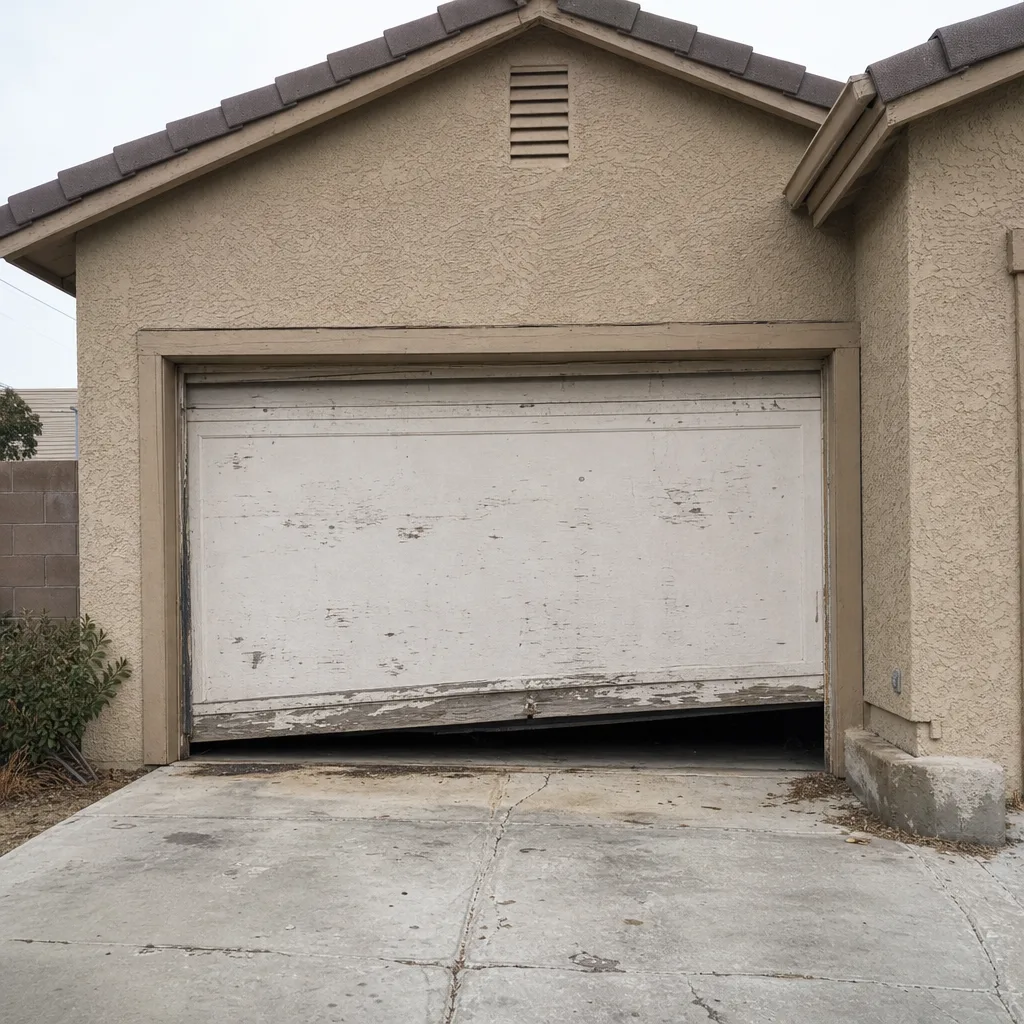
See the difference
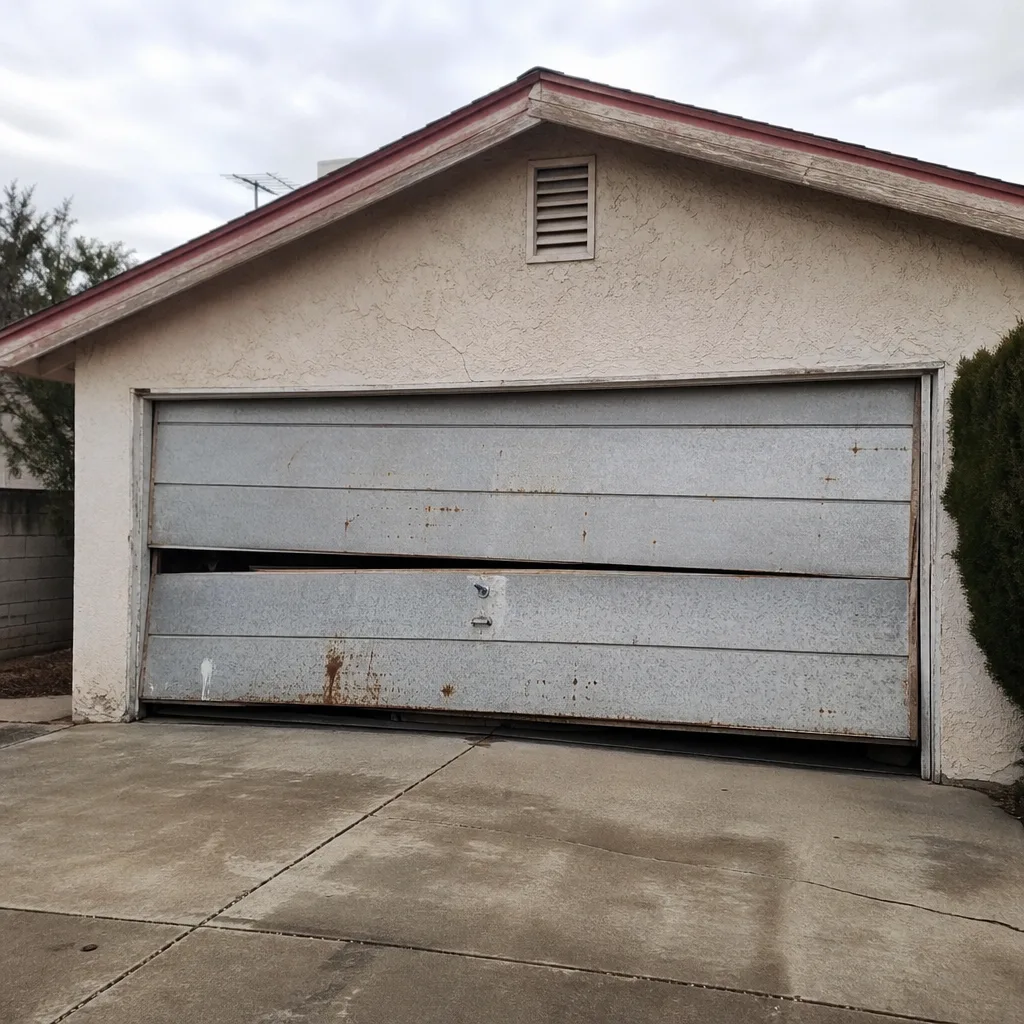 Before
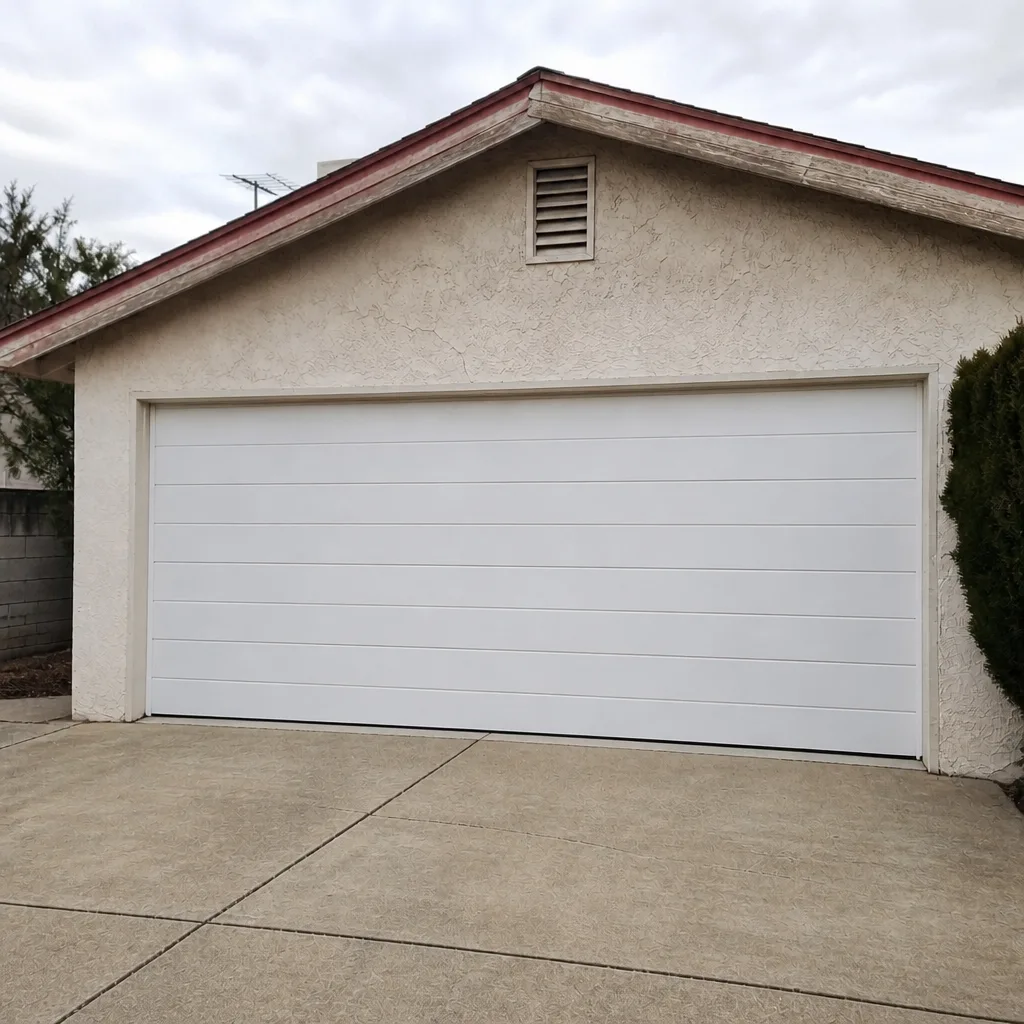 After
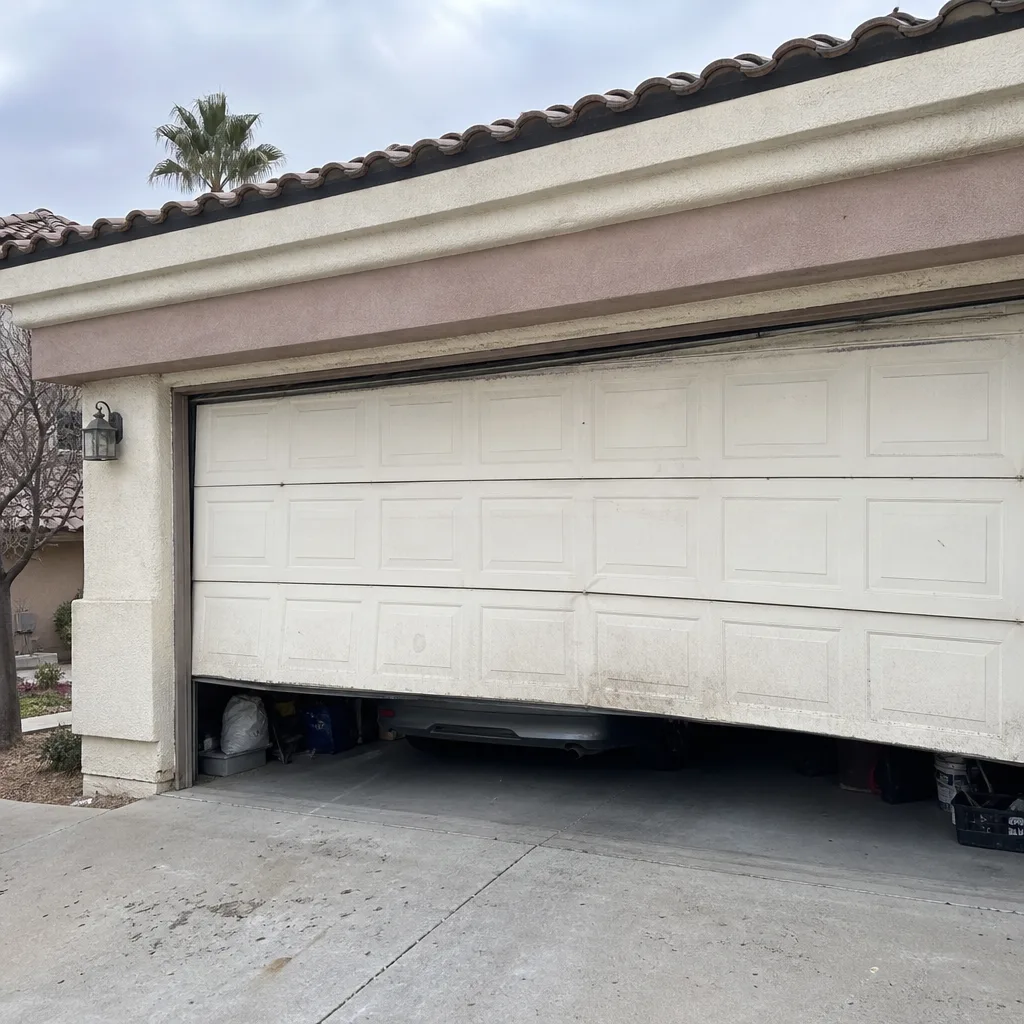 Before
 After
 Before
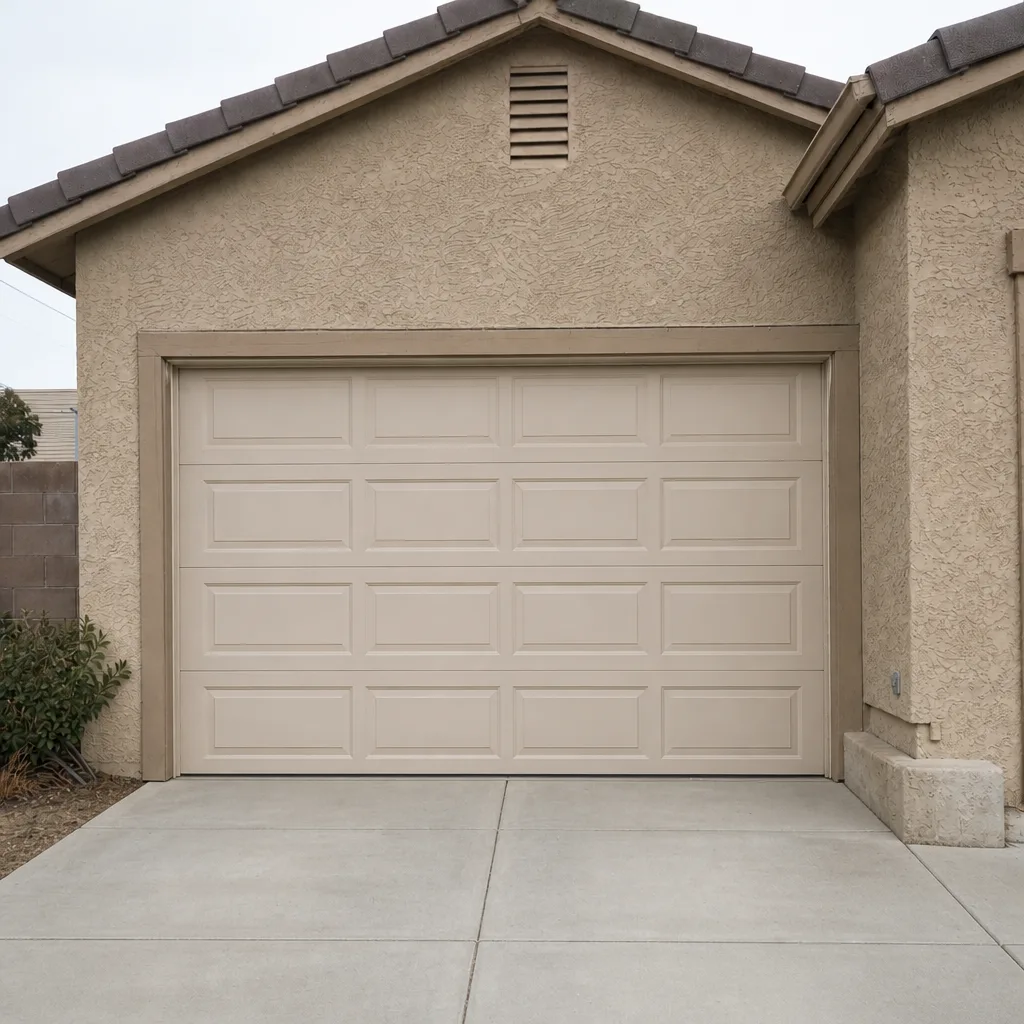 After
When to Call a Professional
Call a professional when the problem involves springs, cables, or opener internals, or when your monthly walk-around turns up something you’re not sure about. Specific times to call: you spot a gap or cracks in a torsion spring, the door won’t stay up or feels extremely heavy, you hear a loud bang from the garage, the door is off its track, or the opener strains and runs hot. Those are not DIY moments. The job needs the right tools and training, and pushing a loaded door is how people get hurt. If you’re near the Historic District or out toward the newer neighborhoods and you want eyes on the door, our team at Mainspring Garage Door Co. Boulder City offers free estimates in Boulder City. Call (833) 605-8582 and a live person will pick up.
Frequently Asked Questions
Monthly visual checks, a lubrication tune-up twice a year, and a professional inspection once a year. The daily temperature swings in Boulder City work metal and grease harder than a mild climate does, so this schedule runs tighter than a generic checklist.
Silicone spray is the safest default for rollers, hinges, and the opener chain because it resists heat and doesn’t gum up. White lithium in thin coats works on hinge pivots and bearing plates. Avoid heavy grease on the tracks, where it grabs dust. If you’re unsure what your hardware needs, call (833) 605-8582 for a free estimate.
Look for a gap or uncoiled section, hairline cracks near the ends, rust streaks or metal dust, and any sign the door has gotten heavier. A spring that’s discolored from heat stress is worth having checked. Never try to adjust or replace a spring yourself. Call (833) 605-8582 and we’ll take a look.
Heat stress. The garage gets hotter than the outside air, and a motor working harder than it should runs hotter still, which wears out capacitors and shortens its life. If your LiftMaster or Craftsman unit sounds rough or runs hot, have it inspected before it fails. Call (833) 605-8582 for a free estimate.
Yes, on most standard doors, since it’s not near the tension parts. Just watch for a brittle retainer or a seal built into the panel, which is a job for someone who knows the hardware. If you’d rather leave it to us, call (833) 605-8582.
We do. The $89 Seasonal Tune-Up covers the lubrication, balance, and safety checks that keep a desert door running. It’s a good fit for the spring and fall slots in the schedule. Call (833) 605-8582 to schedule one.
The Bottom Line
Your garage door in Boulder City lives through a harder climate than most checklists account for. The fix is a tighter, simpler routine: five minutes a month, a lubrication tune-up twice a year, and a professional inspection once a year. Use silicone spray in the joints, watch the seal for dust intrusion, and read the springs for thermal fatigue before they break. Leave springs, cables, and opener internals to a trained technician. Do that, and a door that’s already handled twenty years of Mojave summers can keep going for a good while longer. We’re here when you need us.
When you want the work done right, give us a call. Mainspring Garage Door Co. Boulder City offers free estimates, upfront pricing before any work begins, and every job backed by our written 90-Day Done Right Promise. Reach us at (833) 605-8582 for a free estimate.
Written by the team at Mainspring Garage Door Co. Boulder City.